


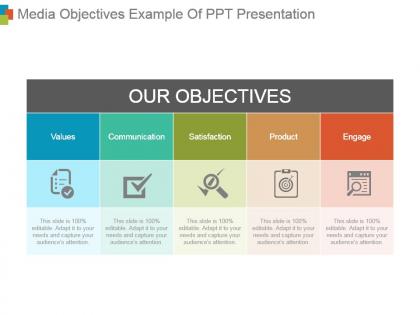
Media objectives example of ppt presentation




Try Before you Buy Download Free Sample Product
 Impress Your
 Audience
 100%
100% Editable
 Save Hours
 of Time


Convince folks about eventual harm with our Media Objectives Example Of Ppt Presentation. Discourage any exaggerated claims.
People who downloaded this PowerPoint presentation also viewed the following :
Media objectives example of ppt presentation with all 7 slides:
Our Media Objectives Example Of Ppt Presentation embody dedicated effort. Beautiful examples of a conscientious approach.

FAQs for Media objectives example
Look, you need three main things for solid media objectives: reach, frequency, and timing. Figure out your audience first, then decide how often they should see your ads and when. Budget planning is honestly where most people screw up - do this part right or you'll regret it later. Which channels are you using? Set some concrete goals you can actually measure, like awareness numbers or engagement rates. Oh and make sure it all connects to your bigger campaign strategy. Otherwise you're just burning cash on random stuff that won't move the needle.
Okay so first figure out what you're actually trying to accomplish - brand awareness, leads, sales, whatever it is. Map your media stuff directly to those goals. Like if you want conversions, focus your reach and frequency on hitting the right people when they're ready to buy. Honestly most people way overthink this part. Every dollar should connect back to a specific goal you set. Oh and definitely track measurable KPIs so you'll know if it's actually working or if you're just burning money.
Honestly, it really depends what you're trying to do. For awareness stuff, track reach and frequency. Clicks and engagement matter more when you want people considering your product. Conversion rates and cost-per-acquisition are your bread and butter for actual sales campaigns. Brand lift studies are amazing but kinda pricey - worth it if you can afford them though. Don't forget efficiency stuff like CPM and ROAS either. Here's the thing: pick maybe 3-4 metrics that actually connect to your business goals. Otherwise you'll just get lost in all those vanity numbers that look impressive but don't mean much.
You can't really set good media goals without knowing who you're talking to first. Like, segmenting by demographics or behavior lets you get super specific - "boost awareness among working parents 25-34 by 15%" vs just "increase awareness" (which honestly means nothing). Different segments need totally different channels and tactics too. I learned this the hard way on a project last year - we had this broad goal that went nowhere fast. Way better to figure out your segments first, then build objectives around each one. Makes everything so much clearer.
Your budget is basically what decides if your media goals are actually doable or just wishful thinking. Like, you might dream of hitting millions of people everywhere, but with only $10K? Yeah, those dreams need to get scaled back real quick. The money you have controls which platforms you can even touch, how many people you'll reach, and how long everything runs. Honestly, it's super annoying when the budget and the big ideas don't match up - happens way too often. But you've gotta work backwards from what you can spend, then squeeze every bit of impact out of it.
Honestly, new tech just completely flips your media strategy on its head. AR/VR suddenly makes these crazy immersive brand experiences possible that we never had before. AI personalizes everything at massive scale - now you're focused on individual customer journeys instead of just getting your name out there. Voice search? Totally different game for getting discovered. And streaming platforms... well, you're fighting for attention in ways that make old TV advertising look ancient. The trick is being flexible when new stuff pops up. Don't just slap new platforms onto your old playbook - let the tech actually change what winning looks like.
Ugh, the worst one I see is companies saying stuff like "increase brand awareness" without actually defining what that means or how they'll track it. Super frustrating. Also, don't just copy what your competitors are doing - their situation is totally different from yours. I've seen teams get obsessed with reach numbers when they should be focusing on conversions or engagement instead. Oh, and make sure your media goals actually connect to your business goals, otherwise you'll have campaigns that look good on paper but accomplish nothing. Start with specific targets that tie back to real outcomes.
Yeah so it really depends on what industry you're in. B2B companies are usually chasing leads and trying to look smart, while consumer brands just want people to know they exist and buy stuff. Healthcare is brutal - so many compliance rules that you can barely breathe without a lawyer approving it first. Tech companies spend forever explaining what their products actually do. Retail? They're obsessed with seasonal sales and getting people to buy RIGHT NOW. Financial services companies have to convince everyone they won't steal your money, which honestly makes sense. You've got to match your strategy to how your customers actually behave in your specific industry.
Honestly, consumer behavior data is like your roadmap for media planning. Without it, you're just guessing at reach and frequency goals. Say your audience ditched cable for TikTok - that's a completely different strategy than targeting prime-time TV watchers. The behavioral insights show you who's actually paying attention and where they hang out online. I always tell people to dig into your current audience data first, then set your KPIs based on what you find. It's way more effective than making assumptions about viewing habits (learned that the hard way on a campaign last year).
Don't just split your budget 50/50 - that's what lazy marketers do. Map out your customer journey first. TV builds awareness, social gets people interested, search catches them when they're ready to buy. Each channel has its own superpower, so use traditional media for broad reach and credibility while digital handles the precise targeting stuff. Oh and track how they work together, not just individual performance - honestly most brands mess this part up. Your KPIs should reflect the combined impact on actual business goals, not vanity metrics.
Honestly, just make your goals SMART first - you know, specific and measurable and all that. Look at your old campaign data to see what actually worked before setting targets. I've watched so many people crash and burn because they wanted massive reach with like zero budget lol. Break everything into smaller chunks you can check monthly. Also make sure you can actually track whatever you're measuring - there's no point making brand awareness your main goal if you have no way to measure it properly. Oh and always connect your media stuff back to the bigger business goals so your boss gets why you picked those numbers.
So basically you want to time everything around when people are actually buying stuff. Retail brands should obviously go hard in Q4, travel companies push summer campaigns - that part's easy. But here's what most people mess up: you need awareness campaigns running *before* those busy periods hit. Like, way before. Your mix changes too - more digital when everyone's online researching during shopping seasons. Honestly the whole thing works better if you map out your year super early. That way you're not fighting everyone else for the good inventory when demand spikes.
Honestly, it's all about going where your people actually are. Demographics matter big time - like don't blow your budget on TikTok if you're targeting 50-year-olds, you know? TV and display ads work great for getting your name out there, but if you want people to actually buy something, search and targeted social are your best bet. Your budget's gonna dictate a lot of this too (obviously). Quick wins vs. long-term building is another thing to consider. I always tell people to stop just copying what they did before and actually think about what each platform does best.
Dude, stories are literally game-changers for media campaigns. Your audience will actually remember what you're saying instead of zoning out. Like, I can still quote that one Geico commercial from years ago, but couldn't tell you a single feature from most car ads I've seen. Makes no sense to just dump facts on people when you could get them emotionally invested, you know? Stories build that trust factor too - which is huge for brand awareness stuff. Even something super simple works. Just find a narrative your target audience gives a shit about and build around that. Trust me on this one.
First thing - figure out what actually shifted. New competitor? Economy tanking? People just buying differently now? Once you know that, look at whether you're still going after the right people with the right budget split. Honestly the pace of change right now is just insane. Your KPIs probably need tweaking too, and maybe move money between channels or totally rework your messaging. Don't freak out though - grab the data first, then make smart changes to your media plan. Speed matters but panic decisions are worse than being a day late.
-
Excellent template with unique design.
-
Easily Understandable slides.