

Medical startup cost breakdown with total expenses




Try Before you Buy Download Free Sample Product
 Impress Your
 Audience
 100%
100% Editable
 Save Hours
 of Time


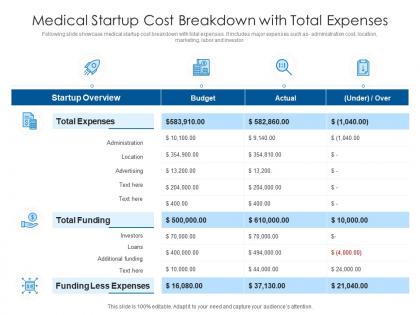
Following slide showcase medical startup cost breakdown with total expenses. It includes major expenses such as- administration cost, location, marketing, labor and investor.
People who downloaded this PowerPoint presentation also viewed the following :
Medical startup cost breakdown with total expenses with all 2 slides:
Use our Medical Startup Cost Breakdown With Total Expenses to effectively help you save your valuable time. They are readymade to fit into any presentation structure.

FAQs for Medical startup cost breakdown
Legal fees and permits will hit you harder than expected - same with insurance. Professional stuff like accounting and design work (if you can't do it yourself) adds up quick. Banking fees, software subscriptions, all that mundane crap nobody thinks about initially. Marketing materials too. Honestly, I learned the hard way to just assume everything costs 20-30% more than whatever you budget. There's always some random expense that blindsides you. Best approach? Write down every single thing you can think of, then tack on extra for the stuff you inevitably forgot.
Honestly, research saves you way more money than it costs. You'll dodge so many expensive screw-ups just by actually knowing what your customers want first. I've watched friends burn through cash on inventory nobody bought or ads that totally missed the mark. Do some quick surveys or interviews before you commit to big purchases - way better than realizing you're wrong after dropping serious money. It helps you figure out which features to build first too, instead of wasting time on random stuff. Basically, it's cheaper to change direction early than later when you're already broke.
So fixed costs are like your unavoidable upfront hits - equipment, permits, that initial inventory buy. Variable costs change with how much you're actually selling, stuff like materials and shipping fees. Honestly, the fixed costs are what'll stress you out most because there's no getting around them. I'd map those out first since they're way easier to pin down than trying to guess your variable expenses. Plus you'll know exactly how much cash you need just to open your doors. The variable stuff you can kinda figure out as you go, but those fixed costs? Yeah, they're not negotiable.
Dude, tech can seriously cut your startup costs. Cloud software beats buying expensive licenses any day. Free tools handle your marketing and accounting stuff. No office rent if you work remote - I mean, who needs that headache anyway? You don't need full teams anymore. AI handles customer service, automated tools run your social media, and Shopify or Square sorts payments. Virtual phone systems and digital banking? Easy savings there. Honestly, just list your biggest expenses first, then find the tech replacements. You'll probably slash like 60% of what you thought you'd spend.
Dude, location will absolutely destroy your budget if you're not careful. Rent alone can go from like $500 in some random small town to $5K+ in SF or NYC - it's insane. But here's what people don't realize: everything else costs more too. Salaries, utilities, even your damn internet bill can be higher in certain cities. I'd definitely look at the full cost of living picture before you commit anywhere. Oh, and seriously consider going remote at first if you can swing it - you could save a ton by staying flexible on location until you get your feet under you.
There's a bunch of ways to fund this thing. Your own savings is easiest if you've got them. Banks and credit unions do small business loans, though they can be picky. Angel investors are worth a shot if your idea's actually scalable. Oh, and local economic development programs sometimes have grants - who knew, right? Friends and family will probably offer, but honestly that can get messy fast if things go sideways. I'd start with the SBA website first. They've got loan programs and resources specifically for startups, plus it's free to browse around and see what applies to you.
Okay so first thing - split your costs into three piles: startup stuff, monthly fixed expenses, and whatever changes based on how much you're making. List out literally everything you can think of. Equipment, software, legal fees, inventory, deposits, all that jazz. Business insurance too (honestly such a pain but you need it). Look up real prices for everything and then add like 20-30% on top because trust me, you'll forget something important. Oh and definitely make a spreadsheet showing 12-18 months out. You'll want to see how long your money actually lasts before you're eating ramen every night.
Dude, your business structure choice can literally cost you thousands. LLCs are usually your best bet - maybe $50-500 in filing fees, plus whatever you pay a lawyer if you go that route. Corporations? Way more expensive upfront and they've got all these ongoing compliance headaches. Sole proprietorships are basically free but offer zero protection (not great if someone sues you). S-Corps fall somewhere in between but the tax stuff gets messy fast. Honestly, I'd crunch the numbers for your first year with each option. Sometimes paying more upfront saves you later.
Put money into stuff that actually makes you money first - product development and getting customers, not some sick office space or pricey software you don't need yet. Legal setup, basic tech, and your MVP are the real priorities. I swear, half the startups I know waste cash on "premium" tools they never touch. Keep your fixed costs stupid low while you're figuring things out. Marketing tests and key hires? Yeah, spend there. Just ask yourself: does this help me get customers or build my thing? No? Then it waits. Track everything and start small.
The business model canvas is actually pretty brilliant for this - it breaks your startup into chunks so you can see where money's gonna go. Work through each section (key resources, partnerships, activities) and list what each one costs. I swear it's like a reality check for your budget! You'll catch stuff you totally forgot about - server costs, initial inventory, partnership fees, all that. Plus it forces you to think through the boring operational stuff that somehow always gets expensive. Just grab a template online and fill it out piece by piece.
Dude, legal fees will destroy you - nobody budgets enough for that mess. Customer acquisition costs way more than you think too. Manufacturing always gets delayed, which means extra money down the drain. Then there's all these random subscriptions piling up - analytics tools, email stuff, design platforms. Insurance and taxes in different states are brutal surprises. Oh, and returns? Yeah, processing those isn't free. The worst part is when you need "quick" design changes that somehow cost like $3K. Honestly, whatever number you have in mind, add 50% on top. Trust me on this one.
Honestly, that 5-10% revenue rule is pretty useless when you're starting out and have like no money coming in. Just set aside whatever you can swing - maybe $500-1000 a month if that's doable. Pick one or two channels max instead of trying everything at once (I learned this the hard way lol). Track where every dollar goes and what's actually getting you customers. Don't increase spending until you see real patterns in what works. Start small and test everything obsessively - you'll figure out what clicks.
Dude, don't just wing it with a random Excel sheet like so many people do. LivePlan and BizPlan have these calculators that actually walk you through everything. SCORE has free templates too if you're more of a spreadsheet person. I swear, everyone forgets about permits and insurance costs - drives me crazy. QuickBooks has a decent startup estimator as well. Start with one of these tools to catch all the random stuff you'd never think of. You can always tweak it later, but at least you won't be missing obvious expenses.
Dude, networking is seriously your secret weapon for cutting startup costs. You'll get free advice from people who've actually built companies instead of paying some consultant $200/hour. Local entrepreneur meetups are gold - I've seen people find co-founders there, get discounted services, even land their first customers. Your mentor might introduce you to investors too. LinkedIn works great for reaching out to founders in your industry. Honestly, sometimes it feels a bit like cheating because you're basically getting a shortcut to all the expensive lessons everyone else had to learn the hard way.
Dude, bad startup cost estimates will absolutely wreck you. Cash runs out way faster than you think, then you're desperately hunting for emergency funding or firing people. Investors hate when you constantly miss your numbers - honestly makes you look clueless. Product launches get delayed right when you need momentum most. Marketing gets slashed. It's brutal. Always pad your estimates by like 20-30% minimum. Track every penny from day one. I learned this the hard way watching my buddy's company almost tank because he underestimated by half.
-
The content is very helpful from business point of view.
-
Very well designed and informative templates.
-
Nice and innovative design.