


Monthly staff meeting teamwork strategies employee engagement recession planning




Try Before you Buy Download Free Sample Product
 Impress Your
 Audience
 100%
100% Editable
 Save Hours
 of Time


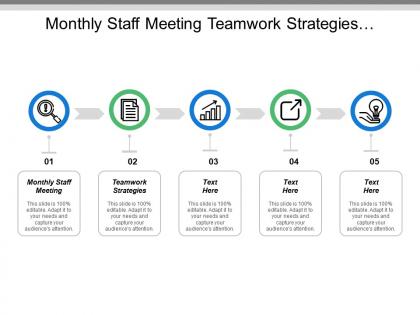
Download our monthly staff meeting teamwork strategies employee engagement recession planning PowerPoint slide. The presentation template helps you to show the information related to the importance of team meetings in the corporate growth. Today it is quite essential for the business management team to take inputs from their team managers and executives as every individual bring some new ideas that can add value to the business. Our PPT design provides you an access to the design that can produce the best results in highlighting the value of business meetings. Teamwork is required to achieve the goals and objectives set by the board of directors and that can only be achieved if give them the importance and make them feel valued. This PowerPoint diagram comes with professionally designed icons that helps to communicate the message in the most effective manner. Besides this, you can also use it to present the message of employee engagement in the business unit. Download it and let it share your communication. For more designs, visit our website. Create the ideal impression with our Monthly Staff Meeting Teamwork Strategies Employee Engagement Recession Planning. You will discover the appropriate images.
People who downloaded this PowerPoint presentation also viewed the following :
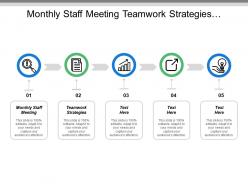
Monthly staff meeting teamwork strategies employee engagement recession planning with all 5 slides:
Extra dimensions get exposed with our Monthly Staff Meeting Teamwork Strategies Employee Engagement Recession Planning. They ensure awareness gets a big boost.


FAQs for Monthly staff meeting teamwork strategies employee
Honestly, it comes down to a few basics. Everyone needs to know what they're doing and when stuff's due - sounds obvious but you'd be amazed how often that gets skipped. Regular check-ins help catch problems before they blow up. Trust matters way more than people think too. If someone can't speak up when things are going sideways, you're screwed. Someone's gotta make decisions when the team gets stuck (doesn't have to be the "official" leader). Oh and that psychological safety thing? Actually works, not just corporate fluff. Next time you start a project, talk through this stuff upfront instead of hoping it'll magically work out.
Dude, it's crazy how much better things get when you mix different skill sets. Your developer catches technical stuff early. Meanwhile, your designer's already thinking about whether users will actually get it - which honestly, they usually don't if it's too complicated. Marketing folks see roadblocks the analyst completely missed. It's like... you know when you're too close to something and can't see the obvious solution? That's what happens when everyone thinks the same way. Each person fills in gaps others don't even realize exist. Seriously, next time you're stuck, grab someone from totally different department and watch what they notice first.
Honestly, teams fall apart without decent communication. You'll avoid so much drama if everyone knows what's going on - like, half the workplace conflicts I've seen could've been prevented with a simple heads up. Regular check-ins keep people aligned on goals and actually make teammates feel valued (which matters more than people think). Trust builds naturally when you're transparent about stuff. Don't wait for things to blow up either - ask questions early, address weird vibes before they turn into real problems. It's really just about making communication a normal thing, not this big formal process.
Honestly, you've gotta overcommunicate everything when you're remote - it feels weird at first but trust me. Set up weekly coffee chats that aren't about work stuff, use video calls whenever you can because seeing faces actually matters more than I thought it would. Write everything down so nobody's wondering what the hell is going on. Also establish response time expectations upfront - like, nobody expects instant Slack replies at 9pm, you know? The easiest thing? Just ask your team what's bugging them. They'll give you the real answers way faster than trying to guess what's broken.
Honestly, good team vibes can totally make or break your project. Like, when everyone actually talks to each other and has each other's backs, decisions happen way faster. Bad dynamics though? Ugh, everything slows to a crawl. People get into stupid conflicts, start doing their own thing, and the good ones just mentally check out. Oh, and problem-solving gets so much better when people aren't afraid to speak up or call out dumb ideas. My advice? Put in the work early to actually build relationships and figure out how you'll communicate. Trust me, it's worth it later.
Don't let conflicts fester - tackle them early. Get everyone together and focus on the actual problem, not who's being annoying (trust me, personality stuff derails everything). Listen to both sides without picking favorites. Then guide them toward what they actually agree on and what goals they share. Honestly, most of the time both people have decent points. Set clear expectations going forward. Check back in later to see if your solution actually stuck, because sometimes it doesn't and you'll need round two.
Dude, this might sound boring but defining roles upfront is honestly huge. You avoid all those "wait, weren't you doing that?" disasters. Nobody duplicates work or steps on each other's toes. People actually know what they're supposed to deliver instead of just wandering around confused. I learned this the hard way on a project last year - total mess because we skipped this step. Now I literally write down who's doing what before we start anything. Sounds nerdy but it works. Check back on it when things get chaotic too.
Dude, culture is literally everything for keeping people motivated. I've seen teams with amazing projects fall apart because everyone hated working together. Good culture makes people actually want to show up and do their best work. Bad culture? Forget it - doesn't matter how cool the job is, people will check out mentally. Look at how your team talks to each other and celebrates stuff. Those little moments add up way more than you'd think. When people feel safe speaking up and actually like their coworkers, engagement goes through the roof. Simple as that.
Honestly, when things get crazy you actually need to talk MORE, not less - sounds backwards but trust me on this. Quick check-ins keep everyone aligned instead of people just assuming we're all thinking the same thing (spoiler: we're not). Be super clear about who's doing what so you don't end up with three people doing the same task or nobody handling something important. Don't pretend the pressure isn't there either. Your team knows it's stressful, so just acknowledge it. Oh and stay calm yourself - that stressed-out energy is contagious and spreads fast.
Honestly, start with Slack or Teams for messaging - way better than drowning in emails. Asana and Trello are solid for tracking who's doing what (Monday.com's pretty good too but costs more). Google Workspace is clutch if people need to edit stuff together in real-time. Zoom's obviously still king for video calls. My advice? Don't try to implement everything at once or your team will hate you. Pick whatever fixes your biggest headache first, then add more tools later. We made the mistake of rolling out like 4 platforms simultaneously and it was chaos for weeks.
Honestly, consistent feedback is a game-changer for teams. People know exactly where they stand instead of guessing, so they can adjust things before problems get bigger. I think of it like... you wouldn't drive cross-country without checking your route, right? Same principle. Your team starts feeling safer about admitting when they're stuck because you're not waiting months to have these conversations. Accountability just happens naturally when expectations aren't a mystery. Oh, and don't try covering everything at once - pick one thing for weekly check-ins. Way less overwhelming.
Honestly, team-building stuff works way better than people think. Your team starts trusting each other more and figures out how everyone actually works. Makes everything smoother when you're grinding on real projects. People literally enjoy coming to work more when they're tight with their teammates - I've watched it completely flip how teams operate. Communication improves, drama dies down faster, and everyone's got each other's backs during crunch time. Oh and conflicts? They sort themselves out quicker too. Start simple though - maybe grab lunch together monthly or throw in a quick game during meetings.
Honestly, it all comes down to showing people how their specific talents actually matter for the team goal. Give everyone ownership of something they're genuinely good at, but don't let them operate in silos - that's where teams fall apart. I learned this the hard way lol. Check in regularly so you can hype up individual wins while keeping everyone focused on the shared objective. What works is assigning clear personal responsibilities that obviously contribute to team milestones. People need to feel invested in their own piece AND accountable to the group.
Honestly, emotional intelligence is huge for teamwork. You've gotta be able to read people's moods and handle conflicts without making things weird. Nobody wants that teammate who just bulldozes through conversations, you know? When you can pick up on social cues and manage your own reactions, everything flows better. Trust builds faster too. I've noticed teams with high EI just... work. They communicate without all the drama. Oh, and start small - just watch how people react when you're talking in meetings. You'll catch on pretty quick to what lands and what doesn't.
Dude, you should totally do debriefs after projects wrap up. Like within a week while everything's still fresh, you know? Maybe 30 minutes max. The whole point is figuring out what worked and what was a disaster - basically building your own cheat sheet for next time. Make sure nobody feels like they're gonna get thrown under the bus though. People need to feel safe being honest about the messy stuff. I always think of it like those post-game breakdowns, except thankfully there's no video evidence of your failures! But seriously, it's how teams actually get better instead of just repeating the same mistakes over and over.
-
Very well designed and informative templates.
-
Excellent products for quick understanding.