

New product detailed cost analysis powerpoint presentation slides




Try Before you Buy Download Free Sample Product
 Impress Your
 Audience
 100%
100% Editable
 Save Hours
 of Time


Determine the ways to manage the overall cost of the product with the aid of our informative New Product Detailed Cost Analysis PowerPoint Presentation Slides. You can show the process of estimating the cost of the new product by using this content ready product development costing techniques PPT theme. With the help of a product cost management strategy presentation template, you can explain in brief about the production & operational cost analysis of a particular item. Use product launch cost PowerPoint graphics and showcase the step-by-step guideline to create a cost-benefit analysis chart. Take the assistance of the product cost assessment presentation slides and highlight the cost & benefit of a new product. Employ this professionally designed cost management strategy PowerPoint layout and make a plan to enhance the financial stability of your organization in the market. Therefore, download our ready-to-use marketing cost analysis PPT deck and outline the tools and techniques that help to diversify and develop your market position.
People who downloaded this PowerPoint presentation also viewed the following :
Content of this Powerpoint Presentation
Slide 1: This slide introduces New Product Detailed Cost Analysis. State your company name and begin.
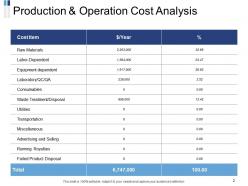
Slide 2: This slide depicts Production & Operation Cost Analysis.
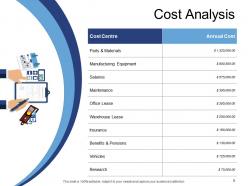
Slide 3: This slide presents Cost Analysis.
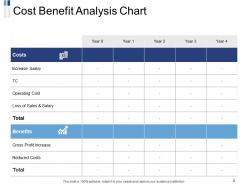
Slide 4: This slide represents Cost Benefit Analysis Chart. This slide is 100% editable. Adapt it to your needs and capture your audience's attention.
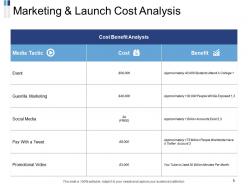
Slide 5: This slide showcases Marketing & Launch Cost Analysis.
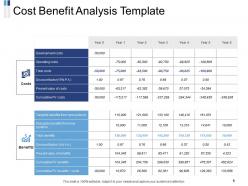
Slide 6: This slide depicts Cost Benefit Analysis.
Slide 7: This slide showcases Cost & Benefits of New Product including- Benefits, Revenue Increasing, Increased Productivity, Cost Decreasing, Decreased Attrition.
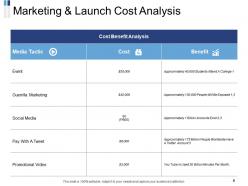
Slide 8: This is another slide showcasing Marketing & Launch Cost Analysis.
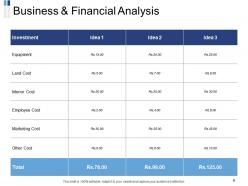
Slide 9: This slide depicts Business & Financial Analysis.
Slide 10: This is New Product Detailed Cost Analysis Icons Slide.
Slide 11: This slide shows time for Coffee Break.
Slide 12: This slide is termed as Additional Slides for moving forward.
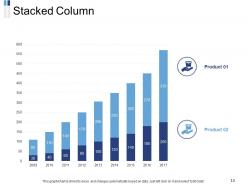
Slide 13: This slide represents Stacked Column chart.
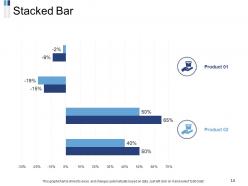
Slide 14: This slide presents Stacked Bar chart.
Slide 15: This slide represents Quotes.
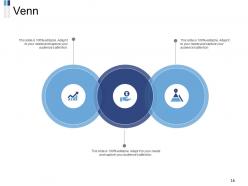
Slide 16: This is Venn slide.
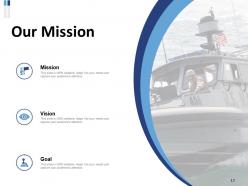
Slide 17: This is Our Mission slide with Mission, Goal,and Vision.
Slide 18: This is Puzzle slide with text boxes.
Slide 19: This is Our Team slide with names and designation.
Slide 20: This slide contains Important Notes.
Slide 21: This is Thank You slide with Email address, contact numbers and address.
New product detailed cost analysis powerpoint presentation slides with all 21 slides:
Use our New Product Detailed Cost Analysis Powerpoint Presentation Slides to effectively help you save your valuable time. They are readymade to fit into any presentation structure.







FAQs for New product detailed cost analysis
A comprehensive cost analysis should include direct costs like materials and labor, indirect costs such as overhead and utilities, opportunity costs, risk assessments, and timeline considerations. These elements enable organizations to evaluate true project profitability by capturing hidden expenses, resource allocation impacts, and potential market delays, ultimately delivering accurate budgeting and strategic decision-making capabilities.
Understanding fixed vs. variable costs enables businesses to make strategic pricing decisions, optimize production levels, and accurately forecast break-even points across different operational scenarios. This distinction helps management allocate resources efficiently, evaluate cost structures during scaling, and determine profitability thresholds, with many organizations finding that clear cost categorization ultimately delivers better budget control and competitive pricing strategies.
Cost estimation best practices include defining project scope clearly, using historical data from similar projects, applying multiple estimation techniques like analogous and parametric methods, and incorporating risk buffers. These approaches enable project managers to create realistic budgets by analyzing past performance, current market conditions, and potential uncertainties, ultimately delivering more accurate financial planning and improved stakeholder confidence.
Cost analysis contributes to effective budgeting and forecasting by providing detailed breakdowns of historical spending patterns, identifying cost drivers, and revealing efficiency opportunities across operational areas. Through systematic expense evaluation, organizations can create more accurate budget projections, anticipate seasonal fluctuations, and allocate resources strategically, ultimately enabling better financial planning and competitive positioning.
Cost analysis plays a crucial role in supply chain management by identifying inefficiencies, optimizing vendor selection, evaluating transportation routes, and determining optimal inventory levels across the entire network. Through detailed cost breakdowns, organizations streamline procurement decisions, negotiate better contracts, and enhance operational efficiency, with many companies finding that strategic cost analysis delivers significant savings and competitive advantage in increasingly complex markets.
Technology and software enhance cost analysis accuracy by automating data collection, eliminating manual calculation errors, and providing real-time financial tracking across multiple projects simultaneously. Advanced analytics platforms enable organizations to process vast datasets, identify cost patterns, and generate precise forecasts, with many companies finding significantly improved budget accuracy and strategic decision-making capabilities.
Effective break-even analysis methods include contribution margin calculations, cost-volume-profit modeling, sensitivity analysis, scenario planning, and fixed versus variable cost segregation. These approaches enable organizations to determine profitability thresholds by analyzing unit economics, pricing strategies, and operational scaling points, with many businesses finding that comprehensive break-even modeling ultimately delivers strategic insights for investment decisions and competitive positioning.
External economic factors significantly influence cost analysis outputs by affecting material prices, labor costs, currency exchange rates, interest rates, and supply chain dynamics. These fluctuations require organizations to incorporate economic forecasting models, adjust pricing strategies, and implement risk management frameworks, with many businesses finding that regular economic monitoring ultimately delivers more accurate cost projections and strategic advantage.
Common cost analysis pitfalls include underestimating hidden costs, relying on outdated data, ignoring indirect expenses, failing to account for inflation, and excluding opportunity costs. These oversights can significantly skew business decisions, with many organizations finding that comprehensive analysis frameworks, regular data validation, and cross-departmental input ultimately deliver more accurate financial projections and strategic advantage.
Cost-benefit analysis supports investment decisions by quantifying financial returns, assessing risk factors, comparing alternative opportunities, and establishing clear ROI timelines. Through systematic evaluation of projected costs against expected benefits, organizations can prioritize strategic investments, allocate resources efficiently, and minimize financial exposure, ultimately delivering data-driven decision-making that enhances competitive positioning.
Techniques include transparent communication of methodologies, involving stakeholders in assumption development, presenting multiple scenarios with clear trade-offs, and providing regular progress updates with preliminary findings. This collaborative approach builds trust and ownership, with many organizations finding that early stakeholder engagement reduces resistance to final recommendations, ultimately streamlining decision-making processes and enhancing project success rates.
Cultural factors significantly influence cost analysis in multinational operations through varying labor expectations, regulatory compliance requirements, communication styles, and business practices across regions. These differences affect everything from workforce productivity calculations to vendor negotiations, with many global companies finding that standardized cost models must be adapted to reflect local market realities, ultimately delivering more accurate budgeting and competitive positioning.
Life cycle costing provides comprehensive cost visibility across a product's entire lifespan, from development and manufacturing to maintenance and disposal, enabling strategic decision-making and resource allocation. This approach helps organizations minimize total ownership costs, optimize design choices, and enhance competitive positioning, with many manufacturers finding that early-stage cost analysis ultimately delivers significant savings and improved profitability.
Historical data improves cost estimate reliability by identifying spending patterns, seasonal fluctuations, vendor pricing trends, and resource utilization rates across previous projects. Through comprehensive analysis of past expenditures, organizations can calibrate forecasting models, minimize budget variances, and enhance predictive accuracy, with many financial teams finding that data-driven estimates reduce cost overruns by identifying recurring expense patterns.
Post-analysis metrics include actual versus estimated costs, timeline adherence, resource utilization rates, quality indicators, and variance percentages across project phases. These tracking mechanisms enable organizations to refine future estimating accuracy, identify systematic biases in forecasting methods, and enhance overall project financial performance, with many companies finding that consistent monitoring reduces cost overruns by twenty to thirty percent.
-
The content is very helpful from business point of view.
-
Very unique, user-friendly presentation interface.
-
The Designed Graphic are very professional and classic.
-
Easily Understandable slides.
-
The content is very helpful from business point of view.