


Présentation PowerPoint de la proposition de projet d'ONG





Try Before you Buy Download Free Sample Product
 Impress Your
 Audience
 100%
100% Editable
 Save Hours
 of Time


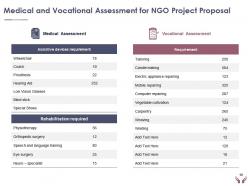
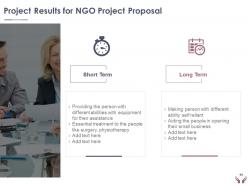
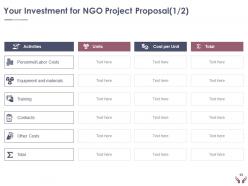
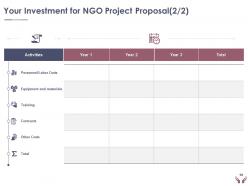
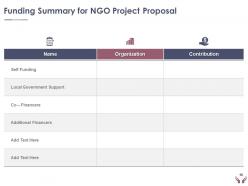
Convaincre votre agence donatrice d'investir dans votre projet en incorporant ces diapositives de présentation PowerPoint de proposition de projet d'ONG. Effectuez une présentation innovante, pratique et méthodologique en utilisant ce modèle de proposition de financement prédéfini pour le modèle PPT d'ONG. Nous vous présentons une mise en page PPT conçue de manière professionnelle pour vous présenter et présenter vos offres d'une manière qui plaira à vos bailleurs de fonds. Expliquez vos intentions et fournissez des solutions valables à divers problèmes socio-développementaux, quelle que soit la taille de votre ONG. Liez directement la vision et les objectifs de votre organisation à votre déclaration de besoin reflétant votre expertise. Donnez aux autorités concernées un aperçu détaillé de vos nobles entreprises et de vos principales activités. Élaborez davantage sur vos services et discutez de votre processus d'évaluation médicale et professionnelle. Avec l'aide de cette mise en page de proposition d'échantillon d'ONG PowerPoint, vous pouvez discuter des résultats à court et à long terme du projet pour gagner la confiance de votre bailleur de fonds. Vous pouvez également énumérer diverses dépenses telles que les frais généraux, les coûts de formation, les coûts de personnel et de main-d'œuvre dans cette infographie PPT et les présenter à vos bailleurs de fonds. Cela les aidera à décider de l'investissement qu'ils souhaitent faire dans votre projet. De plus, ce thème de PPT de financement bien documenté servira de garantie que votre projet est à la fois réalisable et durable, aidant ainsi à attirer davantage d'investissements. Outre son utilité, la proposition de projet ppt se compose de diapositives modifiables, vous pouvez donc la personnaliser en fonction de vos besoins et exigences commerciaux. Chaque composant, de la couleur au texte, peut être modifié pour donner une touche personnelle à votre présentation. Ainsi, captez l'attention de votre donateur et attirez plus de fonds en téléchargeant cette présentation visuelle de proposition de subvention PowerPoint en un seul clic.
People who downloaded this PowerPoint presentation also viewed the following :
Contenu de cette présentation Powerpoint
Considérez ceci : Vous dirigez une ONG et prévoyez de lancer un projet environnemental axé sur la promotion de pratiques durables. Sensibiliser à l'importance de protéger les ressources naturelles est un autre objectif important. Votre projet vise à organiser des ateliers éducatifs, des événements de nettoyage et à mettre en place des programmes de recyclage.
Mais, pour que cette initiative prenne vie, vous avez besoin d'une proposition complète et structurée afin d'obtenir des financements. Une proposition de projet mettrait en évidence les stratégies et les activités à entreprendre, les installations de recyclage, le calendrier du projet, le budget couvrant les coûts opérationnels, l'équipement, etc.
En un mot, une proposition de projet d'ONG est la pierre angulaire pour obtenir des fonds, rassembler le soutien des parties prenantes et rationaliser la mise en œuvre du projet. Elle souligne l'engagement de l'entreprise à résoudre un problème et sa capacité à exécuter la solution proposée. La proposition décrit les objectifs du projet, les méthodologies et met en avant l'expérience et l'engagement de l'ONG en matière de transparence.
Ces modèles PowerPoint pré-conçus sont 100% modifiables et personnalisables. Ils offrent un coup de pouce bienvenu pour rédiger la proposition. Explorons quelques-unes des diapositives du bundle !
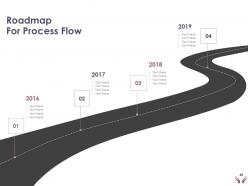
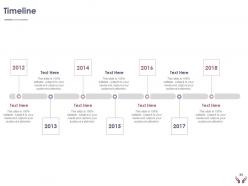
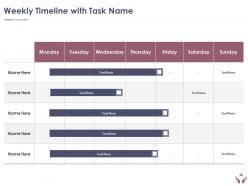
Diapositives de présentation PowerPoint pour le projet d'ONG avec les 32 diapositives :
Utilisez nos diapositives de présentation de projet d'ONG pour vous aider efficacement à économiser votre temps précieux. Elles sont prêtes à s'intégrer dans n'importe quelle structure de présentation.




FAQs for NGO Project Proposal
Okay so you definitely need a solid problem statement first - that's your foundation. Build your objectives around that with actual measurable stuff, not vague goals. Budget breakdown has to be realistic (I've seen people blow this part). Your methodology should walk them through exactly how you're gonna pull this off. Team qualifications matter more than you'd think - funders want to know you can actually deliver. Timeline with real milestones, not just "phase 1, phase 2" nonsense. Oh and the sustainability piece is huge - they hate funding one-time things that die off. Executive summary goes at the top but honestly? Write it last once you know what you're actually proposing.
Dude, you've gotta be way more specific about your audience. Like instead of "vulnerable women," try "single mothers aged 18-35 in rural areas without bank access." I've seen tons of proposals fail because they're too vague here. Get the actual numbers - population size, income, education levels. Why does this exact group need help? And honestly, the "how you'll reach them" part is huge. Are you going through community centers? Local churches? Existing programs? The more concrete details you give about who you're serving and where to find them, the better your chances.
Honestly, mixing data types works best for this. Get your hard numbers first - surveys, census data, existing studies that prove the problem's real. But don't stop there. Add some human voices through interviews or focus groups with the actual people you're trying to help. That combo of stats plus real stories? Pure gold for funders. Map out your key stakeholders too, and if you've done any gap analysis, throw that in. The whole point is proving you didn't just wake up one day and decide there's a problem. Oh, and cite everything properly - funders love seeing you've actually done the legwork.
Okay so the logframe is huge - like, make-or-break huge. Start with your main goal at the top, then work down through objectives, outputs, activities. Each piece should connect logically to the next one above it. I've literally watched solid projects tank because their logframe was all over the place. Your indicators need to actually be measurable (none of that vague "improved wellbeing" stuff), and there has to be a clear line from activities → outputs → objectives → goal. Draft it early but expect to mess with it constantly as your idea evolves. Oh, and don't overthink the formatting initially - focus on getting the logic right first.
Okay so basically you want SMART objectives - specific, measurable, achievable, relevant, time-bound. Take your big goal and break it into maybe 3-5 concrete pieces that actually support it. Use strong verbs like "increase" or "establish" instead of wimpy stuff like "improve." Honestly, I cringe when I see proposals saying "enhance community wellbeing" - like what does that even tell me? Way better to write "train 200 women in financial literacy skills within 18 months." Each objective should connect to your activities and have clear timelines. That way funders can actually track if you're hitting your targets or just spinning wheels.
Honestly, stakeholder engagement can make or break your whole proposal. You've got to bring in beneficiaries, local partners, donors, community leaders right from the start. Otherwise you're just guessing at what people actually need. I've watched so many projects crash because someone thought they knew better than the community they were trying to help - big mistake. Get them involved in shaping the project design and you'll spot real problems, create realistic timelines, build actual ownership. Plus funders love seeing genuine community buy-in. Map out your key people early and have real conversations with them. Surveys are lazy engagement, honestly.
Okay so SMART metrics are your friend here - you want actual numbers with deadlines. Like "train 200 teachers in 18 months" or bump literacy rates by 15%. Impact stuff is honestly way harder since you're basically predicting the future. I'd grab baseline data and plan follow-up surveys. Logic models help connect your activities to results (sounds fancy but it's just mapping cause and effect). Mix hard numbers with stories and case studies - funders eat that up. Oh and definitely cite similar projects to back up your estimates. Nobody wants to fund what looks like random guessing.
Break your budget into personnel, equipment, operations, and indirect costs. Don't go too granular though - I've watched people submit 20-page budgets that nobody actually reads. Your costs need to match up with your project timeline and activities. Always throw in a 10-15% buffer because trust me, something will definitely go sideways. Double-check your indirect rate matches what they allow. Oh, and get someone else to look it over before you submit - you'll miss obvious math errors that fresh eyes catch immediately.
Start by figuring out what could actually tank your project - funding gets cut, key staff quit, local politics shift, or the community pushes back. Don't go crazy listing every possible thing though. Pick the ones that would really mess you up and rank them by how likely they are vs. how badly they'd hurt. Build your backup plans into the project from the beginning. Diversify where your money comes from, make solid local connections, have Plan B ready to go. Being ahead of problems beats scrambling later (learned that one the hard way). Document it all clearly so funders see you're not just winging it.
Start with a real person's story, not boring stats. Show them exactly how you changed someone's life, then throw in your numbers after. Nobody wants to read an academic paper - trust me on this one. Make sure you've actually researched what the funder cares about and connect your project to their goals. Short paragraphs are your friend. Get someone outside your org to read it first because you're probably using way too much jargon without realizing it. Oh, and end each section telling them what you want them to do next.
Okay so first thing - stalk their website like crazy. I know it's boring but check out what they funded recently and write down the exact words they keep using. Those buzzwords matter more than you think! Your proposal should basically speak their language and show how your project hits their goals. Don't waste time trying to make something fit if it obviously doesn't though - find someone who actually wants what you're doing. Oh and at the end of each section, spell out exactly how this helps their mission. They shouldn't have to guess.
Okay so the biggest mistake? Being super vague about results - funders hate "we'll help people" type stuff. They want actual numbers and outcomes. Also don't assume you know what communities need without asking them first (trust me on this one). Your budget shouldn't be weirdly low either - makes you look clueless, not budget-conscious. Copy-pasted proposals are obvious and awful. Realistic timelines matter too because if you overpromise and can't deliver, you're basically screwed for future funding. Oh, and always start with proper needs assessment - everything builds from there.
Start building your M&E into the project design right away - seriously, don't wait until the end. Funders want concrete metrics they can actually track, so pick indicators that clearly connect to your outcomes. I've watched too many proposals crash because the M&E looked rushed. Budget for it properly (evaluation isn't free), include your data collection methods, and assign clear responsibilities. Oh, and spell out how you'll actually use the data to make improvements. Collectors who just gather info for reports? Yeah, donors see right through that.
Oh man, sustainability is HUGE for NGO proposals. Funders basically want proof your project won't just crash and burn once their cash disappears. Build local capacity from day one - train community folks, get governments on board, maybe find ways to generate some revenue. I actually think this is where most proposals mess up honestly. Don't just mention it in passing either. Write a whole section about your exit strategy and be super specific about how you'll hand everything over. Show them exactly how the project keeps running without you there holding it together.
Dude, stories are everything in proposals. Yeah, stats matter, but people remember Maria going from broke single mom to running her own business through your program. That's what gets donors emotionally hooked. Paint the picture with real details - show the before and after. I always tell people to think of donors wanting to see themselves as the hero of the story, you know? Lead with something compelling that makes them care, then hit them with your data to prove it works. Trust me, it's way more effective than just throwing numbers at them.
-
Great quality slides in rapid time.
-
Excellent template with unique design.