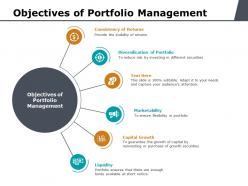
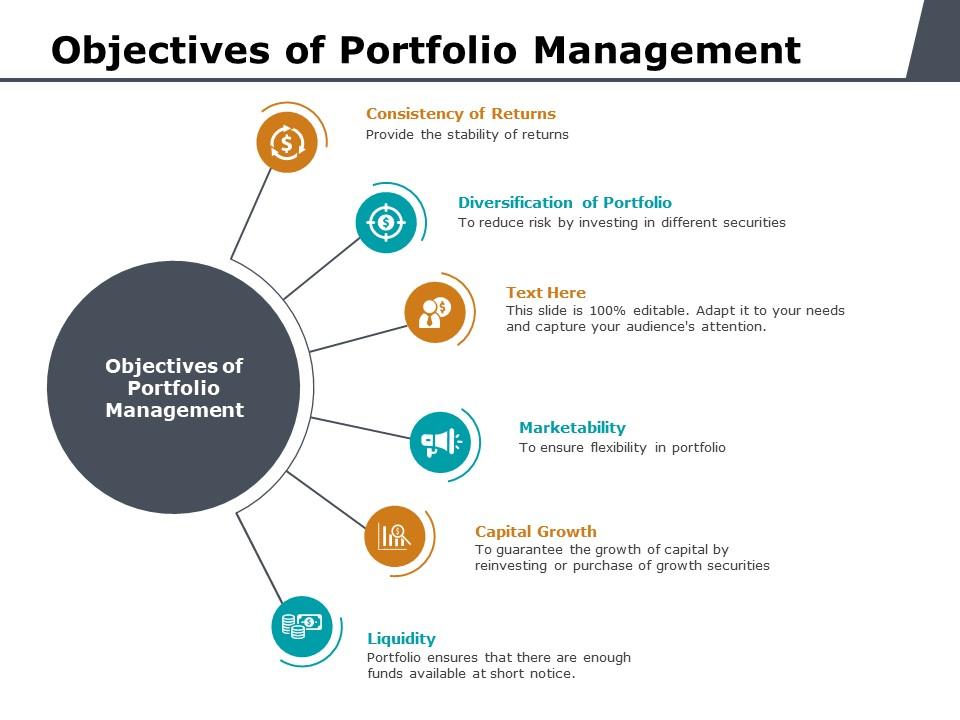
Objectives of portfolio management ppt powerpoint presentation deck
Try Before you Buy Download Free Sample Product
Audience
Editable
of Time
Our Objectives Of Portfolio Management Ppt Powerpoint Presentation Deck are like an access card. They help entry into the minds of your audience.
People who downloaded this PowerPoint presentation also viewed the following :
Objectives of portfolio management ppt powerpoint presentation deck with all 5 slides:
Our Objectives Of Portfolio Management Ppt Powerpoint Presentation Deck are guaranteed to capture everyone's gaze. It will generate curiosity.
FAQs for Objectives of portfolio management ppt
Honestly, it's all about making money without going crazy from stress. Don't put everything in one stock or whatever - spread it around different stuff. Your timeline matters a ton too, like if you need cash in 2 years vs 20 years, that changes everything. Risk tolerance is huge - some people can handle their portfolio swinging wildly, others can't. Oh and make sure some of your money stays accessible for emergencies and life stuff. I'd say figure out what you actually want first, then work backwards from there. That'll tell you how aggressive or conservative to be.
Basically you want to spread your money around different types of investments - stocks, bonds, maybe some international stuff. That way if one thing crashes, you're not totally screwed. I learned this the hard way watching my cousin lose half his savings on GameStop lol. The trick is picking things that don't all tank together. Like when tech stocks are down, maybe energy or healthcare are doing okay? You gotta check your mix every few months and rebalance if needed. Look at what you have now - are you too heavy in one sector or company?
Basically, portfolio management helps because you're spreading risk around instead of betting everything on one thing. When markets go crazy, you won't get completely destroyed. You can also move money between different assets when opportunities pop up - like if bonds are looking better than stocks for a bit. The rebalancing thing is pretty smart too, since you end up buying more when prices drop and selling when they're high. Way better than just randomly picking stocks and hoping for the best, honestly. Yeah it takes discipline, but that beats panicking every time the market has a bad day.
So diversification is your best friend for managing risk without killing your returns. Spread your money across different stuff - asset classes, sectors, different countries. That way if one thing crashes, it won't wreck everything. I know it's super cliché, but don't put all eggs in one basket, you know? The trick is finding balance. You want enough variety to smooth out the crazy ups and downs, but not so much that you water down your good picks. Honestly, most people mess this up by going too extreme either way. Check your portfolio right now - do you have too much in one area? That's usually where problems start.
Dude, you gotta adjust your whole game plan based on what the market's doing. Bull markets? Go aggressive with growth stocks, take some risks. When things turn bearish though, time to play defense - bonds, dividend stocks, maybe keep some cash around. It's honestly like driving in different weather conditions, you know? Volatile periods mean rebalancing more often and spreading stuff across different regions or asset classes. Don't get too attached to one strategy when the market's screaming at you to pivot. Flexibility is everything - I learned that the hard way a few years back.
Honestly, emotions mess with portfolio goals way more than people realize. Your clients will say they're fine with risk, then freak out the second their account drops 20%. Fear and greed totally override logic. I've seen it happen so many times. Cognitive biases make people think they want one thing when they actually need something completely different for long-term success. You've got to factor in all this behavioral stuff when you're setting expectations - return targets, timelines, risk levels. Build something they won't abandon during rough patches. What looks perfect on spreadsheets doesn't mean much if they can't handle the volatility.
Think of your portfolio like a GPS for your money - gotta know where you're headed first. Retirement, house down payment, kids' college fund, whatever. Then match your investments to your timeline and how much risk you can stomach. Needing cash in 5 years for a house? Don't go crazy with risky growth stocks. Set some milestones along the way and shift your mix as deadlines get closer. Oh, and actually review this stuff regularly - I'm terrible at remembering to do it, but your priorities change over time. Rebalancing keeps everything on track.
ROI is your bread and butter - start there. Then compare how you're doing against the S&P 500 or whatever benchmark makes sense for your stuff. Sharpe ratio helps you see if you're getting decent returns for the risk you're taking. I'd also track your max drawdown because nobody likes seeing how badly things tanked during rough patches. Volatility matters too, plus correlation between your holdings so you're not accidentally buying the same thing five different ways. Alpha and beta are handy once you get the hang of this - honestly the math can be a pain but the insights are worth it. Build up to the fancy metrics gradually.
So asset allocation is just how you split up your money between different types of investments - stocks, bonds, whatever. Want growth? Go heavier on stocks. Need income? More bonds and dividend stuff. Honestly, this decision matters more than most people realize. You've gotta match it to how much risk you can handle and when you need the money back. Otherwise you're basically gambling, which... I mean, some people are into that but probably not with retirement funds lol. It's like your master plan that everything else builds on.
So active management is when fund managers try beating the market by picking stocks and timing trades - they think they can outsmart everyone. Passive just tracks an index, no fancy moves. Active costs way more in fees since someone's constantly making decisions. With passive you're buying the whole market basically, so it's cheaper and you don't have to think about it much. Honestly depends if you think these managers can actually beat the market after you pay their fees. Most research shows they can't do it consistently long-term, but hey, some people still swear by it.
Honestly, just stay flexible with your mix and rebalance when things shift. Inflation hitting? Maybe bump up commodities or real estate. Recession vibes? I usually move toward boring stuff like utilities - they're not sexy but they hold up. Don't try timing everything perfectly though, that's a fool's game. Watch interest rates, job numbers, GDP trends for clues. The hardest part is not panicking when everything's going crazy. I do a portfolio check every three months or so. Works better than constantly tweaking things based on whatever drama's happening that week.
Look, rebalancing basically keeps your portfolio from going completely off the rails. Your investments perform differently over time - stocks might crush it while bonds sit there doing nothing. Before you know it, you've got way more risk than you actually wanted because your allocation drifted from the original plan. I check mine every quarter and rebalance back to target percentages. Sell some of what's been winning, buy what's been lagging. Honestly feels backwards but it works. You can also set thresholds - like if anything moves 5% off target, time to rebalance.
Honestly, tech tools can seriously improve your returns by giving you real-time data that would take forever to crunch by hand. AI helps with better asset allocation and spots market trends early. Robo-advisors will automatically rebalance everything based on your rules - which is pretty sweet if you ask me. You can also backtest strategies against old data so you're not just guessing. Oh, and the risk monitoring happens 24/7 without you lifting a finger. I'd start with simple portfolio tracking software first, then add the fancy analytics once you get the hang of reading all that data.
Look, client interests come first - always put them before your commission, even when it stings your wallet. Be upfront about fees and risks, don't hide conflicts of interest. Honestly, too many advisors still push garbage products that pad their own pockets instead of helping clients. Think about what you're actually investing in too - are these companies treating workers decently? Match the risk level to what each person can actually handle, not whatever's trending on social media. Oh and document everything so you can explain your reasoning later if someone asks.
So regulations basically dictate what you can prioritize when managing portfolios. Banks have to hit certain capital ratios. Pension funds deal with fiduciary duties. The rules are different if you're handling retail money versus institutional - retail has way stricter suitability requirements. Honestly, it's annoying but makes sense for protecting investors. You end up balancing risk and returns totally differently depending on who's watching over your shoulder. My advice? Figure out your regulatory constraints before setting any objectives. Trust me, it'll save you from major headaches down the road when compliance comes knocking.
No Reviews