


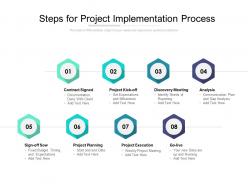
Steps for project implementation process





Try Before you Buy Download Free Sample Product
 Impress Your
 Audience
 100%
100% Editable
 Save Hours
 of Time


Your thoughts and our Steps For Project Implementation Process will make a great ensemble. They will win the prize hands down.
People who downloaded this PowerPoint presentation also viewed the following :
Steps for project implementation process with all 2 slides:
Put your ideas up on the mast. Raise the ensign with our Steps For Project Implementation Process.
FAQs for Steps for
Dude, seriously - figure out your project scope first before you do anything else. What does "done" actually look like? Get your key people on board early because changing minds later is such a pain. Also check your budget, timeline, and team situation upfront. Do a quick scan for potential problems that could bite you later. Oh, and make sure you don't need any weird approvals or permits - learned that one the hard way on my last project! I'd honestly just make a simple checklist of this stuff and get your sponsor to sign off. Saves you so much drama down the road.
Okay so basically you want to set specific, measurable goals upfront - like "cut processing time by 30%" or "hit 95% user satisfaction." Don't just go with vague stuff like "finish on time." Here's why it matters: without clear criteria, everyone judges success differently and you'll get into stupid arguments later about whether it actually worked. Plus it stops scope creep dead in its tracks. Honestly, I've seen too many projects where nobody could agree if they'd "won" or not. Write down your criteria, get the important people to sign off, then keep referencing them throughout. Saves so much headache.
Honestly, stakeholder engagement can make or break your whole project. Keep everyone in the loop with regular check-ins - seriously, schedule them from day one and don't skip them. I've watched projects crash because someone didn't tell the right person about a change (yeah, been there). Get their input on big decisions and actually listen when they raise concerns. Managing expectations is huge too. Oh, and catch issues early by staying in touch consistently. It sounds obvious but you'd be surprised how many people mess this up. Communication really is everything here.
So risk assessment is basically your early warning system - helps you catch problems before they torpedo your whole project. You can spot stuff like resource conflicts or technical snags way ahead of time. Then build in some buffer time and backup plans. Think of it like checking the weather before a road trip, you know? Way better than scrambling when everything goes sideways later. Just make a list of what could go wrong in each phase, then rank by how likely and how bad. Focus your energy on the scary-likely combo stuff first. Honestly saves you so much stress down the road.
Track your delivery stuff first - budget, schedule, scope creep, defect rates. Then business metrics like user adoption and performance gains. Honestly though, don't go crazy with tracking everything or you'll hate your life. Pick maybe 5-7 that your stakeholders actually care about. I set up a simple dashboard that updates weekly so I can catch problems before they blow up. The whole point is having data that helps you make real decisions, not just endless reports that nobody reads anyway.
Start with figuring out what everyone's actually good at - not what their job title says they should do. Then look at your task list and see who's truly available (because we both know Jim says he's free but he's drowning in that other project). Put your best people on the stuff that'll break everything if it goes wrong. Honestly, I always add extra time because nothing ever goes according to plan. Check in with everyone weekly since priorities change constantly and you'll need to shuffle things around. The whole thing's basically organized chaos, but it works if you stay on top of it.
Pick your communication tools on day one and actually use them - Slack, Teams, whatever works for your team. Daily standups or weekly calls depend on how fast things are moving. Honestly, I've watched so many projects crash because someone thought everyone else was telepathic! Document the big decisions somewhere people can find them later. Be upfront about response times and when people need to show up. Oh, and make sure your team knows who handles what issues. The biggest thing though? Don't let people feel stupid for asking questions. Trust me, fixing small confusion beats dealing with disasters.
Think of it like a three-legged stool - mess with one leg and the whole thing wobbles. First thing? Figure out what absolutely can't change (usually money or deadlines, let's be honest). Then get brutal about prioritizing features. I swear, half the disasters I've seen happen because teams think they can magically fit everything in. When scope creep shows up - and it will - give clear choices: more time, more cash, or we're cutting the nice-to-haves. Write it all down so nobody can claim they "forgot" later. Have these talks early, not when you're already drowning.
Honestly, start with the basics - Trello or Asana are solid for tracking tasks and deadlines. Slack keeps everyone on the same page (though sometimes I swear it creates more noise than clarity). Google Workspace is clutch for docs and sharing stuff. If your project gets really complex, maybe look at Jira later. Oh, and Notion's pretty cool if you're into that all-in-one workspace vibe. But seriously, don't go crazy with too many tools right off the bat - your team will hate you for it. Pick like two max and see how it goes.
Honestly, just bake the feedback into your regular schedule instead of treating it like an afterthought. Weekly retrospectives work great, or do check-ins at major milestones. I always cringe when teams wait until the very end to ask "how'd we do?" - by then it's way too late to fix anything that went sideways. Get input from everyone: users, sponsors, your actual team members. The trick is responding to what people tell you pretty quickly. Otherwise they'll stop bothering to give you honest feedback because they think you're not really listening anyway.
Dude, scope creep will absolutely destroy you if you're not watching for it. Write everything down - and I mean everything - because people conveniently "forget" what they originally asked for. Set up regular check-ins so problems don't blindside you later. Resource constraints are brutal too, but honestly that's just project life. Build extra time into your schedule because stuff always breaks. I learned this the hard way on my last project when our main developer got sick for two weeks. Start each week by spotting your biggest risk and deal with it before it explodes.
Team dynamics? They literally make or break projects. Good communication and trust means you'll actually hit deadlines and solve stuff faster. But when it's toxic - oof, that's where everything falls apart. I've watched solid projects crash just because people couldn't work together. Poor communication = missed requirements, wasted effort, everyone pulling in different directions. Build psychological safety from day one. Let people give honest feedback without drama, make roles crystal clear, and jump on conflicts fast before they mess up your whole timeline. Sounds touchy-feely but it works.
Honestly, timelines are what save projects from turning into total chaos. Start with your end date and work backwards - that's usually the most realistic approach. Break everything into milestones first, then get specific with deliverables and deadlines. Always build in buffer time because stuff will take longer than you think. Dependencies are huge too - people need to know what has to happen before they can start their part. Oh, and don't forget to assign clear owners for each task. The whole team should be able to see it, and you've got to keep updating it regularly or it becomes useless.
Think of documentation as your project's brain dump - capture decisions, weird fixes, and why you built things a certain way. Six months later when you're staring at some random code wondering "what was I thinking??" you'll be so grateful it's written down. Requirements, design choices, testing steps - document it all as you go instead of scrambling at the end. New team members will actually understand what's happening, and honestly, it makes troubleshooting way less painful. Plus it's clutch for future projects when you can't remember how you solved similar problems before.
Honestly, just bake the feedback loops right into your process instead of waiting for some big post-mortem. Weekly check-ins are clutch - get your team talking about what's actually broken before it gets worse. Track your metrics as you go, not at the end when it's too late to fix anything. Plan-Do-Check-Act works great for bigger deliverables. Oh, and make sure people can flag issues without getting blamed for it (learned that one the hard way). Try starting each sprint planning with "what's one thing we can tweak this round?" Small changes add up fast.
No Reviews