Website design project implementation process

Rating:
87%
Website design project implementation process
Slide 1 of 2
Favourites Favourites

Try Before you Buy Download Free Sample Product

Audience Impress Your
Audience
Editable 100%
Editable
Time Save Hours
of Time
The Biggest Sale is ending soon in
0
0
:
0
0
:
0
0
Rating:
87%
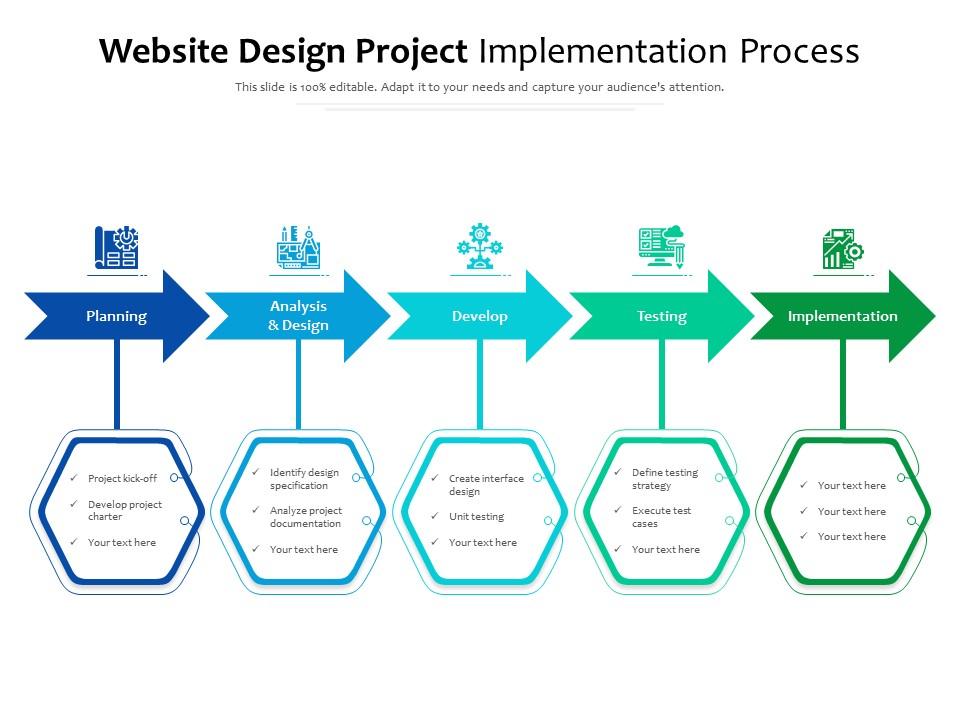
Presenting our set of slides with name Website Design Project Implementation Process. This exhibits information on five stages of the process. This is an easy to edit and innovatively designed PowerPoint template. So download immediately and highlight information onPlanning, Identify Design Specification, Create Interface Design, Define Testing Strategy, Analysis And Design, Develop.

FAQs for Website design

Website design project implementation includes discovery and planning, wireframing and prototyping, visual design development, content creation, development and coding, and testing phases. These phases streamline project delivery by establishing clear requirements, creating user-focused designs, and ensuring functionality, with many organizations finding that structured implementation reduces timeline delays while delivering enhanced user experiences and competitive advantage.

Defining project scope involves establishing clear objectives, target audience parameters, functional requirements, content specifications, and technical constraints through comprehensive stakeholder consultations and documentation. This strategic planning phase enables design teams to align expectations, allocate resources effectively, and minimize scope creep, with many organizations finding that detailed upfront scoping reduces project timelines and delivers more focused user experiences.

User personas serve as foundational guides throughout website design implementation, informing navigation structure, content strategy, visual hierarchy, functionality requirements, and user experience decisions. These detailed user profiles enable design teams to create targeted interfaces, streamline user journeys, and prioritize features effectively, with many organizations finding that persona-driven design significantly enhances user engagement and conversion rates.

Wireframes and prototypes enhance design workflow by streamlining communication between stakeholders, reducing revision cycles, and enabling early user testing before development begins. These visualization tools help design teams iterate quickly, identify usability issues in advance, and secure client approval more efficiently, with many agencies finding that this structured approach ultimately reduces project timelines and development costs significantly.

Project management tools for website design include Asana, Trello, Monday.com, Figma, Adobe Creative Suite, and Slack for team collaboration. These platforms streamline workflow coordination, design asset management, and client communication, with many agencies finding that integrated toolsets reduce project timelines by 30-40% while enhancing creative collaboration and ultimately delivering faster launches.

Stakeholder feedback can be effectively integrated through structured review cycles, collaborative design workshops, real-time feedback tools, and iterative prototyping sessions. These approaches streamline communication by establishing clear feedback channels, setting defined review milestones, and implementing version control systems, ultimately ensuring stakeholder alignment while maintaining project momentum and delivering designs that meet business objectives.

Responsive web design best practices include mobile-first approach, flexible grid systems, scalable images, touch-friendly navigation, and optimized loading speeds. These techniques streamline user experiences by ensuring consistent functionality across devices, improving accessibility, and reducing bounce rates, with many e-commerce and service organizations finding that responsive implementation significantly enhances customer engagement and conversion rates.

Feature prioritization involves evaluating user needs, business goals, technical feasibility, and resource constraints through frameworks like MoSCoW method or user story mapping. Development teams typically focus on core functionality first, followed by user experience enhancements and visual refinements, with many agencies finding that iterative releases enable faster feedback loops and ultimately deliver more effective outcomes.

Effective team collaboration strategies include establishing clear communication protocols, implementing collaborative design tools, defining role responsibilities, conducting regular progress reviews, and creating shared documentation systems. These approaches streamline workflows by enabling real-time feedback, maintaining design consistency, and facilitating seamless handoffs between developers and designers, with many organizations finding that structured collaboration ultimately delivers faster project completion and enhanced creative outcomes.

SEO consideration during website design is crucial because it establishes technical foundations, user experience optimization, and content architecture that directly impact search rankings. Integrating SEO from the design phase enables faster loading speeds, mobile responsiveness, and strategic keyword placement, with many businesses finding that early SEO integration delivers significantly better organic visibility and user engagement than retrofitting later.

Website testing should incorporate usability testing, A/B testing, cross-browser compatibility checks, mobile responsiveness validation, and load performance analysis. These methodologies streamline user experience optimization by identifying navigation bottlenecks, optimizing conversion paths, and ensuring seamless functionality across devices, with many organizations finding that comprehensive testing ultimately delivers higher engagement rates and competitive advantage.

Post-launch maintenance can be planned through scheduled content reviews, regular security updates, performance monitoring, user feedback analysis, and technology upgrades. Many organizations establish quarterly design assessments and monthly technical maintenance cycles, with retail and service companies finding that proactive update schedules enhance user experience, reduce downtime costs, and maintain competitive digital presence.

Website design project success metrics include user engagement rates, conversion rates, page load speeds, bounce rates, and mobile responsiveness scores. These measurements enable organizations to assess user experience improvements, business goal achievement, and technical performance optimization, with many companies finding that tracking these metrics together delivers comprehensive insights into both customer satisfaction and competitive advantage.

Accessibility standards significantly influence website design implementation by requiring inclusive navigation structures, alt-text protocols, color contrast compliance, and keyboard functionality integration from the project's initial phases. These requirements streamline development workflows through systematic testing procedures and universal design principles, with many organizations finding that accessibility-first approaches ultimately deliver broader user reach, enhanced SEO performance, and reduced post-launch remediation costs.

Common pitfalls include inadequate planning, scope creep, poor communication between stakeholders, insufficient user testing, and neglecting mobile responsiveness. These challenges can derail timelines and budgets, with many organizations finding that establishing clear requirements, regular milestone reviews, and comprehensive testing phases ultimately delivers smoother implementations and better user experiences.

Ratings and Reviews

87% of 100
Review Form
Write a review
Most Relevant Reviews
  1. 80%

    by Don Hansen

    Excellent work done on template design and graphics.
  2. 100%

    by Dwight Pena

    Unique design & color.
  3. 80%

    by Del Holmes

    Innovative and Colorful designs.

3 Item(s)

per page: