Sample work plan with project proposal and objectives

Rating:
80%
Sample work plan with project proposal and objectives
Slide 1 of 5
Favourites Favourites

Try Before you Buy Download Free Sample Product

Audience Impress Your
Audience
Editable 100%
Editable
Time Save Hours
of Time
The Biggest Sale is ending soon in
0
0
:
0
0
:
0
0
Rating:
80%
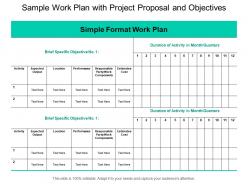
Presenting this set of slides with name - Sample Work Plan With Project Proposal And Objectives. This is a two stage process. The stages in this process are Work Plan, Action Plan, Work Strategies.

People who downloaded this PowerPoint presentation also viewed the following :

Content of this Powerpoint Presentation

In today’s dynamic business environment, it is crucial to execute projects for the success of your organization. Careful planning, executing and monitoring of projects are time and cost-efficient as well as help in getting desired results. Creating an outline for project proposals helps create a structured approach, which eventually enhances efficiency, foster collaboration, and inspire team members to complete tasks within deadline. Every company has the requirement to create a framework for work plans and project proposals.

Download our strategic work plan templates if you desire to develop and create a work plan for your projects!!!

SlideTeam has made the task easy by designing a sample work plan and project proposal PPT Template, which will undoubtedly help you create the right outline for the work plan for projects in your company. You can plan a structured approach for implementing project proposals and achieve those within the desired timeline. Through this slide, you can plan activities and have an overview of their performance and the costs associated with them.

Explore our PPT templates if you want to plan for the projects for a year!!

Template 1: Sample Work Plan with Project Proposal and Objectives

These slides will provide you an outline of your objectives along with tables. In each table, you can highlight the total two activities under the objectives, expected outputs, location, performance, responsible party or work components, and estimated cost. These slides will also provide you with the duration of activities in months and quarters and how much time will be taken to complete the desired outcome. Grab these PPT slides to make your work plans and project proposals attractive and effective.

In conclusion, these work plan templates provide you a design framework and timeline for activities planned for projects. Project leaders can demonstrate objectives of activities, expectations, and costs associated with each activity, as well as the responsibilities and performance of the action plans. Creating an outline for the work plan is essential for any organization.

PS Grab our work plan templates if you desire to plan your company's projects strategically!!

FAQs for Sample work plan with project

So you need clear objectives first - what exactly are you trying to pull off? Then map out a realistic timeline with actual milestones, not just random dates. Budget and resources are huge too. I learned this the hard way when I forgot to account for software licenses once, ugh. Be crazy specific about deliverables - vague descriptions will bite you later. Your approach/methodology matters, and definitely nail down who's doing what (stakeholders love clarity here). Think through potential roadblocks ahead of time. Success metrics are clutch so everyone agrees on what "finished" actually means. Honestly, just grab a basic template and tweak it for each project.

Honestly, work plan proposals are game-changers. They map out your milestones, timelines, and who's doing what before you even start. No more scrambling halfway through when you realize you forgot something obvious. Stakeholders eat this stuff up too - they love seeing everything organized upfront. It's basically like having directions instead of just hoping you'll figure it out as you go. I mean, you *could* wing it, but why make life harder? Trust me, try it on your next project and you'll actually enjoy the process for once.

Break it down into smaller chunks first. Map out what depends on what - like you can't test until you build, obviously. Then estimate each piece, but here's the thing: add 20-30% buffer time because stuff ALWAYS takes longer than expected. Check when your team's actually available too - I learned this the hard way when half my people were out for vacation I forgot about. Get someone who's done similar projects to sanity-check your timeline. Start with your best guess, then pad it. Trust me on the padding part.

Honestly, stakeholder input changes everything about how you write your work plan. Get them involved early and you'll catch things you'd totally miss - like budget limits or weird operational stuff that could derail you later. Each group cares about different things too. Finance obsesses over costs, operations wants realistic timelines, users just want something that actually works. It's kind of annoying to coordinate sometimes, but trust me - getting their buy-in upfront saves you from so much drama during execution. Just figure out who you need input from first, then work their feedback right into your proposal.

Honestly, just focus on three big ones: timeline, budget, and quality scores. Those tell you everything about whether your plan actually worked or totally flopped. I'd throw in stakeholder satisfaction too - like, quick surveys or whatever - because perfect execution doesn't mean squat if people hate the result. Resource utilization is solid for seeing if you used your team efficiently, though I sometimes forget to track that one. Don't go crazy with metrics though. Pick maybe 4-5 max that actually matter for your specific thing. Weekly dashboard keeps you sane and lets you fix stuff before it all goes to hell.

Dude, trust me on this - visuals are a game changer for work plans. Nobody wants to read through paragraphs of text (I sure don't). Throw in some charts for timelines and flowcharts to show how stuff connects. Your stakeholders can actually see what's happening instead of digging through walls of text. Budget breakdowns work great as pie charts too. I always start simple with a basic timeline, then add team responsibility charts if needed. People will actually pay attention to your presentation instead of zoning out. Way better than drowning everyone in bullet points and hoping they stay awake.

Your budget is literally what makes or breaks your proposal - it proves you actually know what you're talking about instead of just guessing. Break everything down: staff costs, materials, overhead, the works. I always add 10-15% extra because trust me, stuff will go sideways. It also shows why certain tasks need the time and resources you're asking for. Decision-makers want to see you've done your homework on current rates and thought through the real scope. Without a solid budget, even the best ideas look sketchy.

Okay so first thing - brainstorm everything that could screw you over. Budget issues, people quitting, tech breaking, scope getting out of hand. Whatever makes you panic at 2am, write it down. Then figure out your backup plan for each thing with actual steps, not just "we'll handle it." I'm obsessed with those probability vs impact grids because they're way easier for people to understand than paragraphs of text. But here's the thing - don't just dump problems on them. Show you've got realistic fixes ready. Makes you look like you actually thought this through instead of just crossing your fingers.

So here's what actually works when pitching work plans. Start by showing them exactly what they'll get - like real numbers and outcomes, not fluffy promises. Address the obvious concerns right up front too, because honestly, you'll save yourself from those annoying email threads later. Include concrete timelines and milestones so people can actually picture how this thing unfolds. The trick is connecting every task to why it matters for the business. Don't just dump a to-do list on them. Wrap up with a clear "what happens next" so the conversation doesn't just die there.

You've got to connect your work plan directly to whatever your company's big goals are. First figure out which strategic priorities your project actually supports. Then copy-paste those exact objectives right into your proposal - I know it sounds super basic but people forget this constantly! Structure everything so your deliverables clearly feed into those outcomes. Your metrics need to match what the bosses care about too. The whole thing should read like "we do this task, and boom - here's the business result you'll see." Makes getting approval so much smoother when they can see that direct line.

Honestly, check if they already have templates first - saves you so much headache. But if you're building from scratch, just hit the basics: executive summary, objectives, what you're actually delivering, timeline with key dates, resources needed, and budget. Don't overthink the formatting! I've watched people spend hours making it look perfect while the content stays mediocre. Bullet points are your friend. Add visual timelines if you can swing it. Oh, and make your deliverables super specific - none of that vague "improve processes" nonsense. Clear beats pretty every time.

Honestly, getting everyone involved early makes such a difference for work proposals. Shared docs are perfect for real-time editing - no more version control nightmares. Project management tools help track who's doing what and when. Video calls work best for brainstorming sessions where you actually need to bounce ideas around (though let's be real, some meetings could've been emails). The game-changer is having everything in one spot instead of hunting through endless email threads. Oh, and don't go overboard - pick maybe 2-3 tools tops. Get your team used to them first, then tackle the proposal writing.

Dude, follow-up is everything. Seriously - it's what makes the difference between proposals that actually go somewhere and ones that just die in someone's inbox. You've got to stay on top of people, track what's happening, make sure stuff gets done on time. Otherwise your whole plan just becomes another PDF gathering digital dust. I learned this the hard way, honestly. Regular check-ins help you spot problems before they blow up your timeline. Set yourself calendar reminders - weekly works for most things, maybe every two weeks if it's longer-term. Shows you're not just good at writing pretty documents but actually care about getting shit done.

Honestly, just bake feedback sessions right into your timeline from the start. I learned this the hard way - always add buffer time after big deliverables because something will need tweaking. Set up weekly team check-ins or bi-weekly client reviews, whatever works. Be super specific about what kind of input you want each time though. Don't just say "let me know what you think" - that's useless. The trick is being proactive instead of waiting for random comments to trickle in. Structure it properly and you'll save yourself so much headache later.

You want stuff that connects activities to real results - reviewers eat that up. I'd dig into successful grant proposals from nonprofits or check out project plans from tech companies that actually made it big. Simple Gantt charts beat complicated spreadsheets every time, honestly. Nobody wants to decode your masterpiece. The good ones show resource allocation right away and have backup plans built in. Sure, Asana and Monday.com have decent templates, but studying proposals from your actual industry? That'll give you way better insight than generic examples. Oh, and make sure timelines don't look completely insane.

Ratings and Reviews

80% of 100
Write a review
Most Relevant Reviews
  1. 80%

    by Dante Wells

    Attractive design and informative presentation.
  2. 80%

    by Clark Ruiz

    Wonderful templates design to use in business meetings.

2 Item(s)

per page: