


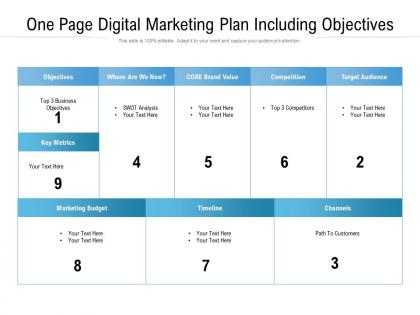
One page digital marketing plan including objectives




Try Before you Buy Download Free Sample Product
 Impress Your
 Audience
 100%
100% Editable
 Save Hours
 of Time


Our One Page Digital Marketing Plan Including Objectives are topically designed to provide an attractive backdrop to any subject. Use them to look like a presentation pro.
People who downloaded this PowerPoint presentation also viewed the following :
One page digital marketing plan including objectives with all 2 slides:
Use our One Page Digital Marketing Plan Including Objectives to effectively help you save your valuable time. They are readymade to fit into any presentation structure.
FAQs for One page digital marketing
So you'll want clear goals and KPIs first - honestly most people skip this step and regret it later. Research your audience and check what competitors are doing. Pick 2-3 channels max to start (social, email, SEO, whatever fits) rather than spreading yourself thin everywhere. Content strategy and budget allocation come next. Timeline with milestones helps too. Attribution tracking is huge - that's where everyone screws up! Oh, and build in crisis protocols plus regular review periods. Document it all somewhere your team can actually access and update as you figure out what works.
Honestly, I used to make my audiences way too broad and couldn't figure out why nothing worked. Start with the obvious stuff - age, location, income. Then get into their actual problems and where they spend time online. Check your analytics to see who's already engaging with you, or just ask your current customers directly. I usually create like 2-3 detailed personas (yeah, with fake names and everything - sounds cheesy but it works). Once you know exactly who you're talking to, picking the right platforms becomes so much easier. Don't try to appeal to everyone or you'll end up reaching no one.
Think of SEO as the thing that makes everything else you do actually work. People find your stuff organically, which feeds your social media and email list. Your paid ads get better too because you'll know which keywords actually convert. Unlike most marketing where you stop paying and it dies immediately, SEO keeps bringing traffic for months or years. Honestly, it's one of the few things that gets stronger over time. Figure out what your people are searching for first - that's where I'd start. Then just create content around those terms.
Honestly, social media is like the glue that holds all your other marketing stuff together. Share your blog posts there, run some targeted ads, chat with people - it all feeds back into growing your email list and getting more website conversions. The audience data you pull from these platforms? Super helpful for everything else you're doing. I'd focus on matching your posts to whatever your main business goals are instead of just throwing random content out there. Oh, and it's obviously great for getting your brand out there and driving traffic too.
Honestly, don't overcomplicate this. Pick conversion rate, customer acquisition cost, and return on ad spend as your main three. Website stuff like bounce rate matters too, but those core ones will tell you if you're actually making money. Social media followers are basically meaningless - I learned that the hard way. Focus on real engagement instead. Email metrics like open rates are solid indicators too. Oh, and lifetime value if you can track it properly. Just stick to 3-5 metrics max that actually connect to revenue. Otherwise you'll drown in data and get nowhere.
Honestly, monthly check-ins are way better than quarterly if you can manage it. Things change so fast online - new algorithms, platforms popping up, people's habits shifting. Waiting three months? You're gonna miss stuff. Do quick monthly reviews of your main numbers and how campaigns are doing. Then every quarter, dive deeper and actually tweak your strategy and budgets. Oh, and set those calendar reminders right now or you'll totally space it. Teams that adapt quickly always crush the ones still using some dusty plan from January.
Here's what I'd focus on for your marketing budget breakdown: Put most of your money (like 60-70%) into paid ads - Google, Facebook, that stuff. It's honestly where you'll see results fastest. Then grab about 20% for all those tools you'll need - analytics software, email platforms, Canva subscriptions. Those SaaS fees sneak up on you, trust me. Save 10-20% for creating content. Could be hiring writers, buying stock photos, whatever. Oh and definitely add an extra 15% cushion for testing random new channels that catch your eye. You'll thank me later.
Think of content marketing as just one piece of your digital marketing puzzle. Digital covers the whole thing - ads, email, social, all that stuff. Content is more about making cool blogs, videos, whatever that people actually want to read or watch. Here's where it gets smart though: you take one blog post and chop it up for Instagram stories, newsletters, maybe even ad copy. Honestly, most brands are terrible at this repurposing thing. Map out how each piece of content can hit multiple channels. That's how you actually get your money's worth instead of just throwing content into the void.
Okay so for digital marketing you'll definitely need Google Analytics - that's like your bread and butter for tracking stuff. I'd grab Hootsuite or Buffer for scheduling social posts because manually posting is such a pain. Email wise, HubSpot's amazing but pricey, so maybe start with Mailchimp? Oh and Google Ads Editor if you're doing paid search. Asana keeps my team from losing their minds with project management. Honestly just start with the free versions first - you can always upgrade later once you figure out what you actually use.
Email marketing is honestly where the magic happens - it's like having a direct hotline to your customers. I'd start with automated welcome emails and those cart abandonment ones that bug people when they almost buy something but don't. Those two alone will make a huge difference. The trick is segmenting your audience so you're not just blasting everyone with the same stuff. You can follow up on social media interactions, send targeted content based on what people looked at on your site. ROI is insane when you get it right. Way better than most other channels, trust me.
Honestly, most people overthink this stuff. Start with your keywords - go specific, not broad. Like "red running shoes size 10" beats "shoes" every time. Your ads need to match exactly what people searched for, none of that creative copywriter BS that sounds clever but confuses everyone. Landing pages have to connect to your ad or you're basically lighting money on fire. Oh, and set up conversion tracking immediately - I learned this the hard way when I couldn't tell which campaigns were actually making money. Begin small, test everything, then double down on what's working.
Dude, you absolutely have to make your stuff mobile-friendly. Most people are scrolling on their phones anyway. Test your website on your phone first - if those buttons are too tiny to tap or you're squinting at the text, your customers are gonna bounce immediately. Google actually ranks mobile-friendly sites higher too, which is nice. Your emails and social posts need to look decent on small screens. Oh, and page speed matters way more on mobile since people get impatient fast. I learned this the hard way when my site was basically unusable on phones for like two months.
Honestly, most people mess up by not knowing what they're actually trying to achieve. Like, they'll post random stuff then get frustrated when nothing happens. Resource constraints are brutal too - you're always short on time or money. And don't get me started on these platforms changing their rules constantly... I swear Facebook moves the goalposts just to mess with us. Data overwhelm is real - you'll have tons of numbers but zero clue which ones matter. Start with just 2-3 platforms max, pick metrics that actually connect to making money, and ignore the rest of the noise for now.
So analytics basically tells you what's actually working vs what's tanking. I'm always digging into Google Analytics (probably too much tbh) but you can see which channels bring in conversions, what content people engage with, and where they bail out. Watch your conversion rates, cost per acquisition, and traffic sources mainly. Like if email's killing it but your social posts are getting crickets, obviously throw more money at email. The data's only useful if you actually review it monthly and make changes though - I learned that one the hard way.
Definitely try voice search optimization and AI personalization first. Social commerce is killing it - people literally buy stuff without leaving TikTok now, which still feels weird to me but whatever works! Interactive AR/VR content is getting big too. Oh, and micro-influencers beat celebrities every time for engagement rates. Since cookies are dying, you gotta build your own data collection (the privacy-first way obviously). I'd honestly just pick two of these that make sense for your audience. Test small campaigns first though - don't blow your whole budget on something untested.
No Reviews