


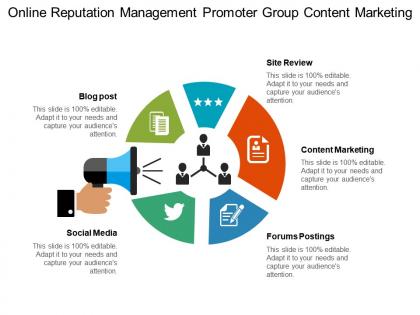
Online reputation management promoter group content marketing




Try Before you Buy Download Free Sample Product
 Impress Your
 Audience
 100%
100% Editable
 Save Hours
 of Time


Ensure you attract befitting candidates with our Online Reputation Management Promoter Group Content Marketing. Highlight the desired criteria.
People who downloaded this PowerPoint presentation also viewed the following :
Online reputation management promoter group content marketing with all 5 slides:
Get all the inputs from our Online Reputation Management Promoter Group Content Marketing. Acquire all the clues to finding the answer.

FAQs for Online reputation management promoter
Honestly, it's mostly about staying on top of three things. First, monitor everything - set up Google Alerts for your name and check review sites regularly. You'll want to catch problems before they blow up. When negative stuff does appear (because it always does), respond fast and keep it professional. Don't ignore it or you'll look sketchy. The proactive part is where most people slack off though - keep pumping out good content like blog posts and social updates. Bug your happy customers for reviews too. All that positive stuff naturally pushes the bad results down in search rankings.
Start with Google Alerts for your company name - super easy setup and it's free. Hootsuite or Sprout Social help track social media mentions, though honestly the free versions might be enough at first. Don't forget review sites like Yelp and Google Reviews. I'd spend maybe 15-20 minutes each morning just scanning through everything. Quick responses to complaints really matter, but also engage with the good stuff people say about you. The worst thing is letting negative feedback sit there and fester - I've seen that blow up on companies before.
Honestly, reviews can make or break you online. Most people check them before buying anything - I know I do. Good ones boost your credibility and help with search rankings too. Bad reviews? They'll scare customers away if you ignore them. You gotta stay on top of this stuff daily, which sounds annoying but it's worth it. Ask your happy customers to leave reviews, and always respond to the negative ones professionally. Maybe set up some kind of follow-up system after people buy from you.
Oh man, social media is honestly terrifying for brands but also amazing? Like you can build crazy loyalty through direct engagement and storytelling - plus stuff goes viral organically. But here's where it gets scary: one bad review or angry customer can literally tank you overnight. I've seen brands get completely destroyed by a single tweet that blew up. You really need to stay on top of mentions and respond fast when drama hits. Google alerts are clutch for this - also get some social listening tools so you're not blindsided. Just keep posting valuable content consistently.
So there's a bunch of ways to track this stuff. Google Alerts is free and decent for basic monitoring. For social media, Hootsuite and Sprout Social work pretty well. If you want something more heavy-duty, check out Brandwatch, Mention, or Brand24 - they'll crawl news sites, blogs, forums, the whole nine yards. Fair warning though, sentiment analysis is kinda wonky on most platforms, so take those results with a grain of salt. I'd probably start simple with Google Alerts plus maybe one social tool, see how much chatter you're actually getting, then level up if needed.
Don't let that bad review just sit there while you overthink your response - that's the worst move. Jump on it fast but keep it real. Own up to whatever went wrong and give them actual next steps, not some vague "we'll do better" nonsense. Try to get their contact info so you can hash it out privately instead of airing everything publicly. Here's the thing - even if their complaint seems totally unfair, other people are watching how you handle it. Stay calm, don't get defensive, and focus on fixing the problem rather than proving you're right.
Honestly, timing is everything with review requests - hit people up right after they get their order or when a project wraps up successfully. Send automated follow-up emails with direct links to Google, Yelp, whatever sites matter for your business. Throw in small incentives like discount codes or loyalty points because let's be real, people want something for their effort. Also think about creating those "Instagram-worthy" moments - cool packaging, little surprise touches that make customers naturally want to share. The whole point is catching them when they're genuinely happy with what you delivered.
Dude, SEO is huge for managing your reputation online. Google someone's name and whatever pops up first? That's what people believe about them. You can actually push positive stuff - good reviews, articles, your website - higher up in results. Negative content gets buried on page 2 where honestly nobody bothers looking. I mean, when's the last time you clicked to page 2 of Google results? Keep posting fresh, positive content consistently and you're basically controlling your own story instead of just hoping for the best.
Honestly, your website is like your digital handshake - people judge you within seconds. Slow loading or messy design? They'll bounce thinking you're sketchy. Typos and random content kill trust faster than anything. But here's the thing - good design with smooth navigation actually keeps people around longer. Quality content that makes sense helps too. I mean, you wouldn't show up to a client meeting looking sloppy, right? Same energy applies online. Just match whatever vibe you'd bring in person.
Honestly, you gotta be super careful here because going after truthful reviews - even brutal ones - is protected speech and you can't legally force removal. Fake positive reviews or threatening people? That stuff usually blows up in your face and breaks FTC rules anyway. If you're dealing with actual lies though, document everything and use the platform's reporting tools instead of making legal threats. I'd focus more on getting real positive reviews and responding professionally to complaints. Way less headache that route, trust me.
Working with influencers is honestly a game-changer for your brand's rep online. Their followers already trust them, so when they recommend your stuff, it feels way more real than regular ads. You want to find people whose vibe matches your brand - micro-influencers are actually better than the mega ones since their engagement is usually stronger. Don't micromanage them either. Let them tell your story their way because that's what makes it feel authentic. Oh, and it helps push down any negative search results too, which is a nice bonus.
Honestly, just be real with people online. Nobody trusts those perfect, polished brands anymore - we can all smell the BS from a mile away. When you mess up, own it. Show the messy behind-the-scenes stuff sometimes. People connect with authenticity way more than they do with some fake corporate image. Like, I've seen businesses bounce back from major screw-ups just because they were honest about what happened instead of making excuses or going silent. Don't be afraid to let your personality show through - that human element is what actually builds trust these days.
Honestly, don't treat crisis management as this separate beast - just build it into whatever reputation monitoring you're already doing. Get alerts set up for nasty comments or complaint spikes so you catch stuff early. Speed matters most here. Pick specific people to handle different crisis types and let them actually respond without jumping through approval hoops (that's where companies usually screw up). Your regular rep team should handle crises too since they know your brand voice anyway. Templates are fine but God, customize them - the generic ones are painfully obvious. Run fake scenarios every few months or you'll panic when real drama hits.
Definitely set up Google Alerts for your brand name first - that's like your early warning system. Check your star ratings on Google and Yelp monthly, plus track how fast you're responding to negative reviews (honestly, speed makes such a difference here). Social media sentiment is huge too - are people saying good or bad things about you? I'd also peek at where you rank when someone searches your brand name since that's what potential customers see. Oh, and if you can swing it, compare your "share of voice" to competitors. Sounds fancy but it's just how often you're mentioned vs them. Catch problems early before they blow up.
So your employees sharing stuff about work? That's like gold for your brand. People actually trust what employees say way more than whatever marketing puts out - which makes total sense if you think about it. Each person has their own friends and connections, so you're hitting all these different networks you'd never reach otherwise. The trick is making it super easy for them and not forcing anyone to participate (that gets weird fast). Just give them a bunch of ready-to-go posts, company updates, fun office photos - stuff they'd actually want to share. It's basically free advertising through people who genuinely work there.
-
Great product with effective design. Helped a lot in our corporate presentations. Easy to edit and stunning visuals.
-
Visually stunning presentation, love the content.