


Online travelling stats powerpoint guide





Try Before you Buy Download Free Sample Product
 Impress Your
 Audience
 100%
100% Editable
 Save Hours
 of Time


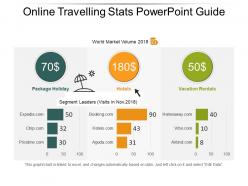
Use our, online traveling stats PowerPoint guide to reassemble your creative touch. Prepare your travel plans before and emit the travel agents. Compare various parameters involved in your tours and execute the best deal. Thee parameters are shown here as, holiday package, hotels, and vacation rentals. Compare the deals offered by various websites and guide your team or clients through the best. Describe your concept and interact with your market to reinforce your positioning, and for customer acquisition. Use this plan to group your ideas, theories, and theories into one large media base. Desist your search for the top PowerPoint Template representing your business and traveling concerns, begin your journey right away by downloading our, online traveling stats PowerPoint guide deck and reach potential customers. Our Online Travelling Stats Powerpoint Guide ensure intense concentration. Bring an end to distracting intrusions.
People who downloaded this PowerPoint presentation also viewed the following :
Online travelling stats powerpoint guide with all 5 slides:
Avoid any disturbance with our Online Travelling Stats Powerpoint Guide. They ensure calm all around.

FAQs for Online travelling
Approximately 60-70% of travelers now book trips online, with younger demographics reaching 80-90%, while traditional methods like travel agents serve around 30-40% of bookings, particularly for complex itineraries. This digital shift streamlines reservation processes, reduces costs, and enhances customer convenience, with airlines, hotels, and tour operators increasingly finding that online platforms deliver faster bookings and broader market reach.
COVID-19 dramatically shifted online travel booking patterns by accelerating contactless booking preferences, increasing flexible cancellation demands, and driving domestic travel surge while international bookings plummeted. The pandemic ultimately transformed traveler expectations toward digital-first experiences, real-time health information integration, and dynamic pricing models, with many travel platforms finding that enhanced safety communication and booking flexibility became essential competitive advantages.
The most popular online travel booking platforms include Booking.com, Expedia, Priceline, Airbnb, and Kayak, along with direct airline and hotel websites. These platforms streamline travel planning by offering comprehensive search capabilities, competitive pricing, and integrated services, with many travelers increasingly combining multiple platforms to secure optimal deals and experiences across accommodations, flights, and activities.
Millennials and Gen Z travelers, aged 25-40, represent the largest demographic using online travel services, accounting for over 60% of digital bookings globally. These tech-savvy generations leverage mobile apps, comparison platforms, and social media integration for trip planning, with many finding that digital-first approaches deliver faster booking experiences, personalized recommendations, and seamless travel management.
Mobile apps significantly influence online travel booking behavior by enabling instant price comparisons, providing personalized recommendations, offering real-time notifications, and streamlining the entire booking process through intuitive interfaces. These mobile platforms enhance customer experiences by delivering location-based deals, seamless payment integration, and 24/7 accessibility, with many travelers finding that app-exclusive offers and loyalty rewards ultimately drive faster booking decisions and increased brand loyalty.
Social media reviews significantly influence online travel decisions by providing authentic traveler experiences, visual content, real-time feedback, and peer recommendations that build trust and credibility. These platforms enable travelers to discover destinations, compare accommodations, and validate choices through community insights, with many finding that user-generated content and influencer partnerships ultimately drive booking confidence and reduce purchase anxiety.
The average conversion rate for travel booking websites typically ranges from 2-5%, with leading platforms achieving rates up to 8% through personalized experiences, streamlined checkout processes, and mobile optimization. Hotels and vacation rentals often see higher conversion rates than flights, while strategic pricing transparency, customer reviews, and targeted recommendations help travel companies maximize bookings and revenue per visitor.
Online travel prices are often lower than traditional travel agents due to reduced overhead costs, direct supplier relationships, and automated booking systems that eliminate commission markups. However, traditional agents can sometimes secure exclusive deals, package discounts, and personalized negotiations, with many travelers finding that comparing both channels delivers optimal pricing and service combinations.
Post-pandemic online travel trends include contactless booking experiences, flexible cancellation policies, sustainable travel options, personalized recommendations through AI, and integrated health safety information. These digital innovations streamline travel planning by reducing uncertainty, enhancing customer confidence, and delivering customized experiences, with many travel companies finding that flexible, tech-enabled services significantly boost customer retention and competitive advantage.
Asia-Pacific and Latin America demonstrate the highest growth in online travel bookings, driven by expanding internet penetration, rising middle-class populations, and increasing smartphone adoption. These regions benefit from growing disposable incomes, younger demographics embracing digital platforms, and improved payment infrastructure, with many travel companies finding that mobile-first strategies deliver significantly higher conversion rates and customer engagement.
Artificial intelligence has revolutionized personalized travel recommendations by analyzing user preferences, browsing history, and behavioral patterns to deliver highly targeted suggestions. Through machine learning algorithms, travel platforms like Expedia and Booking.com enhance customer experiences, increase booking conversions, and streamline decision-making processes, ultimately delivering more relevant options and improved customer satisfaction.
Flexible booking options become critically important to online travelers during uncertain times, with studies showing 78% prioritize free cancellation and rebooking policies when making travel decisions. These flexible policies enable travelers to book confidently despite potential disruptions, while travel companies offering such options see increased bookings and customer loyalty, ultimately delivering competitive advantage in volatile markets.
Credit cards, digital wallets like PayPal and Apple Pay, and buy-now-pay-later services represent the most preferred payment methods for online travelers. These options streamline booking experiences by offering fraud protection, instant confirmation, and flexible payment terms, with many travelers finding that multiple secure payment options ultimately enhance their confidence in completing reservations across various travel platforms.
Loyalty programs significantly enhance customer retention in online travel booking by offering personalized rewards, exclusive discounts, tier-based benefits, and seamless booking experiences. These programs enable travel platforms to increase repeat bookings, reduce acquisition costs, and build long-term customer relationships, with many hotels and airlines finding that loyal customers generate 40-60% higher lifetime value than non-members.
Key factors influencing customer satisfaction for online travel platforms include intuitive website navigation, transparent pricing, comprehensive search filters, reliable booking confirmations, and responsive customer support. These elements enhance user experiences by streamlining reservation processes, minimizing booking uncertainties, and building trust, with many travelers finding that platforms offering real-time availability and seamless mobile functionality ultimately deliver superior service experiences.
-
Unique design & color.
-
Attractive design and informative presentation.
-
Colors used are bright and distinctive.
-
Top Quality presentations that are easily editable.