


Optimization Of Restaurant Management Systems Powerpoint Presentation Slides




Try Before you Buy Download Free Sample Product
 Impress Your
 Audience
 100%
100% Editable
 Save Hours
 of Time


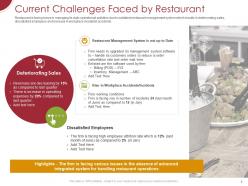
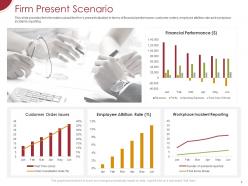
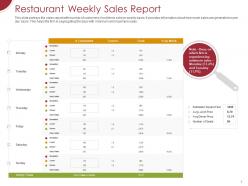
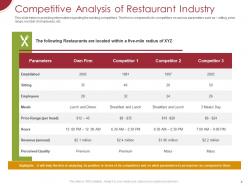
This template focuses on efficient handling of restaurant operations, staff management, enhancing food and safety standards, etc. The restaurant manager will present it to the top level management. The current scenario of the firm describes the current challenges the firm facing such as deteriorating sales leading to poor financial performance, restaurant management system is outdated leading to customer order issues, dissatisfied employees with high attrition rate, and increase in workplace accidents, etc. The firm will also analyze weekly sales reports, competitive analysis, etc. The firm will look for various solution for managing restaurant operations effectively by upgrading restaurant management system for data consolidation, improved point of sale system for smooth ordering process, managing inventory by stock tracking, handling staff for reducing employee attrition rate, improving food and workplace safety management, marketing management for customer engagement, etc. The firm will determine the impact of successful implementation of restaurant management system. It will also estimate firms financial performance by projecting income statement, cash flow, balance sheet and monthly sales forecast.
People who downloaded this PowerPoint presentation also viewed the following :
Content of this Powerpoint Presentation
Slide 1: This slide introduces Optimization of Restaurant Management Systems. State your Company name and begin.
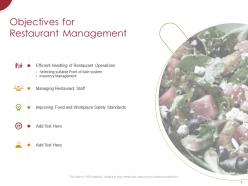
Slide 2: This slide displays Objectives for Restaurant Management.
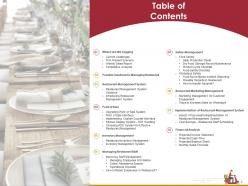
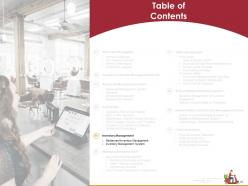
Slide 3: This slide displays Table of Contents of the presentation.
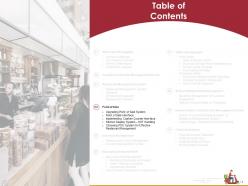
Slide 4: This slide displays Table of Contents.
Slide 5: This slide showcases Current Challenges Faced by Restaurant.
Slide 6: This slide shows Firm Present Scenario.
Slide 7: This slide showcases Restaurant Weekly Sales Report
Slide 8: This slide depicts Competitive Analysis of Restaurant Industry.
Slide 9: This slide displays the Table of Contents.
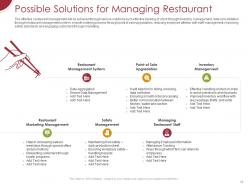
Slide 10: This slide represents Possible Solutions for Managing Restaurant.
Slide 11: This slide displays the Table of Contents of the presentation.
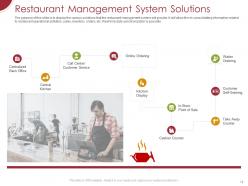
Slide 12: This slide depicts Restaurant Management System Solutions.
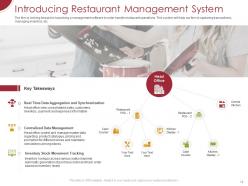
Slide 13: This slide depicts Introducing Restaurant Management System.
Slide 14: This slide displays the Table of Contents.
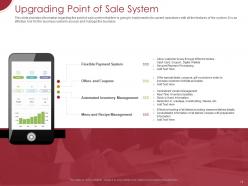
Slide 15: This slide provides information regarding the point of sale system that firm is going to implement in its current operations with all the features of the system.
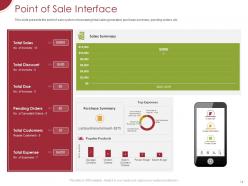
Slide 16: This slide shows Point of Sale Interface. This slide presents the point of sale system showcasing total sales generated, purchase summary, pending orders, etc.
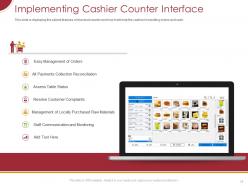
Slide 17: This slide is displaying the salient features of checkout counter and how it will help the cashier in handling orders and cash.
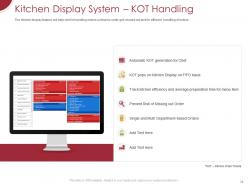
Slide 18: This slide showcases Kitchen Display System – KOT Handling. The kitchen display feature will help chef in handling orders so that no order get missed out and for efficient handling of orders.
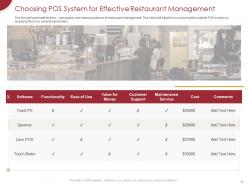
Slide 19: This slide describes about Choosing POS System for Effective Restaurant Management
Slide 20: This slide displays the Table of Contents.
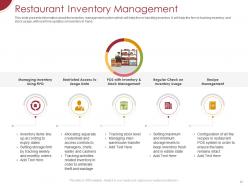
Slide 21: This slide depicts Restaurant Inventory Management.
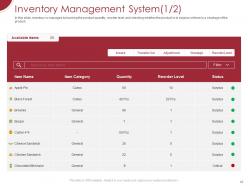
Slide 22: This slide displays Inventory Management System.
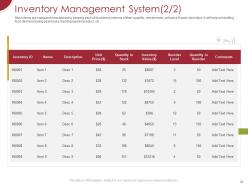
Slide 23: This slide presents Inventory Management System.
Slide 24: This slide displays the Table of Contents
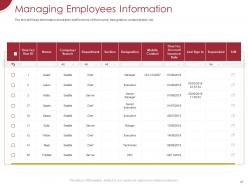
Slide 25: This slide describes about Managing Employees Information.
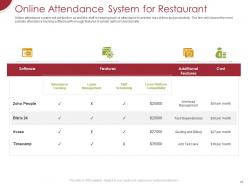
Slide 26: This slide depicts Online Attendance System for Restaurant.
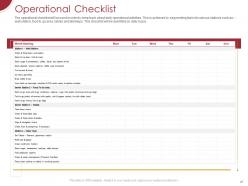
Slide 27: This slide showcases Operational Checklist.
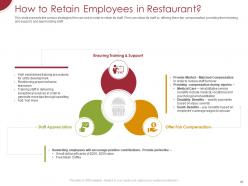
Slide 28: This slide describes How to Retain Employees in Restaurant?
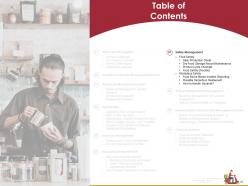
Slide 29: This slide displays the Table of Contents.
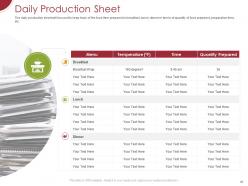
Slide 30: This slide presents Daily Production Sheet.
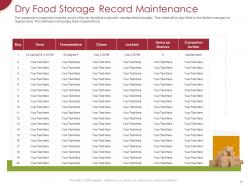
Slide 31: This slide showcases Dry Food Storage Record Maintenance.
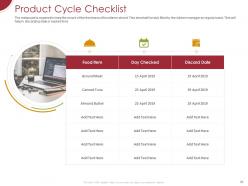
Slide 32: This slide is displaying Product Cycle Checklist.
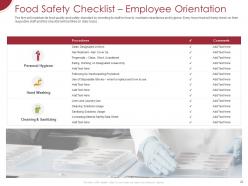
Slide 33: This slide displays Food Safety Checklist – Employee Orientation.
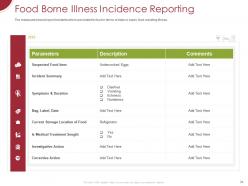
Slide 34: This slide describes Food Borne Illness Incidence Reporting.
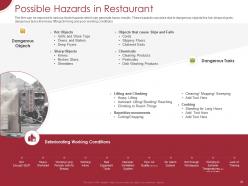
Slide 35: This slide showcases Possible Hazards in Restaurant.
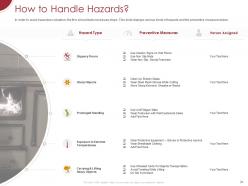
Slide 36: This slide explains How to Handle Hazards?
Slide 37: This slide displays Table of Contents.
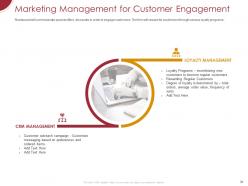
Slide 38: This slide shows Marketing Management for Customer Engagement.
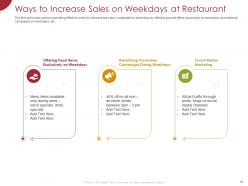
Slide 39: This slide provide the Ways to Increase Sales on Weekdays at Restaurant.
Slide 40: This slide displays Table of Contents of the presentation.
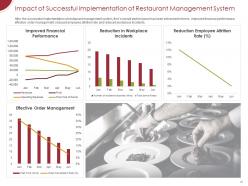
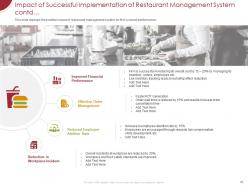
Slide 41: This slide showcases Impact of Successful Implementation of Restaurant Management System.
Slide 42: This slide displays the Impact of Successful Implementation of Restaurant Management System.
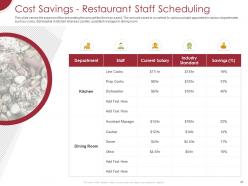
Slide 43: This slide showcases Cost Savings - Restaurant Staff Scheduling.
Slide 44: This slide displays the Table of Contents.
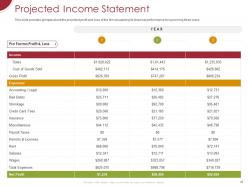
Slide 45: This slide provides glimpse about the projected profit and loss of the firm visualizing its financial performance for upcoming three years.
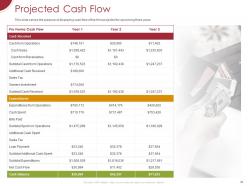
Slide 46: This slide serves the purpose of displaying cash flow of the firm projected for upcoming three years.
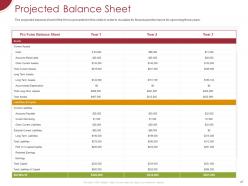
Slide 47: This slide shows Projected Balance Sheet.
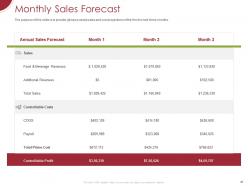
Slide 48: This slide displays Monthly Sales Forecast.
Slide 49: This is Optimization of Restaurant Management Systems Icons Slide
Slide 50: This slide is titled as Additional Slides for moving forward.
Slide 51: This is 30 60 90 Days Plan slide.
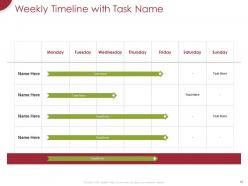
Slide 52: This slide displays Weekly Timeline with Task Name.
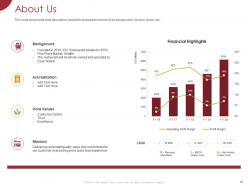
Slide 53: This is About Us to showcase Company specifications.
Slide 54: This slide shows Roadmap for Process Flow.
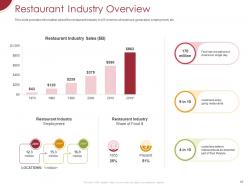
Slide 55: This slide displays Restaurant Industry Overview. This slide provides information about the restaurant industry in US in terms of revenues generated, employment, etc.
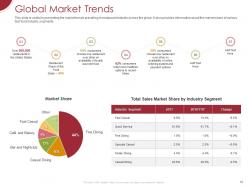
Slide 56: This slide presents the market trends prevailing in restaurant industry across the globe. It also provides information about the market share of various fast food industry segments.
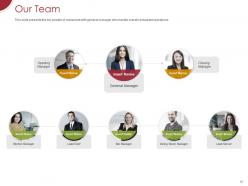
Slide 57: This is Our Team slide with names and designations.
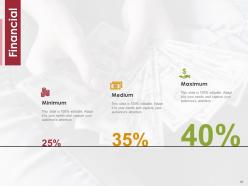
Slide 58: This is Financial slide. Showcase finance related stuff here.
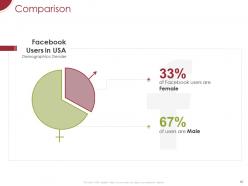
Slide 59: This is Comparison slide showcasing comparison between male and female facebook users.
Slide 60: This is Our Mission slide with Mission, Vision and Goal.
Slide 61: This is Thank You slide with Address, Email address and Contact numner.
Optimization Of Restaurant Management Systems Powerpoint Presentation Slides with all 61 slides:
Use our Optimization Of Restaurant Management Systems Powerpoint Presentation Slides to effectively help you save your valuable time. They are readymade to fit into any presentation structure.




FAQs for Optimization Of Restaurant Management Systems
Focus on food costs first - shoot for 28-35% of revenue. Labor should stay under 30%. Track your table turnover and average ticket size too. Prime cost (food + labor together) needs to be below 60% or you're screwed. Customer satisfaction scores matter obviously, and don't let inventory sit around rotting. I'd also watch revenue per seat hour since you're paying rent on that space anyway. Honestly though? Pick like 3-4 of these based on what's killing you most right now. Check them weekly instead of drowning in spreadsheets tracking everything.
Honestly, start with your POS system - that's gonna be your foundation for everything else. Modern ones handle inventory, scheduling, the whole nine yards. Then think about mobile ordering because customers are obsessed with skipping lines these days (can't blame them). Kitchen display systems are clutch too - way better than those messy paper tickets flying around everywhere. Oh, and don't sleep on reservation platforms if you do sit-down service. There's also automated review monitoring but that's more of a nice-to-have. Build from POS outward and you can't really go wrong.
Dude, staff training is honestly where you'll see the biggest bang for your buck. Your team knowing food safety and service standards = way fewer expensive screwups during dinner rush. Plus customers actually enjoy eating there when servers know what they're doing, which obviously means more money. I'd start by figuring out what's driving you crazy operationally - maybe it's ticket times or people not following protocols. Then just focus training on those problem areas first instead of trying to fix everything at once. Seriously, I've watched places completely turn around just from getting their training game together.
Dude, the biggest thing is it stops you from over-ordering and wasting food - that's where most places bleed money. Real-time tracking shows you what's actually getting used vs what you think you need. Plus you get alerts before stuff expires, which is clutch. It also catches theft and portion issues you might miss otherwise. I thought it was overkill at first, but most restaurants cut costs 15-20% in just a few months. The numbers don't lie. Start with your priciest ingredients - you'll see results fast. Way easier than trying to track everything at once.
Honestly, start tracking how long tables are sitting right now - you'll probably be shocked. Mobile ordering is a game changer, and those tableside payment things save SO much time. Train your servers to drop the check without being asked, maybe when they clear the main course? During rush hours, push the stuff your kitchen can bang out fast and maybe 86 some of the complicated dishes. Set time goals with your team - like 45 minutes for lunch, hour and a half for dinner. The payment process is seriously where most places bleed time though.
Honestly, just start simple - throw up a quick digital survey or leave comment cards on tables. Make it dead easy for people to complain (because they will anyway, might as well capture it). Online reviews are obvious but don't sleep on just chatting with customers while they're paying. I'd go digital first since you can actually track patterns without drowning in paperwork. Here's the thing though - collecting feedback means nothing if you're not looking at it weekly. Notice everyone's griping about slow Saturday service? Time to add staff. Pick one method this week and see what happens.
Your menu layout is basically printing money if you do it right. Put your high-profit stuff in the top-right and center - people's eyes hit those spots first, and you'll see a 20-30% sales bump. Pricing tricks work too: $9.95 feels way cheaper than $10, and throwing some expensive items up top makes everything else look reasonable. Don't go crazy with options though - too many choices and people freeze up. I learned this the hard way at my cousin's restaurant. Most customers scan menus the same way every time, so just put what you want to sell where they're already looking. Check your current setup and see what needs moving around.
Dude, your layout is everything! I've literally watched restaurants tank because their kitchen flow was a disaster. Map out where your staff walks most - servers need clear paths from tables to kitchen without playing bumper cars. Put your POS systems where they actually make sense, not just wherever there's counter space. Rush periods will expose every bottleneck you didn't think about. Oh, and make sure staff can see the whole dining room from key spots. Good flow cuts wait times and keeps tables turning. Bad layout? You're basically paying people to waste time walking around each other.
Dude, save like 20-30% of your tables for walk-ins no matter what. Friday nights taught me that lesson the brutal way! Get a system that shows live availability and stick to time limits - 90 minutes for dinner works. Your host needs to be upfront about waits from the start. Honestly, people respect honesty way more than getting jerked around. Keep waitlists for everyone. Bar seating is a lifesaver while they wait, plus you're making money on drinks. Oh, and apps help too - keeps people from getting hangry!
Dude, local seasonal stuff is a total game changer for margins. You're buying when things are dirt cheap and in peak supply, but customers will pay extra because they love that "farm fresh" vibe - honestly it's crazy how much they'll shell out for it. No crazy shipping costs or storing expensive out-of-season produce either. I'd say start with just your veggie sides, see how the numbers look. Oh and definitely get tight with 2-3 farms nearby so you're not scrambling for supply. Track everything though - you'll be shocked at the difference.
Okay so first thing - set up your communication system before you're drowning in orders. Get everyone clear roles and maybe some basic hand signals. I swear I've watched kitchens completely implode just from people screaming over each other, it's brutal. Do quick huddles every hour, use those callback confirmations for orders. Headsets are worth it if you can swing the cost. Cross-train everyone so they can hop around when someone gets slammed. Oh and make those short daily meetings a thing when it's quiet - you'll actually practice this stuff instead of learning mid-disaster.
Honestly, marketing is what keeps the money flowing in. You're filling empty tables during dead hours and getting people to come back instead of constantly hunting for new customers. Good campaigns let you predict busy nights, so you don't overstaff or waste food. Here's the thing though - when your marketing actually works, people will pay more just to eat at YOUR spot. I'd focus on tracking who's walking through your door from each campaign, not just random social media metrics. The digital stuff gives you instant feedback too, so you can pivot promotions fast.
Honestly, going sustainable will save you money - energy bills drop, way less food waste, cheaper supplies. Customers eat this stuff up too. People want to spend money at places that aren't terrible for the environment, so you'll get more loyal regulars and new faces. Your staff will probably be happier with better working conditions. Oh, and you won't feel guilty every night about contributing to climate change, which is nice. Start with something easy like energy-efficient equipment or a composting bin. Don't feel like you need to flip your whole operation overnight - small changes add up fast.
Your POS data is basically a crystal ball for this stuff. Look at what people order and when - seasonal changes, busy times, which dishes are hot or dying off. I'd dig into your last year of sales first to spot the obvious patterns. Then get weird with it - check if rainy days boost soup sales or if that new taco place down the street is stealing your Tuesday crowd. Social media's great too since people love posting their food drama. Honestly, once you start connecting the dots between sales, weather, local events, and what's trending online, you'll be way ahead on staffing and inventory.
Dude, inventory waste will kill your margins fast - I've seen places throw out hundreds in spoiled ingredients weekly. Labor scheduling is brutal too, especially when someone no-shows during dinner rush. Get scheduling software that actually tracks your busy periods and cross-train everyone so you're not totally screwed. Oh, and portion control - track that religiously or food costs will spiral. For customer service, just standardize your processes so staff can make quick decisions without hunting down a manager every time. Honestly though, start by figuring out where you're bleeding money first, then fix the workflow stuff.
-
Out of the box and creative design.
-
Use of icon with content is very relateable, informative and appealing.
-
Very well designed and informative templates.
-
Visually stunning presentation, love the content.
-
Great designs, Easily Editable.