

Email marketing optimization ppt powerpoint presentation professional skills cpb
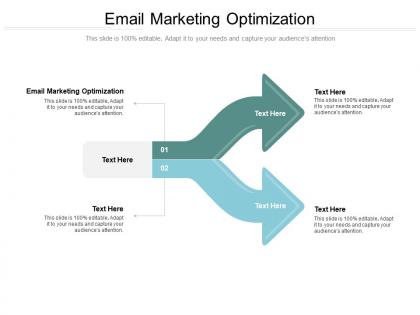




Try Before you Buy Download Free Sample Product
 Impress Your
 Audience
 100%
100% Editable
 Save Hours
 of Time


Broadcast your intentions with our Email Marketing Optimization Ppt Powerpoint Presentation Professional Skills Cpb. Give everyone an insight into your decisions.
People who downloaded this PowerPoint presentation also viewed the following :
Email marketing optimization ppt powerpoint presentation professional skills cpb with all 5 slides:
Give everyone an insight into your decisions with our Email Marketing Optimization Ppt Powerpoint Presentation Professional Skills Cpb. Be able to broadcast your intentions.
FAQs for Email marketing optimization ppt powerpoint presentation
Key elements of an effective email marketing campaign include compelling subject lines, personalized content, clear calls-to-action, mobile optimization, and strategic segmentation. These components work together by increasing open rates, enhancing engagement, and driving conversions, with many businesses finding that personalized, segmented campaigns deliver significantly higher ROI and stronger customer relationships.
Segmentation improves email marketing performance by delivering personalized content, increasing open rates, reducing unsubscribe rates, and enhancing customer engagement through targeted messaging. By categorizing subscribers based on demographics, purchase history, and behavior patterns, businesses achieve higher conversion rates, improved ROI, and stronger customer relationships, with many organizations finding that segmented campaigns outperform generic broadcasts significantly.
Key email marketing metrics include open rates, click-through rates, conversion rates, bounce rates, unsubscribe rates, and revenue per email. These metrics enable marketers to optimize campaign performance, segment audiences more effectively, and enhance customer engagement, with many organizations finding that tracking these indicators ultimately delivers higher ROI and more personalized customer experiences.
A/B testing optimizes email content and design by comparing subject lines, call-to-action buttons, layouts, personalization levels, and send times across different audience segments. Through systematic testing of these elements, marketers can identify which combinations drive higher open rates, click-through rates, and conversions, with many organizations finding that data-driven optimization delivers significantly improved campaign performance and customer engagement.
Personalization significantly enhances email engagement by delivering targeted content based on subscriber preferences, behavior patterns, purchase history, and demographic data. This strategic approach enables retailers, financial services, and healthcare organizations to achieve higher open rates, increased click-through rates, and improved conversion rates, ultimately driving stronger customer relationships and revenue growth.
**INPUT**: How often should businesses send marketing emails to maintain subscriber interest without overwhelming them? **OUTPUT**: Optimal email frequency varies by industry and audience, but most businesses find success with 1-3 emails per week, balancing consistent engagement with subscriber tolerance. Through segmentation and preference centers, companies like retail brands, SaaS providers, and financial services can tailor frequency based on customer behavior and interests, ultimately delivering personalized experiences while maintaining list health and maximizing engagement rates. [Word count: 60 words]
Effective strategies include optimizing send frequency, segmenting audiences based on preferences and behavior, personalizing content relevance, improving subject line clarity, and providing preference management options rather than binary unsubscribe choices. These approaches streamline subscriber retention by delivering targeted value, reducing email fatigue, and enhancing user control, with many organizations finding that strategic segmentation and frequency optimization significantly improve engagement while minimizing list churn.
Subject lines significantly impact open rates by serving as the first impression that determines whether recipients engage with your email, with compelling headlines increasing open rates by 20-30% across industries. Best practices include personalizing with recipient names, creating urgency through time-sensitive language, keeping length under 50 characters for mobile optimization, and A/B testing different approaches, with many retail and financial services companies finding that clear, benefit-focused subject lines ultimately deliver higher engagement and conversion rates.
Email marketing automation delivers increased efficiency, personalized customer experiences, improved lead nurturing, higher conversion rates, and enhanced scalability across campaigns. Through automated workflows, businesses streamline repetitive tasks, deliver targeted messaging based on customer behavior, and maintain consistent engagement, with many organizations finding that automation reduces manual effort while significantly boosting revenue and customer retention.
Businesses can re-engage inactive subscribers through personalized win-back campaigns, segmented messaging based on past behavior, exclusive offers, preference centers, and strategic timing adjustments. These targeted approaches streamline customer retention by delivering relevant content, reducing list churn, and maximizing engagement rates, with many organizations finding that segmented re-engagement campaigns ultimately deliver significantly higher conversion rates than generic messaging.
Email marketing compliance regulations include GDPR for European data protection, CAN-SPAM Act for US commercial emails, CASL in Canada, and industry-specific requirements like HIPAA for healthcare organizations. These regulations streamline trust-building by requiring clear consent mechanisms, transparent unsubscribe options, and proper data handling, ultimately delivering enhanced customer relationships and reduced legal risks for businesses operating across multiple jurisdictions.
Design elements that boost email click-through rates include compelling call-to-action buttons, personalized subject lines, mobile-responsive layouts, strategic use of white space, and relevant visual content. These elements work together by creating clear visual hierarchy, reducing cognitive load, and guiding reader attention, with many marketers finding that strategic color contrast and button placement ultimately deliver significantly higher engagement rates.
Businesses can leverage user-generated content by incorporating customer reviews, social media posts, testimonials, photo submissions, and success stories directly into email campaigns. This approach enhances authenticity and engagement while reducing content creation costs, with retail brands and e-commerce companies finding that UGC-driven emails deliver higher click-through rates and stronger customer trust.
Current email marketing trends include AI-powered personalization, interactive content elements, mobile-first design optimization, automated behavioral triggers, and advanced segmentation strategies. These approaches enhance customer engagement by delivering targeted messaging, streamlining campaign management, and improving conversion rates, with many organizations finding that strategic email optimization significantly boosts customer retention and revenue growth.
Email marketing integrates with other digital marketing channels through synchronized messaging, shared customer data, and coordinated campaign timing across platforms. Social media retargeting, content marketing nurture sequences, and SEO-driven lead magnets create seamless customer journeys, with many organizations finding that cross-channel integration delivers 25% higher engagement rates and improved conversion tracking.
No Reviews