


Optimizing Inventory Audit For Enhanced Turnaround Efficiency Powerpoint Presentation Slides




Try Before you Buy Download Free Sample Product
 Impress Your
 Audience
 100%
100% Editable
 Save Hours
 of Time


Introducing our complete Optimizing inventory audit for enhanced turnaround efficiency presentation, meticulously created to streamline your inventory management operations. This lively lecture looks into critical components of stock assessment, offering practical solutions for improving stock levels and reducing disparities. With specific guidance on inventory inspection techniques, you can conduct thorough checks while maintaining accuracy and compliance. Our PPT stresses the importance of asset verification, providing practical solutions for authenticating inventory data and protecting important assets. From detailed stock audits to meticulous inventory inspections, this presentation will provide your team with actionable insights to improve efficiency and accuracy throughout the audit process. Improve your inventory management techniques and increase productivity with our Inventory Audit PPT. Get access to this PPT now.
People who downloaded this PowerPoint presentation also viewed the following :
Content of this Powerpoint Presentation
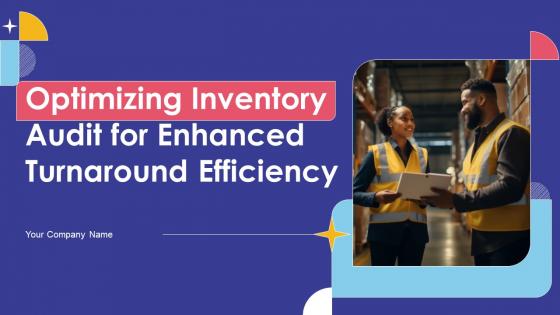
Slide 1: This slide showcase Optimizing Inventory Audit for Enhanced Turnaround Efficiency.State Your Company Name
Slide 2: This slide showcase Agenda for optimizing inventory audit for enhanced turnaround efficiency.
Slide 3: This slide exhibit Table of content.
Slide 4: This slide shows title for topics that are to be covered next in the template.
Slide 5: This slide showcases inventory count accuracy level graphical representation due to high human errors and inaccurate inventory counting.
Slide 6: This slide showcases kpis of inventory management such as stock out rate, carrying cost and many others inventory variables.
Slide 7: This slide illustrates challenges of conducting inventory audit such as technology limitations, human error, accuracy issues, seasonal fluctuations etc.
Slide 8: This slide showcases inventory audit challenges survey results such as data accuracy, timely extension, counting errors, inadequate training etc.
Slide 9: This slide shows title for topics that are to be covered next in the template.
Slide 10: This slide showcases gap analysis of conducting inventory audit includes elements such as inventory accuracy, stock turnover, dead stock ratio, fill rate etc.
Slide 11: This slide shows title for topics that are to be covered next in the template.
Slide 12: This slide illustrate procedure to conduct inventory audit for accurate records such as define scope, conduct audit, analyze results.
Slide 13: This slide shows title for topics that are to be covered next in the template.
Slide 14: This slide showcases objectives of conducting inventory audit such as verify physical existence, examining accuracy of process etc.
Slide 15: This slide shows title for topics that are to be covered next in the template.
Slide 16: This slide showcases inventory audit timeline for stock management includes elements such as prepare pre audit checklist, plan communication schedule etc.
Slide 17: This slide showcases inventory audit checklist for proper stock management such as make schedule for inventory audit etc.
Slide 18: This slide showcases schedule for inventory audit to communicate different audience such as management, employees, suppliers et.
Slide 19: This slide shows title for topics that are to be covered next in the template.
Slide 20: This slide showcases inventory audit method to enhance turnaround efficiency such as ABC analysis, physical stock count, stock reconciliation etc.
Slide 21: This slide illustrate ABC analysis technique of inventory audit to utilize warehouse space effectively and efficiently.
Slide 22: This slide showcases physical stock count of inventory audit such as manual counting, electronic and cycle counting.
Slide 23: This slide illustrates stock reconciliation mention of inventory and includes elements such as mis recorded serial orders, and mislabeled invoices.
Slide 24: This slide showcases cycle count inventory audit method such as random sampling, control group technique etc.
Slide 25: This slide illustrates finished goods cost analysis inventory audit method include elements such as decide time period, gather necessary data etc.
Slide 26: This slide shows title for topics that are to be covered next in the template.
Slide 27: This slide showcases a comparison of inventory audit methods such as BAC analysis, physical stock count, stock reconciliation, etc.
Slide 28: This slide depicts inventory categorization report of ABC method of stock audit includes revenue, grade etc.
Slide 29: This slide illustrates best practices for conduction effective ABC analysis such as review surplus stock, keep classifications simple etc.
Slide 30: This slide shows title for topics that are to be covered next in the template.
Slide 31: This slide showcases inventory report analysis of stock includes elements such as stock quantity, value, variance, track status etc.
Slide 32: This slide showcases impact of conducting inventory audit on key performance indicators such as inventory accuracy, stock turnover etc.
Slide 33: This slide shows title for topics that are to be covered next in the template.
Slide 34: This slide depicts inventory audit team organization structure such as audit general, deputy audit general etc.
Slide 35: This slide depicts inventory audit team roles and responsibility such as issue guidelines, inventory team, collaborate with warehouse etc.
Slide 36: This slide showcases RACI metric for inventory audit team such as responsible, accountable, consulted and informed.
Slide 37: This slide shows title for topics that are to be covered next in the template.
Slide 38: This slide illustrates comparison of stock audit software for effective inventory management includes elements such as price, ease of use, integration etc.
Slide 39: This slide shows title for topics that are to be covered next in the template.
Slide 40: This slide showcase inventory audit budget allocation summary includes elements such as personnel costs, travel expenses, consulting fees etc.
Slide 41: This slide illustrates stock audit budget allocation gap analysis to find out discrepancy in budget and make necessary action.
Slide 42: This slide shows title for topics that are to be covered next in the template.
Slide 43: This slide showcases inventory count accuracy level graphical representation due to proper inventory counting, periodic review etc.
Slide 44: This slide showcases kpis of inventory management such as stock out rate, carrying cost and many others inventory variables.
Slide 45: This slide illustrates impact of conducting inventory audit such as technology limitations, human error, accuracy issues, seasonal fluctuations etc.
Slide 46: This slide shows title for topics that are to be covered next in the template.
Slide 47: This slide illustrates ABC inventory management dashboard analysis includes elements such as product name, stock keeping unit, grade etc.
Slide 48: This slide showcases supplier and vendor inventory analysis dashboard include elements such as return rate, stock, accuracy etc.
Slide 49: This slide shows title for topics that are to be covered next in the template.
Slide 50: This slide illustrates cases study with aim, solutions and impact for IT assets inventory management.
Slide 51: This slide shows all the icons included in the presentation.
Slide 52: This slide is titled as Additional Slides for moving forward.
Slide 53: This is an Idea Generation slide to state a new idea or highlight information, specifications etc.
Slide 54: This slide shows SWOT analysis describing- Strength, Weakness, Opportunity, and Threat.
Slide 55: This slide showcases Magnifying Glass to highlight, minute details, information, specifications etc.
Slide 56: This slide shows Post It Notes for reminders and deadlines. Post your important notes here.
Slide 57: This is a Timeline slide. Show data related to time intervals here.
Slide 58: This slide contains Puzzle with related icons and text.
Slide 59: This slide depicts Venn diagram with text boxes.
Slide 60: This is a Thank You slide with address, contact numbers and email address.
Optimizing Inventory Audit For Enhanced Turnaround Efficiency Powerpoint Presentation Slides with all 68 slides:
Use our Optimizing Inventory Audit For Enhanced Turnaround Efficiency Powerpoint Presentation Slides to effectively help you save your valuable time. They are readymade to fit into any presentation structure.










FAQs for Optimizing Inventory Audit For Enhanced Turnaround Efficiency
Regular inventory audits deliver enhanced accuracy, reduced shrinkage, improved cash flow management, better demand forecasting, and strengthened regulatory compliance. These systematic reviews enable businesses to minimize carrying costs, optimize stock levels, and identify operational inefficiencies, with many retail and manufacturing organizations finding that consistent auditing ultimately drives profitability and competitive advantage.
Technology enhances inventory audit accuracy through RFID tracking, automated counting systems, barcode scanning, real-time data analytics, and AI-powered discrepancy detection. These solutions streamline verification processes by eliminating manual errors, providing instant stock visibility, and enabling predictive analysis, with many retailers and manufacturers finding that automated systems deliver 95% accuracy improvements while reducing audit time significantly.
Companies should avoid inadequate preparation, inconsistent counting methods, poor documentation, insufficient staff training, and neglecting technology integration during inventory audits. These mistakes often lead to inaccurate data, operational disruptions, and compliance issues, with many organizations finding that systematic preparation, standardized procedures, and proper staff coordination ultimately deliver more accurate results and streamlined audit processes.
Businesses should perform inventory audits quarterly for high-value items, monthly for fast-moving stock, and annually for comprehensive reviews, with cycle counting conducted weekly on rotating product categories. Through strategic scheduling, companies in retail, manufacturing, and healthcare streamline operations, minimize discrepancies, and enhance accuracy, while automated systems increasingly enable continuous monitoring, ultimately delivering improved cash flow and operational efficiency.
Inventory management software streamlines audits by providing real-time tracking, automated cycle counting, barcode scanning capabilities, and comprehensive reporting tools. These technologies enhance accuracy by minimizing manual errors, accelerating verification processes, and delivering detailed analytics, with many organizations finding that automated systems reduce audit time by up to 60% while improving inventory accuracy.
Businesses can integrate cycle counting by scheduling regular, smaller audits of specific inventory segments throughout the year, using ABC analysis to prioritize high-value items, and leveraging inventory management software to automate count scheduling. This approach enables continuous accuracy monitoring, reduces operational disruptions, and identifies discrepancies faster than annual audits, with many organizations finding that strategic cycle counting delivers improved inventory visibility and enhanced operational efficiency.
Companies should track inventory turnover ratios, accuracy percentages, carrying costs, stock-out frequencies, and aging analysis during audits. These metrics enable organizations to streamline supply chain efficiency, minimize waste, and optimize resource allocation, with many retail and manufacturing businesses finding that comprehensive tracking ultimately delivers better demand forecasting and competitive advantage.
Companies determine the right audit method by evaluating inventory value, turnover rates, storage complexity, regulatory requirements, and risk tolerance levels. High-value items often require perpetual auditing with cycle counting, while bulk commodities may use periodic methods, with manufacturing and pharmaceutical sectors increasingly finding that hybrid approaches combining automated tracking and strategic sampling deliver optimal accuracy and operational efficiency.
Employee training significantly enhances inventory audit effectiveness by improving accuracy, reducing errors, ensuring regulatory compliance, and accelerating audit completion times. Well-trained teams streamline audit processes through proper documentation techniques, systematic counting methods, and advanced technology utilization, with many organizations finding that comprehensive training programs ultimately deliver faster audits, better compliance outcomes, and enhanced operational efficiency.
Businesses can streamline inventory audit procedures through automated tracking systems, barcode scanning technology, cycle counting methods, real-time inventory management software, and standardized audit protocols. These approaches enable organizations to reduce manual errors, accelerate data collection, and minimize operational disruptions, with many retailers and manufacturers finding that strategic automation ultimately delivers faster audit cycles and improved resource allocation.
Regulatory implications include compliance with Sarbanes-Oxley financial reporting requirements, FDA tracking for pharmaceuticals, GAAP inventory valuation standards, SEC disclosure obligations, and industry-specific safety regulations. These requirements enhance transparency and accountability by mandating accurate inventory records, systematic tracking protocols, and regular verification processes, with many organizations finding that robust audit systems ultimately deliver competitive advantages while ensuring regulatory compliance.
Businesses can prepare for audit challenges by establishing contingency protocols, maintaining backup documentation systems, training cross-functional teams on audit procedures, and conducting regular pre-audit assessments. Through proactive planning and standardized processes, organizations streamline operations, minimize disruptions, and ensure compliance readiness, with many finding that comprehensive preparation ultimately delivers faster audit completion and improved inventory accuracy.
Data analytics enhances inventory audit outcomes by identifying discrepancies, predicting stock patterns, automating variance detection, and providing real-time visibility into inventory movements. Through advanced algorithms and predictive modeling, retailers and manufacturers streamline audit processes, reduce manual errors, and optimize stock levels, ultimately delivering faster audit cycles and improved operational efficiency.
Visual management tools enhance inventory audit processes by providing real-time dashboards, automated tracking systems, color-coded status indicators, barcode scanning capabilities, and interactive floor maps. These technologies streamline audit workflows by minimizing manual data entry, reducing human error, and accelerating verification processes, with many warehouses and retail operations finding that visual interfaces ultimately deliver faster audit completion times and improved accuracy rates.
Businesses can leverage past audit results by identifying recurring discrepancies, analyzing root causes of inventory variances, implementing targeted corrective measures, and establishing predictive monitoring systems. Through pattern recognition and data analytics, organizations streamline their inventory processes, enhance accuracy rates, and reduce costly stockouts or overstock situations, with many finding that historical audit insights ultimately deliver significant operational efficiency and improved financial forecasting capabilities.
-
“One of the best experiences with SlideTeam for my presentation.Everything on time, communication is efficient and price is reasonable. All good in one place.”
-
Superb! The innovative and inspiring template designs provide an edge to the presentation.