


Organizational Feedback Policy Training Ppt




Try Before you Buy Download Free Sample Product
 Impress Your
 Audience
 100%
100% Editable
 Save Hours
 of Time


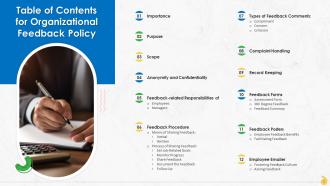
Organizational Feedback Policy is a comprehensive PowerPoint Presentation designed to guide businesses in developing and implementing an effective feedback policy. The PPT Deck begins by highlighting the importance of feedback in the workplace, emphasizing its role in driving organizational growth, employee development, and enhanced performance. It includes detailed sections on Purpose, Scope, Anonymity and Confidentiality, Feedback-related Responsibilities, Feedback Procedure, and Feedback Comments Types. The PPT Module also covers Complaint Handling, Record Keeping, Feedback Forms, Feedback Posters, and an Employee Emailer section.
People who downloaded this PowerPoint presentation also viewed the following :
Content of this Powerpoint Presentation
Slide 3
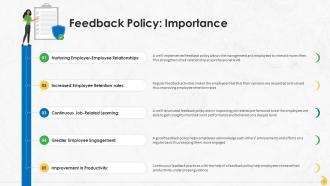
This slide lists the advantages of having a feedback policy. These are: Nurturing of employer-employee relationships, increased employee retention rates, continuous job-related learning, greater employee engagement, and improvement in productivity.
Slide 4
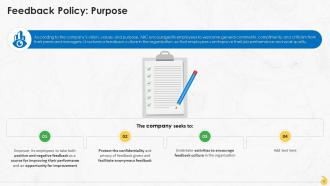
This slide contains information about the purpose of feedback policy that shows the company’s visions towards carrying out feedback activities for the employees.
Slide 5
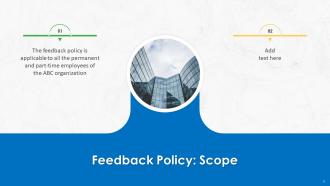
This slide contains information about stakeholders to whom organizational feedback policy is applicable.
Slide 6
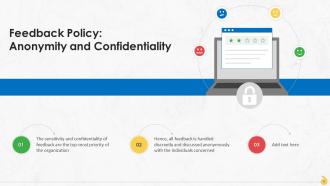
This slide contains information that all feedbacks are handled discreetly and discussed anonymously with the concerned person to ensure confidentiality.
Slide 7
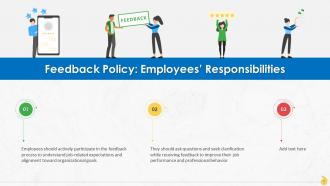
This slide contains information about the roles and responsibilities that employees must fulfil while receiving feedback at the organization. They should ask questions and seek clarification to improve their job performance and professional behavior.
Slide 8
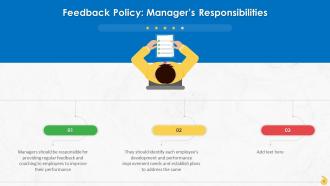
This slide contains information about the roles and responsibilities that managers must fulfil to facilitate feedback effectively. They should identify each employee's development and performance improvement needs and draw up plans to address the same.
Slide 9
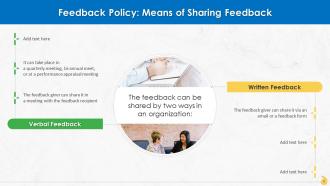
This slide represents the two ways of sharing feedback in the organization which are verbal and written.
Slide 10
This slide represents the process to be followed while sharing feedback at the organization. The major steps are set job-related goals, monitor progress, share feedback, document the feedback, and follow up.
Slide 11
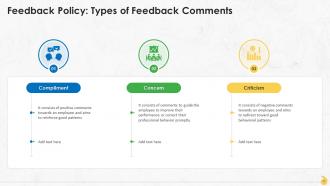
This slide highlights the feedback comments that are given to employees in the context of their job performance and organizational behavior that include compliments, concern and criticism.
Slide 12
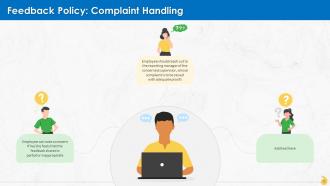
This slide contains information about the complaint handling in an organization. Employee should reach out to the reporting manager of concerned supervisor whose complaint is to be raised with adequate proofs, if they feel the feedback shared is partial or inappropriate
Slide 13
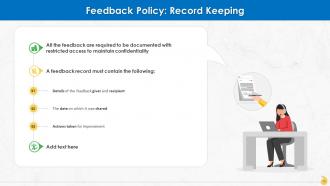
This slide highlights how record keeping is to be done for all the feedback activity that takes place in the organization.
Slide 14
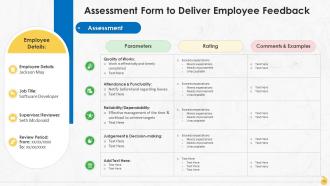
This slide represents the form for delivering feedback to the employee at the workplace that evaluates an employee on the basis of quality of work, attendance and punctuality, reliability/dependability, and their decision-making power.
Slide 15
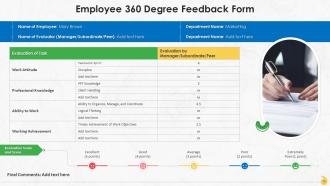
This slide represents the form 360-degree performance evaluation form for measuring employee’s performance at the organization. The performance evaluation KPI’s used are work attitude, professional knowledge, and ability to work. The raters are managers, subordinate, peers of the employee.
Slide 16
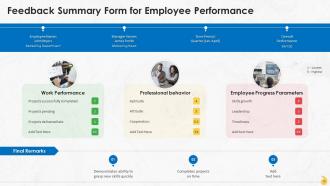
This slide represents the feedback summary form for employee performance. It considers work performance, professional behavior, and employee progress based on skills growth, leadership, and timeliness for evaluation.
Slide 17
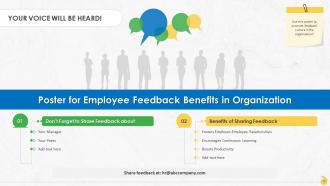
This slide represents a one-page poster that can be circulated amongst employees of an organization for regulating feedback. It includes the benefits that feedback reaps for an organization, and the employees with whom the personnel can share feedback.
Slide 18
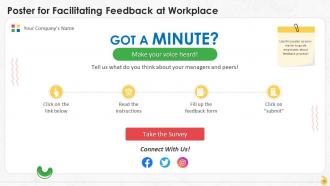
This slide represents a one-page poster that can be used by an organization for facilitating feedback amongst its employees.
Slide 19
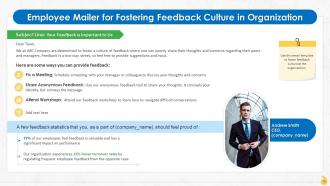
This slide contains an employee e-mailer highlighting the significance of feedback in the organization. Feedback at the organization increases employee retention rates, improves productivity, and aids in continuous learning. A few stats related to the company’s feedback are listed in the slide.
Slide 20
This slide depicts a mailer that an employee can use to seek feedback from their manager or colleague.
Slide 32 to 47
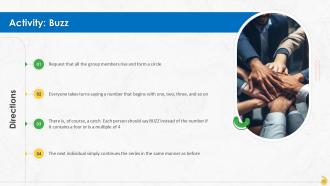
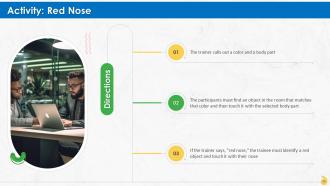
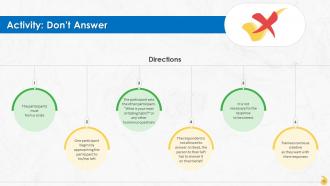
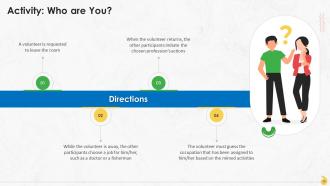
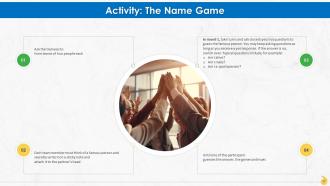
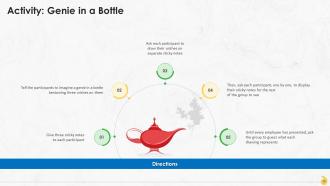
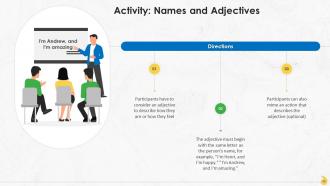
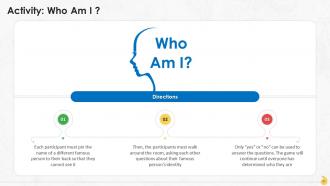
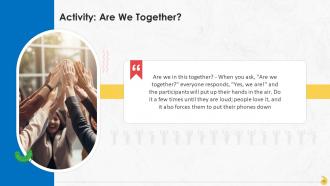
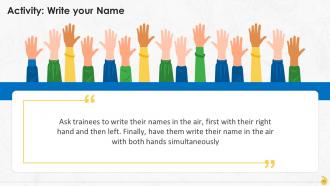
These slides contain energizer activities to engage the audience of the training session
Slide 48 to 75
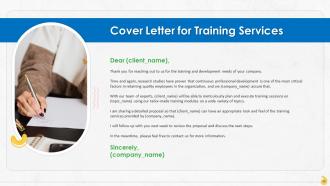
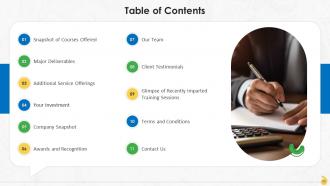
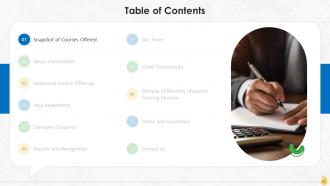
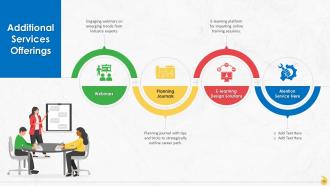
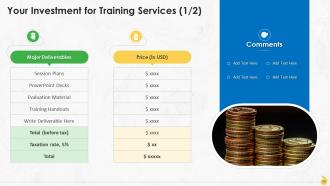
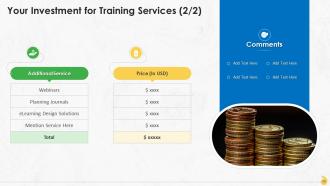
These slides contain a training proposal covering what the company providing corporate training can accomplish for the client.
Slide 76 to 78
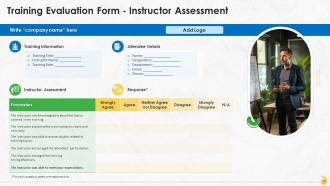
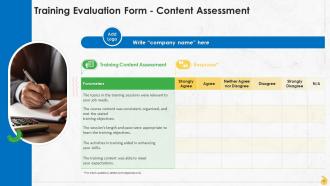
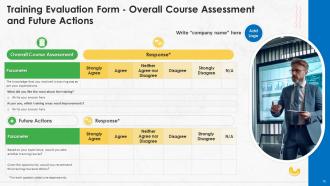
These slides include a training evaluation form for instructor, content and course assessment.
Organizational Feedback Policy Training Ppt with all 86 slides:
Use our Organizational Feedback Policy Training Ppt to effectively help you save your valuable time. They are readymade to fit into any presentation structure.






















FAQs for Organizational Feedback
An effective organizational feedback policy should include clear feedback mechanisms, defined frequency schedules, standardized evaluation criteria, confidentiality protections, and structured follow-up procedures. These components work together by establishing transparent communication channels, ensuring consistent assessment standards, and creating accountability frameworks, with many organizations finding that systematic feedback policies enhance employee engagement, improve performance outcomes, and ultimately deliver stronger retention rates.
Organizations can ensure their feedback policy promotes openness and trust by establishing clear guidelines for respectful communication, training managers on constructive delivery techniques, implementing anonymous feedback channels, and demonstrating leadership accountability through transparent response processes. These approaches streamline communication across departments while building psychological safety, with many companies finding that regular feedback cycles and follow-up actions ultimately enhance employee engagement and organizational performance.
Feedback mechanisms can be tailored through personalized delivery methods, flexible timing schedules, anonymous reporting options, role-specific evaluation criteria, and adaptive communication channels. Organizations increasingly customize approaches by department culture, with engineering teams preferring data-driven assessments while sales teams favor real-time coaching conversations, ultimately enhancing engagement and developmental outcomes across diverse workplace environments.
Effective feedback should be solicited quarterly for formal reviews, monthly through pulse surveys, and continuously via open channels and one-on-one meetings. This multi-tiered approach enables organizations to capture both strategic insights and immediate concerns, with many companies finding that regular touchpoints enhance employee satisfaction, reduce turnover, and ultimately deliver stronger organizational performance and competitive advantage.
Leadership plays a crucial role in modeling feedback behaviors by demonstrating active listening, providing constructive input regularly, responding positively to criticism, and transparently communicating policy expectations across all organizational levels. Through consistent modeling, leaders in organizations ranging from healthcare systems to financial services create psychological safety, encourage open dialogue, and establish feedback cultures, ultimately delivering higher employee engagement and improved performance outcomes.
Organizations measure feedback policy effectiveness through employee engagement surveys, retention rates, performance improvement metrics, participation levels in feedback sessions, and 360-degree review completion rates. These measurements enable tracking of communication quality, response implementation speed, and cultural transformation, with many companies finding that regular assessment cycles, typically quarterly or bi-annually, ultimately deliver enhanced workplace satisfaction and operational efficiency.
Without a structured feedback policy, organizations face employee disengagement, inconsistent performance management, higher turnover rates, poor communication, and reduced productivity. These risks ultimately undermine workplace culture and competitive advantage, with many companies finding that unclear feedback processes lead to talent retention issues, decreased innovation, and costly recruitment cycles that significantly impact bottom-line results.
Technology facilitates ongoing feedback in remote and hybrid environments through digital performance platforms, real-time collaboration tools, automated pulse surveys, video conferencing systems, and mobile feedback applications. These solutions enable managers and teams to maintain continuous dialogue, track progress seamlessly, and deliver timely recognition across distributed workforces, ultimately enhancing engagement and productivity despite physical distance.
**INPUT**: What training or resources should be provided to employees to help them give and receive feedback constructively? **OUTPUT**: Training should include active listening workshops, communication skills development, emotional intelligence building, conflict resolution techniques, and structured feedback frameworks like SBI (Situation-Behavior-Impact). These programs enhance workplace relationships by improving dialogue quality, reducing defensiveness, and fostering collaborative problem-solving, with many organizations finding that comprehensive feedback training ultimately delivers higher employee engagement and stronger team performance.
Organizations can address feedback resistance through transparent communication about benefits, comprehensive training programs, creating psychological safety, implementing gradual rollouts, and establishing two-way dialogue systems. By demonstrating how feedback enhances career development and organizational growth, companies like Google and Microsoft have found that resistance diminishes significantly, ultimately improving employee engagement and performance outcomes.
Legal and ethical considerations include ensuring confidentiality protection, preventing retaliation against feedback providers, maintaining data privacy compliance, establishing fair documentation processes, and creating transparent grievance procedures. These safeguards enable organizations to build trust, reduce liability risks, and foster open communication cultures, with many institutions finding that comprehensive policies ultimately enhance employee engagement while protecting both individual rights and organizational integrity.
Feedback supports diversity, equity, and inclusion initiatives by identifying unconscious bias in decision-making, evaluating the effectiveness of DEI programs, and ensuring equitable opportunities across all employee groups. Through structured feedback mechanisms, organizations can measure inclusive leadership behaviors, track representation in promotions and development programs, and create psychological safety for underrepresented voices, ultimately fostering more equitable workplace cultures.
**INPUT**: What strategies can be implemented to ensure that feedback leads to actionable outcomes and not just a reporting exercise? **OUTPUT**: Effective feedback strategies include establishing clear action timelines, assigning specific ownership for implementing changes, creating follow-up mechanisms, linking feedback to performance metrics, and establishing transparent communication channels about progress. These approaches streamline organizational responsiveness by ensuring accountability, tracking measurable improvements, and maintaining continuous dialogue, with many companies finding that systematic follow-through ultimately delivers enhanced employee engagement and operational efficiency.
Organizations create safe feedback environments by establishing anonymous reporting systems, training managers on non-retaliatory responses, implementing clear anti-retaliation policies, and fostering open communication cultures. These approaches enable transparent dialogue while protecting employee confidentiality, with many companies finding that regular feedback sessions, third-party platforms, and leadership accountability ultimately deliver higher engagement and improved workplace trust.
**INPUT**: What methods can be utilized to collect anonymous feedback effectively while maintaining trust in the process? **OUTPUT**: Anonymous feedback collection methods include secure digital surveys, suggestion boxes with encrypted submissions, third-party feedback platforms, confidential focus groups, and anonymous reporting hotlines. These approaches enhance trust by ensuring data encryption, transparent communication about anonymity protocols, and regular updates on feedback implementation, with many organizations finding that combining multiple channels while clearly communicating privacy safeguards ultimately delivers higher participation rates and more honest insights. [Word count: 60]
-
Excellent Designs.
-
Time saving slide with creative ideas. Help a lot in quick presentations..