

Performance Evaluation Strategies For Employee Skill Development Powerpoint Presentation Slides




Try Before you Buy Download Free Sample Product
 Impress Your
Audience
 100%
Editable
 Save Hours
of Time


Unleash your workforces full potential with our thorough deck on Performance Evaluation Strategies for Employee Skill Development. This meticulously curated presentation is intended to walk employers through effective ways for monitoring and improving employee performance. We look at tried-and-true tactics that encourage continual skill development, ensuring your team remains flexible and competitive in todays fast-paced business environment. The deck begins by emphasizing the value of performance reviews as a foundation for recognizing strengths and areas for improvement. It then provides novel assessment tools, such as 360-degree feedback, goal-setting frameworks, and regular check-ins, to provide a comprehensive picture of employee skills. Furthermore, the talk investigates the incorporation of technology in performance evaluations, demonstrating tools and platforms that shorten the process, improve data accuracy, and facilitate. Get access to this PPT now.
People who downloaded this PowerPoint presentation also viewed the following :
Content of this Powerpoint Presentation
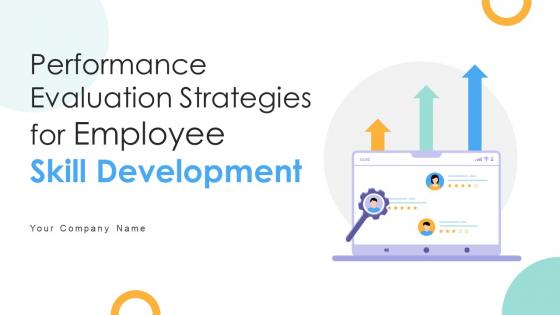
Slide 1: This slide showcase Performance Evaluation Strategies for Employee Skill Development. State Your Company Name
Slide 2: This slide showcase AGENDA.
Slide 3: This slide exhibit Table of content.
Slide 4: This slide exhibit Table of content.
Slide 5: This slide shows title for topics that are to be covered next in the template.
Slide 6: This slide illustrate overview of employee performance assessment to improve overall productivity level.
Slide 7: This slide illustrate best practices for employee performance evaluation to attain organization goals effectively.
Slide 8: This slide illustrate statistics of employee performance evaluation.
Slide 9: This slide illustrate various benefits of implementing employee performance evaluation to enhance productivity.
Slide 10: This slide showcases various challenges of employee performance evaluation along with solutions to mitigate risk.
Slide 11: This slide provide effective guidelines for employee performance evaluation to avoid shortcomings.
Slide 12: This slide illustrate characteristics for effective develop questionnaires for employee performance evaluation to gather feedback.
Slide 13: This slide provide information about various key performance indicators that is used in evaluating employee performance for development.
Slide 14: This slide provide information about various goals of employee performance evaluation for boosting morale and productivity.
Slide 15: This slide illustrate different tips for effective performance evaluation to implement it effectively and efficiently.
Slide 16: This slide illustrate various survey questions for effective performance evaluation for quarterly feedback.
Slide 17: This slide shows title for topics that are to be covered next in the template.
Slide 18: This slide illustrate various need why we should conduct employees performance assessment for sales and marketing department to increase deal closure rates.
Slide 19: This slide illustrate various need why we should conduct employees performance assessment for HR department to reduce employee turnover.
Slide 20: This slide illustrate various need why we should conduct employees performance assessment for finance department to boost stability.
Slide 21: This slide illustrate various need why we should conduct employees performance assessment for operation department to improve product quality.
Slide 22: This slide shows title for topics that are to be covered next in the template.
Slide 23: This slide illustrates pre assessment phase for preparing employee performance evaluation to conduct feedback effectively.
Slide 24: This slide provide information about employee performance evaluation meeting to conduct fruitful conversation.
Slide 25: This slide provide information about employee performance evaluation post-performance analysis for detailed feedback.
Slide 26: This slide shows title for topics that are to be covered next in the template.
Slide 27: This slide showcases steps to develop employee performance evaluation process effectively for clear goal setting.
Slide 28: This slide showcase employee performance evaluation form for conducting survey.
Slide 29: This slide illustrate procedure to automate employee performance feedback to save time and cost.
Slide 30: This slide showcases approval process flowchart for employee performance for acceptance and rejection of appraisal.
Slide 31: This slide illustrate ways to manage employee performance evaluation data effectively and proactively.
Slide 32: This slide showcase best practice to conduct performance evaluation discussion to get maximum outcome.
Slide 33: This slide shows title for topics that are to be covered next in the template.
Slide 34: This slide illustrate information about employee performance evaluation methods for constructive feedback.
Slide 35: This slide shows title for topics that are to be covered next in the template.
Slide 36: This slide illustrate overview of management by objective performance evaluation approach to bring organizational goals into alignment.
Slide 37: This slide showcase procedure to conduct performance evaluation using management by objective for boosting productivity.
Slide 38: This slide illustrates a performance appraisal questionnaire for management by objective program to conduct feedback.
Slide 39: This slide illustrate pros and cons of management by objective performance evaluation techniques to assess weakness and strength.
Slide 40: This slide shows title for topics that are to be covered next in the template.
Slide 41: This slide illustrate information about 360 degree performance evaluation approach for self-evaluation to get open-ended feedback.
Slide 42: This slide illustrate 360 degree performance evaluation process for open-ended feedback.
Slide 43: This slide showcases questionnaire for 360 degree feedback performance appraisal to increase salary scale.
Slide 44: This slide illustrate pros and cons of 360 degree performance evaluation to assess weakness and strength.
Slide 45: This slide shows title for topics that are to be covered next in the template.
Slide 46: This slide illustrate information about critical incident performance evaluation approach to provide detailed feedback.
Slide 47: This slide illustrate critical incident performance evaluation process for detailed feedback.
Slide 48: This slide showcases questions of performance evaluation using critical incident method to assess employee productivity.
Slide 49: This slide illustrate pros and cons of critical incident performance evaluation to assess weakness and strength.
Slide 50: This slide shows title for topics that are to be covered next in the template.
Slide 51: This slide illustrate overview of checklist method for performance evaluation to assess candidates for promotions.
Slide 52: This slide showcase procedure to conduct performance evaluation using checklist method for goal alignment.
Slide 53: This slide illustrate rating scale that is used in assessing and analyzing performance level of employees.
Slide 54: This slide illustrate pros and cons of checklist method for performance evaluation to assess weakness and strength.
Slide 55: This slide shows title for topics that are to be covered next in the template.
Slide 56: This slide illustrate overview of psychological appraisal method for performance evaluation to examine staff members.
Slide 57: This slide showcase procedure to conduct performance evaluation using psychological appraisal for career development.
Slide 58: This slide illustrate questions of performance evaluation for psychological appraisal method to examine impact.
Slide 59: This slide illustrate pros and cons of psychological appraisal for performance evaluation to assess weakness and strength.
Slide 60: This slide shows title for topics that are to be covered next in the template.
Slide 61: This slide illustrate overview of behaviorally anchored rating scale method for employee performance evaluation.
Slide 62: This slide showcase procedure to conduct performance evaluation using behaviorally anchored rating scale for examination.
Slide 63: This slide illustrate performance appraisal questionnaire using behaviorally anchored rating scale method for feedback.
Slide 64: This slide illustrate pros and cons of behaviorally anchored rating scale method for performance evaluation to assess weakness and strength.
Slide 65: This slide shows title for topics that are to be covered next in the template.
Slide 66: This slide illustrates introduction to employee performance evaluation software to streamline and automate process.
Slide 67: This slide illustrate comparative assessment of employee performance evaluation software to choose best one.
Slide 68: This slide illustrate various benefits of using trackstar for employee performance evaluation to get consistent performance from team members.
Slide 69: This slide shows title for topics that are to be covered next in the template.
Slide 70: This slide illustrates graphical representation of impact after performance evaluation on key performance indicators.
Slide 71: This slide illustrate overall impact of employee performance evaluation on organization to make changes in future plans.
Slide 72: This slide shows title for topics that are to be covered next in the template.
Slide 73: This slide illustrate employee performance evaluation team roles and responsibilities for effective management.
Slide 74: This slide illustrate budget table for employee performance evaluation for maximum utilization of resources.
Slide 75: This slide shows title for topics that are to be covered next in the template.
Slide 76: This slide illustrate dashboard for staff performance evaluation for boosting performance level.
Slide 77: This slide illustrate information about employee performance evaluation analytics dashboard for self assessment.
Slide 78: This slide illustrate information about employee performance evaluation analytics dashboard for 360 degree feedback.
Slide 79: This slide shows title for topics that are to be covered next in the template.
Slide 80: This slide illustrate case study of mobile app development company on employee performance evaluation to achieve future objectives.
Slide 81: This slide gives overview of employee performance management system case study to assist faculty in manual work.
Slide 82: This slide shows all the icons included in the presentation.
Slide 83: This slide is titled as Additional Slides for moving forward.
Slide 84: This slide showcase Employee performance evaluation Likert rating scale.
Slide 85: This slide showcase Ways to choose performance evaluation software.
Slide 86: This slide showcase Reasons to conduct performance evaluation using online survey.
Slide 87: This slide showcase Importance of conducting employee performance evaluation.
Slide 88: This is Our Target slide. State your targets here.
Slide 89: This slide provides 30 60 90 Days Plan with text boxes.
Slide 90: This slide presents Roadmap with additional textboxes. It can be used to present different series of events.
Slide 91: This is a Thank You slide with address, contact numbers and email address.
Performance Evaluation Strategies For Employee Skill Development Powerpoint Presentation Slides with all 99 slides:
Use our Performance Evaluation Strategies For Employee Skill Development Powerpoint Presentation Slides to effectively help you save your valuable time. They are readymade to fit into any presentation structure.










FAQs for Performance Evaluation Strategies For Employee Skill Development
Key performance indicators for employee evaluation include productivity metrics, quality standards, goal achievement rates, collaboration effectiveness, and professional development progress. These KPIs enable organizations to streamline performance assessments by measuring quantifiable outputs, tracking skill enhancement, and evaluating team contributions, ultimately delivering comprehensive employee insights and strategic workforce optimization.
360-degree feedback integrates effectively through structured data collection from supervisors, peers, subordinates, and customers, combined with clear evaluation criteria and regular feedback cycles. This comprehensive approach enhances performance accuracy by providing multiple perspectives, identifying blind spots, and creating development-focused conversations, with many organizations finding that it ultimately delivers more balanced assessments and stronger employee growth outcomes.
Self-assessment enables employees to reflect on their achievements, identify growth areas, and take ownership of their development, while providing managers valuable insights into employee perspectives and motivations. Organizations optimize self-assessment by providing structured frameworks, training employees on objective self-reflection techniques, and integrating self-evaluations with manager feedback, ultimately delivering more comprehensive performance discussions and enhanced employee engagement.
Organizations can ensure bias-free performance evaluations through structured assessment criteria, multiple evaluator perspectives, standardized rating scales, unconscious bias training, and regular calibration sessions among managers. These strategies enhance evaluation objectivity by minimizing subjective interpretations, promoting consistency across departments, and establishing clear performance metrics, with many companies finding that systematic approaches ultimately deliver fairer outcomes and stronger employee trust.
**INPUT**: What strategies can be used to align individual performance metrics with organizational goals? **OUTPUT**: Effective alignment strategies include cascading objectives from organizational to individual levels, implementing balanced scorecards, establishing clear KPI hierarchies, regular goal-setting sessions, and cross-functional collaboration metrics. These approaches streamline performance management by connecting daily activities to strategic outcomes, enhancing accountability, and improving resource allocation, with many organizations finding that aligned metrics deliver increased productivity and competitive advantage.
Performance evaluations should be conducted quarterly or bi-annually, with continuous feedback occurring weekly or monthly through regular check-ins, real-time coaching sessions, and project-based reviews. This strategic combination enhances employee engagement, accelerates professional development, and improves retention rates, with many organizations finding that frequent feedback cycles ultimately deliver higher productivity, better alignment with business goals, and stronger competitive advantage.
Tools that enhance performance evaluation include performance management software, 360-degree feedback platforms, analytics dashboards, AI-powered assessment tools, and real-time tracking systems. These technologies streamline evaluation processes by automating data collection, providing comprehensive insights, and enabling continuous feedback, with many organizations finding that digital platforms deliver more accurate assessments and improved employee engagement.
Managers can effectively communicate performance evaluation results by scheduling one-on-one meetings, providing specific examples of achievements and areas for improvement, creating actionable development plans, and maintaining open dialogue throughout the process. This approach enables teams to understand their performance clearly, align with organizational goals, and identify growth opportunities, with many organizations finding that transparent communication ultimately enhances employee engagement and retention.
Well-structured performance evaluations significantly enhance employee engagement by providing clear feedback, recognition of achievements, goal alignment, and development opportunities. These systematic assessments create transparency around expectations and career progression, with many organizations finding that regular, comprehensive evaluations boost motivation, reduce turnover, and ultimately deliver stronger workplace satisfaction and productivity outcomes.
Performance evaluations can be tailored by incorporating role-specific competencies, department-relevant metrics, customized assessment criteria, and industry-appropriate benchmarks that align with each position's unique responsibilities. Through strategic customization, organizations enhance evaluation accuracy, employee engagement, and developmental outcomes, with many companies finding that tailored approaches deliver more meaningful feedback, improved performance alignment, and stronger retention across diverse functional areas.
Performance evaluation pitfalls include bias and subjectivity, unclear criteria, infrequent feedback, one-size-fits-all approaches, and focusing solely on past performance rather than future development. Organizations can avoid these challenges by implementing structured evaluation frameworks, providing regular feedback throughout the year, establishing clear performance metrics, training managers on objective assessment techniques, and combining backward-looking reviews with forward-focused development planning, ultimately enhancing employee engagement and organizational effectiveness.
Performance evaluation results inform professional development by identifying skill gaps, highlighting strengths to leverage, pinpointing training needs, and revealing career progression opportunities across different roles. These insights enable organizations to create targeted learning programs, customize mentoring approaches, and allocate training resources strategically, with many companies finding that data-driven development significantly enhances employee engagement and retention.
Cultural differences significantly influence performance evaluation strategies through varying communication styles, feedback preferences, individual versus collective achievement orientations, and differing perceptions of authority and hierarchy. Multinational organizations increasingly adapt their evaluation frameworks by incorporating culturally sensitive feedback methods, flexible goal-setting approaches, and region-specific performance metrics, ultimately delivering more effective talent management and enhanced employee engagement across diverse global markets.
Methods for assessing teamwork and collaboration include 360-degree feedback, peer evaluations, team-based project reviews, collaborative goal assessments, and cross-functional performance metrics. These approaches enable organizations to measure communication effectiveness, shared accountability, and collective problem-solving capabilities, with many companies finding that structured collaboration assessments ultimately enhance team dynamics and deliver improved project outcomes.
Organizations leverage performance evaluations to identify high-potential employees through competency assessments, leadership scenario discussions, and growth trajectory mapping. These strategic evaluations enable targeted development programs, mentorship assignments, and succession planning initiatives, with many companies finding that structured talent identification during reviews accelerates leadership pipeline development and retention.
-
Great experience, I would definitely use your services further.
-
I looked at their huge selection of themes and designs. They appeared to be ideal for my profession. I'm sure I'll grab a few of them.