


Pitch deck to raise funding from equity crowdfunding powerpoint presentation slides




Try Before you Buy Download Free Sample Product
 Impress Your
 Audience
 100%
100% Editable
 Save Hours
 of Time


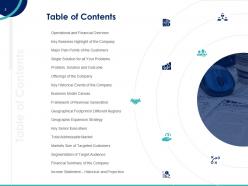
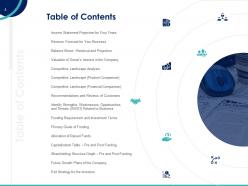
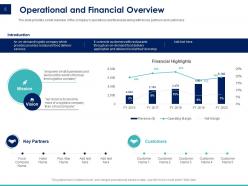
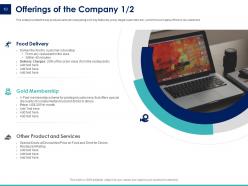
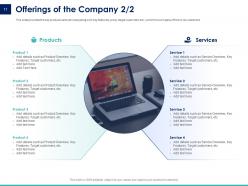
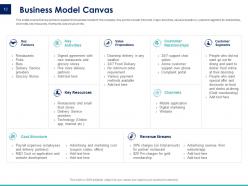
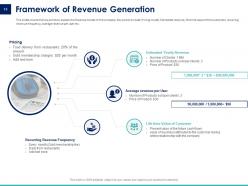
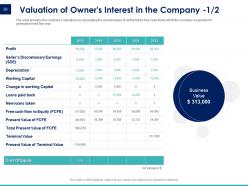
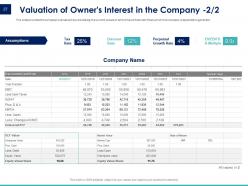
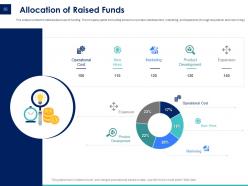
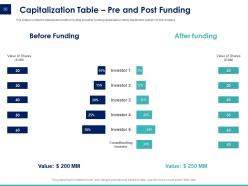
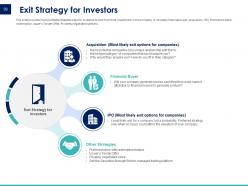
Equity crowdfunding is one of the methods of alternative financing that enables a wide group of investors to invest their money in start-ups and small businesses in return for equity. Investors put their money in the business and receive ownership in the company, as per their invested capital This presentation is helpful for the organizations, looking for a crowdfunding round of financing from the investors, who can put their money in the organization. This will help them to provide a quick overview of the business and their future plans. This presentation initially provides the operational and financial overview of the company i.e. business overview, key offerings, Unique selling proposition USP, company history, key achievements and recognitions, business model, revenue streams, marketing strategies, historical and forecasted financials etc. After analyzing the companys operations, it covers the details about funding requirement, goals and its allocation. The presentation also provides relevant exit strategies for crowdfunding investors.
People who downloaded this PowerPoint presentation also viewed the following :
Pitch deck to raise funding from equity crowdfunding powerpoint presentation slides with all 50 slides:
Ensure you establish a fair bargain with our Pitch Deck To Raise Funding From Equity Crowdfunding Powerpoint Presentation Slides. It helps handle the deal.












FAQs for Pitch deck to raise funding from equity crowdfunding
Equity crowdfunding offers investors actual ownership stakes in companies, while traditional crowdfunding provides products, perks, or rewards without equity participation. Unlike traditional platforms where backers receive tangible items, equity crowdfunding enables investors to potentially benefit from company growth and returns, with many startups finding this approach attracts more substantial funding for scaling operations.
Equity crowdfunding impacts startup valuation by establishing market-driven pricing through investor demand, creating transparent valuation benchmarks, and providing external validation of business models. This democratized funding approach enables startups to gauge genuine market interest while building investor communities, with many technology and consumer product companies finding that successful campaigns enhance credibility and attract follow-on institutional investment.
Startups must consider securities regulations like Regulation D, Regulation CF, and Regulation A+, disclosure requirements for financial statements and business risks, and state blue sky laws governing investor protections. These compliance frameworks enable companies to legally raise capital while maintaining transparency with investors, with many startups finding that proper regulatory preparation streamlines the fundraising process and enhances investor confidence.
Equity crowdfunding typically attracts retail investors seeking startup exposure, accredited investors diversifying portfolios, angel investors exploring new deal flow, and sector-specific enthusiasts targeting industries they understand. These investor types are drawn by lower minimum investments, direct founder access, and portfolio diversification opportunities, with many finding that crowdfunding platforms streamline due diligence while enabling strategic participation in emerging companies.
Platforms evaluate startups through comprehensive due diligence processes, assessing business models, financial projections, management teams, market potential, and regulatory compliance requirements. These vetting mechanisms streamline investor decision-making by filtering viable opportunities, with many platforms finding that rigorous selection criteria ultimately enhance investor confidence and deliver better outcomes for both startups and backers.
Equity crowdfunding offers startups access to diverse investor pools, reduced reliance on traditional venture capital, enhanced market validation, increased brand visibility, and flexible funding terms. Through these platforms, startups streamline capital raising while building engaged communities of investors, with many finding that the process delivers faster funding cycles and valuable customer feedback, ultimately providing competitive advantages in increasingly crowded markets.
Startups can effectively market their equity crowdfunding campaigns through compelling storytelling that highlights their value proposition, leveraging social media and email marketing to build investor communities, and creating professional pitch materials with clear financial projections. Many successful campaigns combine targeted digital advertising with personal networks and industry partnerships, ultimately delivering broader investor reach and enhanced credibility that attracts both retail and accredited investors.
Transparency builds investor trust by providing clear financial statements, detailed business plans, realistic projections, and honest risk assessments throughout the campaign. This openness enables potential investors to make informed decisions while demonstrating management credibility, ultimately attracting more committed backers and increasing funding success rates across diverse sectors.
Equity crowdfunding campaigns significantly enhance long-term growth prospects by providing capital access, market validation, and customer acquisition simultaneously, while building brand awareness and community engagement. These campaigns enable companies to scale operations, accelerate product development, and expand market reach, with many startups finding that investor networks become valuable resources for strategic partnerships, mentorship, and future funding rounds.
Equity crowdfunding risks include high failure rates of startups, illiquidity of investments, limited investor protections, potential fraud, and dilution from future funding rounds. While these investments offer access to early-stage opportunities, investors often face years without returns, with many financial advisors recommending limiting exposure to 5-10% of investment portfolios.
Investor due diligence in equity crowdfunding relies more heavily on platform-provided information, public disclosures, and community insights, while traditional investments allow direct access to management, detailed financial records, and professional intermediaries. Many retail investors find that crowdfunding platforms streamline research through standardized presentations and investor forums, though institutional investors typically conduct more comprehensive analysis with greater resources and direct company access.
Startups can track equity crowdfunding success through conversion rates, investor acquisition costs, social media engagement metrics, funding velocity, and campaign reach analytics. These tools enable monitoring of investor interest patterns, geographic distribution, and referral sources, while platforms like Republic and SeedInvest provide built-in dashboards that streamline performance tracking, ultimately delivering actionable insights for campaign optimization.
Equity crowdfunding diversifies funding by enabling entrepreneurs to access retail investors, international backers, and niche communities beyond traditional venture capital and bank loans. This approach reduces dependence on single funding sources while building customer bases early, with many startups finding that diverse investor networks provide valuable market insights, brand advocacy, and reduced financial risk through distributed capital raising.
Successful equity crowdfunding case studies include BrewDog, which raised over $75 million across multiple campaigns, Monzo Bank securing £20 million for digital banking expansion, and Revolut raising funds for fintech services. These companies leveraged crowdfunding to build customer communities, validate market demand, and accelerate growth, while gaining brand advocates who became both investors and loyal customers, ultimately delivering enhanced market positioning and sustainable competitive advantages.
Equity crowdfunding fosters community engagement by enabling local residents to become stakeholders in neighborhood businesses, creating deeper connections through shared ownership and vested interest in success. This model transforms customers into investor-advocates who actively promote local enterprises, while businesses benefit from enhanced community loyalty, grassroots marketing, and strengthened local economic ecosystems that ultimately drive sustainable growth and retention.
No Reviews