


Pitch deck to raise funding from series b investment powerpoint presentation slides





Try Before you Buy Download Free Sample Product
 Impress Your
 Audience
 100%
100% Editable
 Save Hours
 of Time


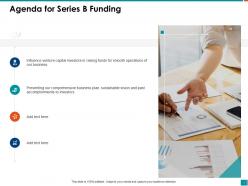
The purpose of Series B funding is to take corporations to the next level, after the development stage. Series B Financing is used to develop the company so that it can meet these amounts of demand. This presentation can be shown by the company to its investors so that they can get to know about the companys vision, mission, long term goals and helps the company by investing their money in the business. The main objective of this presentation is to influence the venture capitalists to invest their capital for the smooth operations of the business. It also presents a comprehensive business plan, Key executive and Top Management, sustainable vision and past accomplishments to the investors. This presentation analyzes the companys ownership structure, products offered, business opportunity, business problems and solutions, company growth performance, investors breakdown, target market, etc. It also includes the companys financial performance which includes sales forecast, business expense budget, company valuation, capitalization table, five year financials with projections, etc. It also provides the exit strategies for the investors which include IPO, Strategic Sales, Open Market Sale, Management Buyouts, etc.
People who downloaded this PowerPoint presentation also viewed the following :
Content of this Powerpoint Presentation
Slide 1: This slide introduces Pitch Deck to Raise Funding from Series-B Investment. State your Company name and begin.
Slide 2: This slide displays Agenda for Series B Funding.
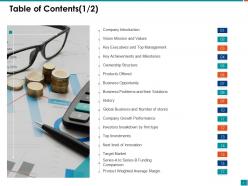
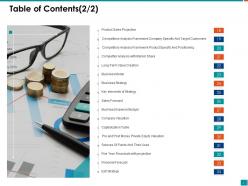
Slide 3: This slide displays Table of Contents.
Slide 4: This slide displays Table of Contents.
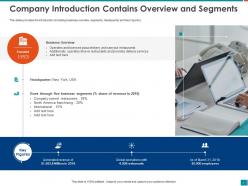
Slide 5: This slides provides the introduction (including business overview, segments, Headquarter and Key Figures).
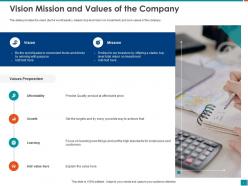
Slide 6: This slides provides the vision (be the world leader), mission (top level return on investment) and core values of the company.
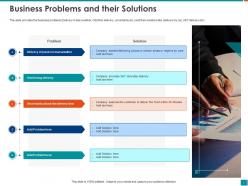
Slide 7: This slide provides the business problems (Delivery in bad weather, Odd time delivery, uncertainty etc.) and their solutions like (delivery by car, 24/7 delivery etc).
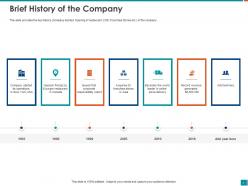
Slide 8: This slide provides the key history (Company started, Opening of restaurant, CSR, Franchise Stores etc.) of the company.
Slide 9: This slide provides the name and designations of Key Executives (C-level) of the company.
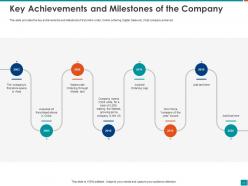
Slide 10: This slide provides the key achievements and milestones (First online order, Online ordering, Digital Sales etc.) that company achieved.
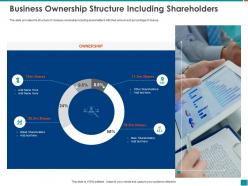
Slide 11: This slide provides the structure of company ownership including shareholders with their amount and percentage of shares.
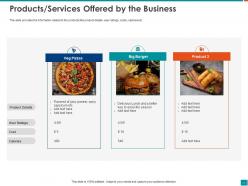
Slide 12: This slide provides the information related to the products like product details, user ratings, costs, calories etc.
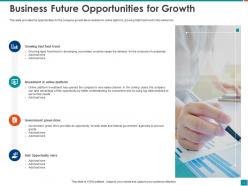
Slide 13: This slide provides the opportunities for the company growth like investment in online platform, growing fast food trend in the market etc.
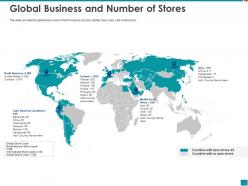
Slide 14: This slide provides the global store count of North America, Europe, Middle East, Asia, Latin America etc.
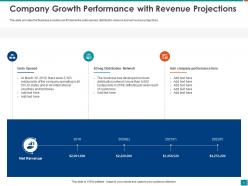
Slide 15: This slide provides the Business evolution performance like units opened, distribution network and net revenue projections.
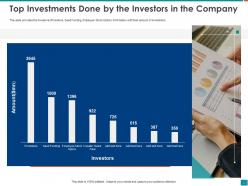
Slide 16: This slide provides the investors (Promoters, Seed Funding, Employee Stock Option) information with their amount of investment.
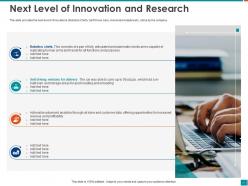
Slide 17: This slide provides the next level of innovations (Robotics Chefs, Self Driven Cars, Advanced Analytics etc.) done by the company.
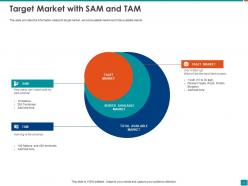
Slide 18: This slide provides the information related to target market, served available market and total available market.
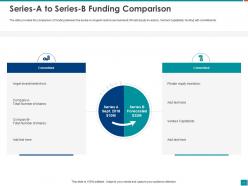
Slide 19: The slide provides the comparison of funding between the series-A (Angel Investors) and series-B (Private Equity Investors, Venture Capitalists) funding with commitments.
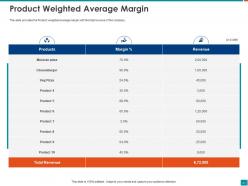
Slide 20: This slide provides the Product weighted average margin with the total revenue of the company.
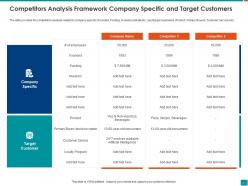
Slide 21: The slide provides the competitors analysis related to company specific (Founded, Funding, Investors details etc.) and target customers (Product, Primary Buyers, Customer Service etc).
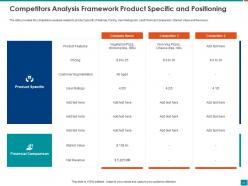
Slide 22: The slide provides the competitors analysis related to product specific (Features, Pricing, User Ratings etc.) and Financial Comparison (Market Value and Revenue).
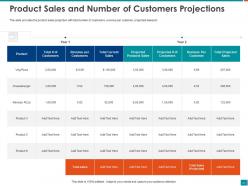
Slide 23: This slide provides the product sales projection with total number of customers, revenue per customer, projected sales etc.
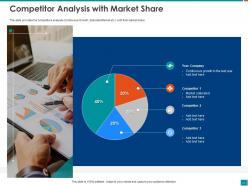
Slide 24: This slide provides the competitors analysis (Continuous Growth, Saturated Market etc.) with their market share.
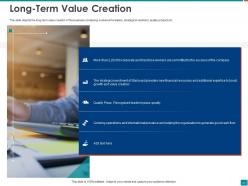
Slide 25: This slide depicts the long-term value creation of the business containing workers information, strategic investment, quality product etc.
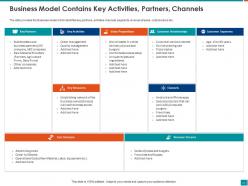
Slide 26: The slide provides the Business model which identifies key partners, activities channels, segments revenue streams, cost structure etc.
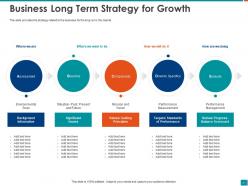
Slide 27: This slide provides the strategy related to the business for the long run in the market.
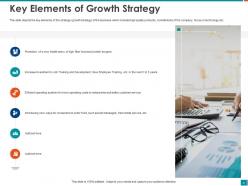
Slide 28: This slide depicts the key elements of the strategy (growth strategy) of the business which includes high quality products, commitments of the company, focus on technology etc.
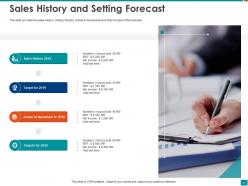
Slide 29: This slide provides the sales History, Setting Targets, Actual Achievements and final forecast of the business.
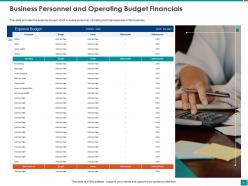
Slide 30: This slide provides the expense budget which includes personnel, operating and total expenses of the business.
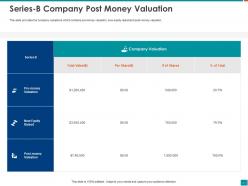
Slide 31: This slide provides the company valuations which contains pre-money valuation, new equity raised and post-money valuation.
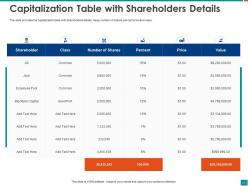
Slide 32: This slide provides the capitalization table with shareholders details, class, number of shares, percent price and value.
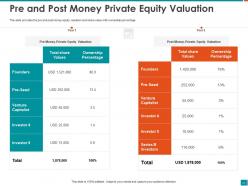
Slide 33: This slide provides the pre and post money equity valuation and share value with ownership percentage.
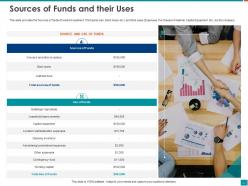
Slide 34: This slide provides the Sources of funds (Owners Investment, Third party loan, Bank loans etc.) and their uses (Expenses, Purchases of material, Capital Equipment etc.) by the company.
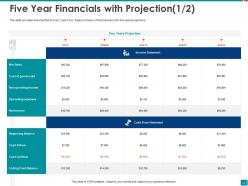
Slide 35: This slide provides financial (Net Income, Cash Flow, Balance Sheet) of the business with five years projections.
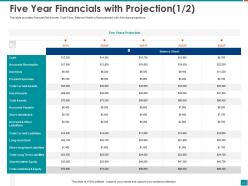
Slide 36: This slide provides financial (Net Income, Cash Flow, Balance Sheet) of the business with five years projections.
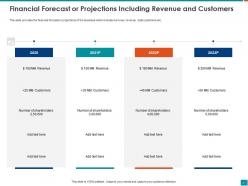
Slide 37: This slide provides the financial forecast or projections of the business which includes turnover, revenue, total customers etc.
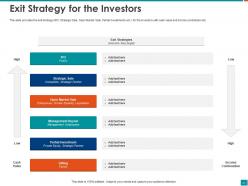
Slide 38: This slide provides the exit strategy (IPO, Strategic Sale, Open Market Sale, Partial Investments etc.) for the investors with cash value and income contribution etc.
Slide 39: This is Pitch Deck to Raise Funding from Series-B Investment Icons Slide
Slide 40: This slide is titled as Additional Slides for moving forward.
Slide 41: This slide reminds of Coffee break.
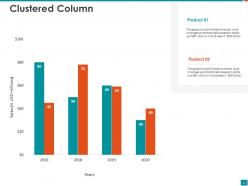
Slide 42: This slide shows Clustered Column with product comparison.
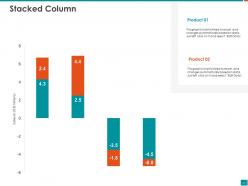
Slide 43: This slide displays Stacked Column chart with product comparison.
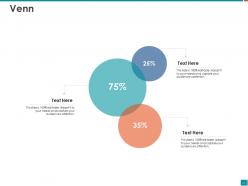
Slide 44: This is Venn slide.
Slide 45: This slide displays Company Introduction.
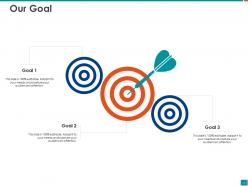
Slide 46: This is Our Goal slide.
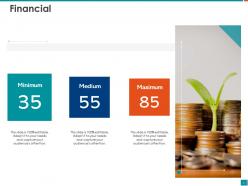
Slide 47: This is Financial slide. Display finance related stuff.
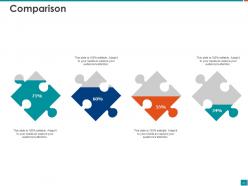
Slide 48: This is Comparison slide.
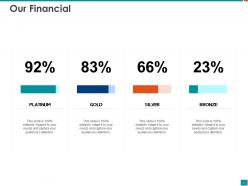
Slide 49: This is Our Financial slide.
Slide 50: This is Thank You slide with Contact details.
Pitch deck to raise funding from series b investment powerpoint presentation slides with all 50 slides:
Use our Pitch Deck To Raise Funding From Series B Investment Powerpoint Presentation Slides to effectively help you save your valuable time. They are readymade to fit into any presentation structure.




FAQs for Pitch deck to raise funding from series b investment
A Series B pitch deck should include market opportunity analysis, proven business model validation, detailed financial performance metrics, clear growth trajectory plans, and competitive differentiation strategies. These elements demonstrate scalability by showcasing revenue growth, customer acquisition costs, and market expansion potential, with many investors finding that strong unit economics and strategic partnerships ultimately deliver the confidence needed for larger funding rounds.
A Series B pitch deck emphasizes proven traction, scalable business models, and path to profitability, while Series A focuses on product-market fit and initial growth. Series B presentations showcase detailed unit economics, market expansion strategies, and competitive positioning, with investors expecting comprehensive financial metrics, customer acquisition costs, and clear revenue scaling plans that demonstrate sustainable growth momentum.
Best practices for presenting Series B financial projections include demonstrating clear unit economics, showcasing 3-5 year revenue forecasts with realistic growth trajectories, highlighting key metrics like customer acquisition costs and lifetime value, and providing detailed assumptions behind your projections. These elements enable investors to assess scalability and market opportunity, with many successful Series B companies finding that transparent, data-driven projections with conservative scenarios ultimately build greater investor confidence and trust.
Startups should demonstrate market growth potential through comprehensive market sizing (TAM, SAM, SOM), competitive analysis, customer acquisition metrics, revenue projections, and validated demand indicators like pilot programs or partnerships. These elements showcase scalability by highlighting expansion opportunities, customer retention rates, and unit economics, with many investors finding that startups combining quantitative market data with proven traction metrics ultimately deliver the strongest growth narratives and secure funding more effectively.
Customer acquisition strategy demonstrates scalable growth mechanisms, proven unit economics, diversified acquisition channels, and sustainable customer lifetime value metrics that investors scrutinize for Series B funding. This strategic component showcases how companies move beyond initial product-market fit to systematic growth engines, with many SaaS and e-commerce businesses finding that detailed acquisition funnels and retention analytics ultimately deliver the predictable revenue growth essential for larger funding rounds.
A startup should showcase its team through detailed leadership profiles highlighting relevant experience, track records in scaling businesses, and specific achievements that demonstrate execution capability. Investors at Series B stage prioritize teams with proven scaling expertise, so emphasizing previous exits, revenue growth milestones, and industry recognition helps build confidence, while showcasing advisory board strength and key hires since Series A demonstrates continued talent acquisition and strategic growth.
Series B pitch decks should emphasize revenue growth rates, customer acquisition costs, lifetime value ratios, monthly recurring revenue trends, and market expansion metrics. These financial indicators demonstrate scalability and operational efficiency, with many investors finding that consistent 100%+ year-over-year growth, improving unit economics, and clear paths to profitability create compelling investment opportunities.
Startups should present their competitive landscape through a comprehensive matrix highlighting direct competitors, indirect alternatives, feature comparisons, market positioning, and clear differentiation factors. This strategic analysis demonstrates deep market understanding while showcasing unique value propositions, with many Series B companies finding that transparent competitive positioning builds investor confidence and validates market opportunity size.
Effective Series B storytelling techniques include demonstrating clear market traction, showcasing proven revenue growth, highlighting scalable business models, presenting compelling customer success stories, and articulating strategic expansion plans. These narrative elements enhance investor confidence by combining quantifiable achievements with future growth potential, with many startups finding that data-driven storytelling paired with vision-forward messaging ultimately delivers stronger investor engagement and competitive positioning.
Including testimonials and case studies in a Series B pitch deck is crucial for demonstrating proven market validation, customer satisfaction, and scalable business impact. These elements provide concrete evidence of your product's effectiveness, showcase quantifiable results across different client segments, and build investor confidence by highlighting real-world success stories that validate your growth trajectory and market position.
Clear hierarchy through consistent typography, strategic use of white space, professional color schemes, and high-quality visuals should be prioritized in pitch deck design. These elements enhance readability and investor engagement by creating logical flow, emphasizing key metrics, and maintaining visual consistency, with many Series B companies finding that clean, data-focused designs ultimately strengthen credibility and funding outcomes.
Startups can convey fund usage effectively by presenting detailed allocation breakdowns across key areas like product development, market expansion, team scaling, and operational infrastructure, while connecting each investment to specific growth metrics and revenue targets. This strategic approach demonstrates fiscal responsibility and clear growth vision, with many Series B investors finding that startups linking fund deployment to measurable outcomes like customer acquisition costs, market penetration rates, and projected revenue milestones create compelling investment cases.
Common mistakes include weak market sizing validation, unclear revenue scaling strategies, insufficient competitive differentiation, vague use of funds allocation, and inadequate team expansion plans. Many startups also underestimate investor due diligence requirements, presenting overly optimistic projections without supporting data, ultimately weakening their credibility and reducing their chances of securing strategic growth capital.
Startups can tailor their Series B narrative by researching investor portfolios, investment thesis, and preferred sectors, then customizing messaging around scalability metrics, market expansion strategies, and proven revenue models that align with each investor's focus. Through personalized storytelling that emphasizes specific growth achievements, competitive advantages, and strategic partnerships, companies demonstrate clear paths to significant returns while addressing investor concerns about market positioning, ultimately creating compelling cases for investment partnership.
Technology and product innovation demonstrate scalability, competitive differentiation, and market expansion capabilities that Series B investors prioritize when evaluating growth potential. These elements showcase how companies can capture larger market share, streamline operations, and deliver enhanced customer experiences, while highlighting proprietary advantages, strategic partnerships, and revenue optimization that ultimately position startups for sustainable growth and market leadership in increasingly competitive landscapes.
No Reviews