

Post Merger Integration Plan Checklist




Try Before you Buy Download Free Sample Product
 Impress Your
 Audience
 100%
100% Editable
 Save Hours
 of Time


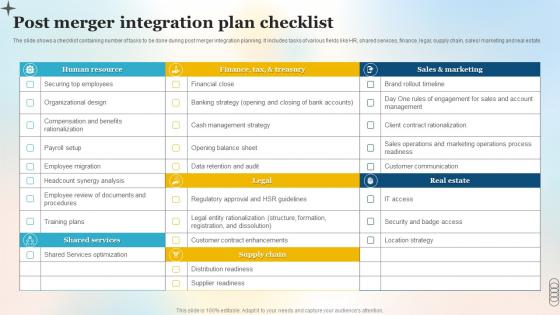
The slide shows a checklist containing number of tasks to be done during post merger integration planning. It includes tasks of various fields like HR, shared services, finance, legal, supply chain, sales marketing and real estate.
People who downloaded this PowerPoint presentation also viewed the following :
Post Merger Integration Plan Checklist with all 6 slides:
Use our Post Merger Integration Plan Checklist to effectively help you save your valuable time. They are readymade to fit into any presentation structure.





FAQs for Post Merger
Look, you've got three big things to nail: grabbing those cost savings and revenue bumps that sold everyone on the deal, getting teams to actually collaborate instead of fighting each other, and making everything run smoother. The culture stuff is brutal - way trickier than the spreadsheets make it seem. Don't forget about keeping your star players from jumping ship and making sure customers don't freak out during all the changes. Oh, and systems integration is a nightmare but you can't avoid it. Go for some early wins to keep momentum up, just don't get so caught up in quick fixes that you lose sight of the bigger picture.
OK so basically you need three things sorted: how often you're talking to people, who gets what info, and keeping your main message straight across the board. Weekly updates for the big shots, every two weeks for all staff, monthly for outside folks. Honestly I've seen way too many mergers go sideways because leadership went radio silent - people's imaginations run wild, you know? Different groups care about different stuff, so customize accordingly. But don't contradict yourself between channels or you'll create chaos. Mix it up with emails, meetings, whatever actually works in your company. I'd start by listing out all your key people and figuring out how they like to get news.
Honestly, you've got to figure out roles super early or it becomes a total shitshow. Get one person as integration lead who actually has power to make calls - not some middle manager who has to check with their boss constantly. Break everything into workstreams: HR, finance, IT, operations, legal stuff. Each needs leads from both companies who know what they're talking about (skip the executives who just like hearing themselves speak). Oh, and don't forget communication leads - people need updates or they'll make up their own stories. Document it all in a RACI matrix. Sounds boring but trust me, you'll thank yourself later when nobody's fighting over who owns what.
Honestly, you need to figure out both companies' vibes first - even similar businesses can be totally different culturally. Run some surveys or focus groups to spot where things might clash later. Get people actually working together on projects instead of just talking about merging in endless meetings. Oh, and transparency is everything here. Tell folks what's changing and what isn't. Don't make one company swallow the other's culture whole - that never works. Cherry-pick the good stuff from both sides and build something fresh that doesn't make everyone miserable.
Start with the big operational stuff - ERP, CRM, HR/payroll, financial reporting. Those are your backbone systems. Communication tools matter too since juggling multiple Slack workspaces drives everyone crazy (learned that the hard way). Data management and inventory tracking can't wait either. Honestly, industry-specific software is where things get tricky since both companies probably have their favorites. Map out what each side uses first. Then rank everything by "how screwed are we if this breaks?" That's your timeline right there. The stuff that'll cause chaos goes first.
Start with real-time dashboards for the big stuff - revenue synergies, cost savings, EBITDA vs your milestones. Monthly scorecards comparing actual numbers to what you projected work well too. Cash flow's huge here since mergers get ugly fast without proper liquidity tracking. Don't sleep on leading indicators like customer retention and employee productivity either - they hit your bottom line hard. Oh, and weekly finance check-ins for the first 90 days are a lifesaver for catching problems before they snowball.
Track your financial stuff first - revenue gains, cost cuts, EBITDA bumps. But honestly? The operational metrics matter way more than people think. Employee retention, customer churn, system uptime, how fast you're shipping new products. Also throw in some culture tracking like satisfaction surveys and whether teams are actually working together across companies. Oh, and baseline everything before you start or you'll have no clue what changed. Pick maybe 5-7 metrics tops - any more and you'll just ignore the whole dashboard anyway.
Map out both company structures first and spot where roles overlap - that's your main pain point right there. People absolutely hate not knowing what's happening, so be crazy transparent about new reporting lines from the start. I'd honestly rather tell someone bad news than leave them guessing. Keep your best people happy while cutting the duplicate positions. Cultural stuff is huge though - don't just bulldoze through changes without understanding how each team actually works. Take time with it. Share a clear org chart with timelines so everyone knows what's coming and when.
Talk to people constantly - seriously, over-communicate everything. Be upfront about how roles will change, then keep sending updates even when nothing's happening. Companies that go quiet? Their employees start job hunting immediately, it's so predictable. Within 30 days, figure out who you can't afford to lose and sit down with them. Career paths in the new structure, retention bonuses if you have to - whatever keeps them around. Your managers need to be ready for tough questions too. Oh, and don't wait until someone quits to find out they were unhappy for months.
Definitely revisit the financial reconciliation stuff - that's where surprises love to hide. IT compatibility issues always get messier once you're actually trying to merge systems. Legal liabilities are worth another look too, especially those employment contracts that seemed straightforward but turn into headaches. Cultural fit is huge and you won't really know until you're in it. I'd also double-check talent retention risks and customer concentration problems that might've shifted. Regulatory compliance deserves fresh eyes since rules change. Honestly, just block out time in your first 90 days to systematically go through this stuff again - it's boring but saves you later.
Look, customer experience has to be your
-
I was really impressed with the presentation I created with their templates. I’ll be using their services moving forward.
-
Kudos to SlideTeam for achieving the high success rate in delivering the top-notch slides.