


Post Merger Integration Plan Acquisition Due Diligence Checklist




Try Before you Buy Download Free Sample Product
 Impress Your
 Audience
 100%
100% Editable
 Save Hours
 of Time


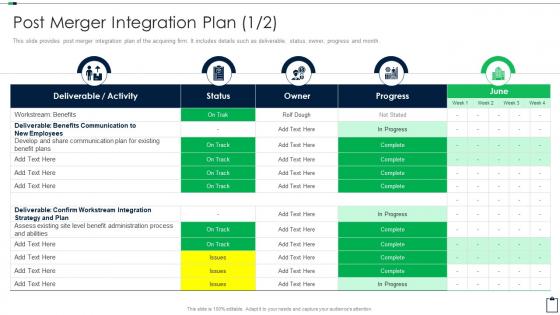
This slide provides post merger integration plan of the acquiring firm. It includes details such as deliverable, status, owner, progress and month.
People who downloaded this PowerPoint presentation also viewed the following :
Post Merger Integration Plan Acquisition Due Diligence Checklist with all 6 slides:
Use our Post Merger Integration Plan Acquisition Due Diligence Checklist to effectively help you save your valuable time. They are readymade to fit into any presentation structure.





FAQs for Post Merger Integration Plan Acquisition
Honestly, culture clash is your biggest enemy - people from both companies will resist change like crazy. You'll also lose good talent because everyone panics about job security. Different systems that don't talk to each other? Total headache. Communication gets messy fast when nobody knows who reports to whom anymore. Meanwhile you're supposed to hit those synergy targets while keeping the lights on. Quick wins help build momentum though. I'd say communicate way more than feels necessary, lock down your star players early so they don't bail, and tackle the easy stuff first.
Dude, you've gotta communicate like crazy during this - way more than feels right. Town halls, emails, team meetings, the works. Even when there's nothing new to share, keep talking. People would rather hear bad news than sit in silence wondering what's happening. Your managers are gonna get bombarded with questions about layoffs and benefits, so prep them with consistent answers. Also set up ways for people to give feedback - can't just be you talking at everyone. Oh and honestly? Being ahead of the curve beats scrambling to respond later. Trust me on this one.
Dude, culture stuff will absolutely kill a merger if you're not careful. Like, I've watched deals that seemed perfect just completely implode because nobody figured out how the teams would actually work together day-to-day. You'll have one company that does everything through Slack, another that's all about formal emails - sounds small but it creates chaos. Decision-making processes are huge too. The trick is spotting these clashes before they blow up and actually having a game plan. Don't just hope people figure it out themselves because they won't.
So first thing - get cross-functional teams with people from both companies to spot the cultural gaps and figure out what you're aiming for. Communication is huge here, honestly can't stress that enough. Do town halls, surveys, listening sessions to see what matters most to each group. Then blend the best parts instead of forcing one side to just adopt everything the other does (that never works anyway). Quick wins help - grab the popular stuff from both cultures and roll it out fast. Oh and your leadership team needs to actually live this new culture daily, not just talk about it.
Track the obvious stuff first - revenue synergies, cost savings, whether you're blowing your integration budget. But honestly? The soft metrics matter just as much. Employee retention tells you if people are jumping ship, and customer satisfaction shows if you're screwing up what actually matters. Cultural integration surveys are gold - they'll reveal the real drama happening between teams. Oh, and monitor how fast departments are actually working together instead of staying in their old silos. Set up monthly tracking, not quarterly. Integration problems snowball crazy fast, so you need to spot issues while you can still do something about them.
Start with something like the 100-day plan or McKinsey's method - gives you structure when everything's chaos. Monday or Asana work great for tracking all the pieces, though honestly Excel still saves my butt half the time. Set up an IMO early for coordination. Culture stuff is huge - run employee surveys to spot problems before they explode. Oh, and build dashboards to actually track if those synergy numbers you promised are happening. Pick one framework first, then add tools as you go. Way easier than trying to do everything at once.
Dude, leadership involvement is absolutely everything. I'm talking make-or-break stuff here. When executives aren't fully committed, employees notice immediately - and they start panicking or bailing. You'll get teams working against each other, priorities all over the place. It's a mess. The leaders have to communicate constantly and make decisions fast. Can't be wishy-washy about it. I've watched integrations completely implode because the C-suite kept flip-flopping or just checked out mentally. Honestly? If your leadership team isn't eating, sleeping, and breathing this integration, you might as well pack it up now. People need to see their bosses are actually invested.
First thing - audit both tech stacks to see what overlaps and what's missing. Focus on the critical stuff first (payroll, customer data, core systems). Don't be a hero and try integrating everything at once - trust me on this one. Build out a migration timeline with clear owners and backup plans. Your teams need to talk constantly because tiny mix-ups become huge disasters fast. Oh, and run your old and new systems side by side way longer than feels necessary. Seriously annoying but worth it. Get your data backups sorted before touching anything else though.
Honestly, just be super upfront about everything - timelines, role changes, the whole mess. People know when you're being sketchy and that's when they start updating their resumes. Get your best people involved in actually planning the integration so they feel ownership instead of just sitting there wondering if they're getting fired. Retention bonuses work if you've got budget for it. Show them clear career paths in the new setup too - nobody wants to stick around for chaos with no future. Oh and seriously, don't drag this out forever. I've seen companies take like two years to integrate and it's a disaster. Set deadlines and hit them.
Dude, the biggest mistakes are rushing things and terrible communication. Most people only focus on the numbers and completely ignore whether the company cultures actually fit together - that's where deals usually blow up. Your employees are gonna freak out without regular updates about what's changing. I've seen so many good people bail just because leadership went radio silent. Oh, and don't treat the people stuff like some HR checkbox. Get someone senior to actually own the cultural integration piece because honestly? That's what makes or breaks these things way more than the spreadsheets do.
Oh man, regulations are such a pain but they'll totally derail your timeline if you don't plan for them. GDPR in Europe is brutal - adds months to any integration. US antitrust stuff moves quicker thankfully. Asia's weird though, some places are super chill while others make you jump through crazy hoops. But here's what really sucks: these aren't just legal boxes to check. They actually dictate when you can migrate data and consolidate systems. Honestly learned this the hard way on a project last year. You've gotta map out regulatory requirements first, before you even touch your integration plan.
Look, the people side of mergers is where things get messy fast. Everyone's freaking out - employees think they'll get fired, customers worry about service changes, investors want results yesterday. I've watched perfectly good deals crash because nobody bothered talking to stakeholders until it was too late. You can't just send one email and call it done either. Map out your key groups first, then hit them with regular updates that actually answer "what does this mean for ME?" Be honest about the uncertainty too - people smell BS from miles away.
Honestly, map out everything each company has first - products, services, customers, the whole deal. I know execs will want instant results, but don't skip this step. Cut the duplicate stuff while finding things that actually work well together. Your customers shouldn't feel like everything's falling apart, so tell them what's happening early. Set up teams with real deadlines and someone who's actually in charge. Here's the tricky part - you want to move quickly on the obvious wins but slow down when it gets complicated. Some decisions can really bite you later if you rush them.
Dude, change management can make or break your whole M&A deal. Without it, people panic and you lose your best employees - I've seen it happen so many times. Start communicating early about what's changing, even if you don't have all the details yet. Find those natural leaders in both companies who can help sell the vision to everyone else. The resistance is gonna come no matter what, so get ahead of it. Map out how jobs and processes will shift so people aren't left guessing. Trust me, the upfront work saves you from complete disaster later.
Look at customer overlap first - that's where the real money is. Map out your combined customer base to find cross-selling spots and figure out who might bail during the chaos. Financial data shows you the actual cost savings, not just what the C-suite thinks exists (spoiler: they're usually way off). Track everything in real-time too - employee happiness, how smoothly systems are merging, customer churn rates. Honestly, setting up good dashboards early saves you from making dumb decisions based on office politics instead of what's actually happening. Data beats gut feelings every time in M&A.
-
Like always a great experience with you guys. Always there on the drop of hat to help.
-
SlideTeam is the best in the business. Their templates are engaging and customizable. You can rely on them.