


Post Merger Integration Plan Timeline




Try Before you Buy Download Free Sample Product
 Impress Your
 Audience
 100%
100% Editable
 Save Hours
 of Time


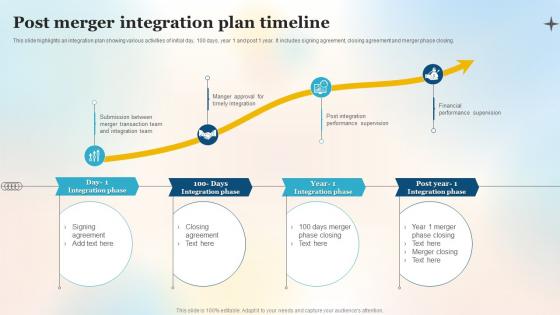
This slide highlights an integration plan showing various activities of initial day, 100 days, year 1 and post 1 year. It includes signing agreement, closing agreement and merger phase closing.
People who downloaded this PowerPoint presentation also viewed the following :
Post Merger Integration Plan Timeline with all 6 slides:
Use our Post Merger Integration Plan Timeline to effectively help you save your valuable time. They are readymade to fit into any presentation structure.





FAQs for Post Merger
So PMI breaks down into three chunks. Day 1 prep takes maybe 3-6 months - you're basically making sure nothing breaks when the deal closes. Months 6-18 is where things get messy (and honestly, where most mergers crash and burn) - that's when you're actually smooshing systems and teams together. The final stretch is optimization, like 18-36 months out. That's when you're tweaking everything and trying to hit those synergy numbers the executives promised. Oh, and whatever timeline you think it'll take? Add six months. Trust me on this one.
Pick your 5-7 most critical goals first - trust me, tracking everything just creates chaos. Financial stuff is straightforward: "hit 75% of cost savings by month 12" or "finish IT integration by month 18." Culture's way harder to pin down, but employee retention and engagement scores give you something concrete to watch. The real trick is making sure someone actually owns each goal with real deadlines. I'd also track how fast teams from both companies start working together naturally - that's usually where you see if the merger's actually working. Set up regular check-ins so nothing falls through the cracks.
Dude, those first 90 days are make-or-break time. Your leaders need to be everywhere - talking constantly, making quick calls on who stays, who goes, org structure, all that messy stuff. Most integrations crash and burn right here because leadership drops the ball. People are losing their minds about job security, so someone has to kill the rumors and keep everyone working instead of panicking. Get your leadership team on the same page BEFORE you announce anything - like way before. Oh and find your integration champions early. Give them real power to actually do stuff, not just busywork.
Dude, you can't communicate enough during a merger - like, think you're being super annoying and then double it. Have leadership do town halls where they actually address what everyone's thinking. Send regular updates even when nothing's happening, because people will assume the worst otherwise. I learned this the hard way watching deals implode. Set up Q&A channels and give managers real talking points for their team check-ins. Honestly? If you don't know something yet, just say that instead of being weird about it. Make a communication schedule so stuff doesn't slip through the cracks.
Ugh, communication breakdowns are the worst part - people just don't understand each other's work styles at first. Everyone gets super protective of their old ways, like you're asking them to abandon their favorite coffee mug or something. Power struggles pop up everywhere as teams fight for their spot in the new setup. Job security fears make everyone paranoid, which kills team morale fast. Honestly? Map out the cultural differences between both companies right now. That way you can tackle problems before they blow up instead of scrambling later when people are already frustrated.
So mergers drag on forever - like 12-18 months usually because you've got two "equal" companies trying to agree on literally everything. Acquisitions are way faster, maybe 6-12 months, since one company's clearly in charge and just tells everyone how it's gonna be. Honestly mergers are such a pain. It's like when roommates can't decide whose Netflix account to keep - except with billion dollar decisions. At least with acquisitions the buyer just says "we're doing it our way" and moves on. Obviously regulatory stuff can slow things down, but that's your basic timeframe to expect.
Okay so definitely track the money stuff first - revenue synergies, cost savings, EBITDA improvements. Employee retention is massive though, like way more than people think. Customer churn too. Then you've got system integration milestones and those cultural survey scores (ugh, surveys, but they're actually useful here). Time-to-market for new products is critical - seriously gets ignored all the time. Communication feedback and how fast decisions happen matter too. Just throw it all on a dashboard. Weekly reviews for the first 100 days, then monthly. Trust me on this one.
So tech is basically what holds everything together during a merger - handles all the data movement, connects systems that probably hate each other, automates stuff that'd take forever manually. First thing? Audit what both companies actually have. Trust me, you can't merge what you don't understand (learned that the hard way). Different tech stacks are a nightmare - like connecting an iPhone to some ancient PC. Done right though, you get real-time tracking, spot problems early, keep everyone on the same timeline. It's crucial for HR databases, customer records, all that critical stuff.
First thing - figure out what tasks actually tie back to why you bought this company. What revenue bumps or cost cuts did you promise? Focus there. Quick wins with big impact should be your starting point. Honestly, I've watched teams waste months on random operational stuff that doesn't move the needle. Get a steering committee together who can actually make decisions fast. Short sentences work here - rank everything by what matters most. If something doesn't connect to your original deal logic, it can wait. Build momentum early with the wins that actually count.
Dude, you've gotta talk way more than feels normal - seriously overdo it at first. Map out who needs what info because your team needs totally different updates than customers do. Give realistic timelines from day one, not the "everything goes perfect" version that'll screw you over later. I made that mistake once and it was brutal! Set up regular check-ins with the important people. Be honest about changes even when you're still figuring stuff out. Oh and write down what you promise - sounds obvious but you'd be surprised how easy it is to forget. Start identifying your key people today.
Ugh, regulatory approvals are such a pain - they can drag your timeline out for months or even years depending on your industry. Healthcare and finance are the absolute worst for this. You can't touch certain operations until you get the green light, especially anything with customer data or pricing. Here's what I'd do: figure out which parts actually need regulatory approval versus what you can start on right away. My old boss learned this the hard way when their deal got held up for an extra 8 months. Build those approval milestones into your timeline from day one and definitely have a backup plan ready.
Honestly, don't rush into changes without telling everyone what's going on - people freak out when they're left in the dark. Company cultures are weirdly different too, and that can mess things up fast if you ignore it. Skip the big system overhauls for your first few months. I'd focus on some easy wins first to build trust, then go after the complicated stuff. Oh, and seriously resist integrating everything at once even though it's tempting. You'll just create chaos. Start small, communicate like crazy, then scale up once people actually trust the process.
Figure out your synergies fast and get specific teams on them with real deadlines. Cost savings are your friend here - cut duplicate roles, merge vendors, that kind of stuff. Gives you credibility when the harder revenue synergies come up later (cross-selling is where the real money is, honestly). Don't just wing it though. Treat this like an actual project with milestones and someone tracking progress every week. I've seen too many deals where people assume synergies will magically happen. Set up a dedicated office to watch the numbers and make sure everyone's hitting their targets. Quick wins first, then tackle the complex stuff.
Look, due diligence is everything because it catches all the nasty surprises before they blow up your integration. You've got to dig into their systems, culture, processes - basically find any skeletons lurking around. It's like house hunting - nobody skips the inspection, right? Skip this step and you're going in blind, which means missed opportunities, blown budgets, and everything taking twice as long. Start early and really focus on IT systems, HR stuff, and financial processes. Honestly, that's where most of the headaches come from later.
Honestly, start with monthly pulse surveys right away - within your first 30 days if possible. Cross-functional committees are great but only if they actually meet and can escalate real problems (so many companies just create them for show). Make sure feedback doesn't die in middle management - that's where good ideas go to disappear forever. Track everything you're hearing and respond visibly. People need to see their input actually changing things, otherwise they'll stop bothering to share. Switch to quarterly surveys once things settle down and you're not putting out fires constantly.
-
Much better than the original! Thanks for the quick turnaround.
-
Very well designed and informative templates.