

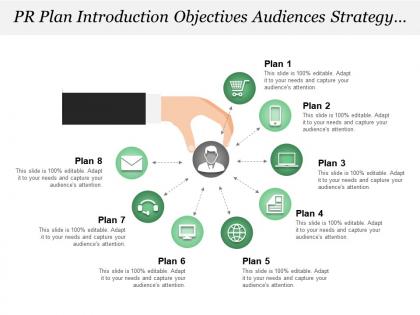
Pr plan introduction objectives audiences strategy tactics media public relations




Try Before you Buy Download Free Sample Product
 Impress Your
 Audience
 100%
100% Editable
 Save Hours
 of Time


Link your chain of thoughts with our Pr Plan Introduction Objectives Audiences Strategy Tactics Media Public Relations. Increase their overall tensile ablity.
People who downloaded this PowerPoint presentation also viewed the following :
Pr plan introduction objectives audiences strategy tactics media public relations with all 5 slides:
Give them a good account of your capability with our Pr Plan Introduction Objectives Audiences Strategy Tactics Media Public Relations. They act like a calling card.


FAQs for Pr plan introduction objectives audiences strategy tactics
So basically you're the company's storyteller and damage control person rolled into one. PR handles reputation management, builds relationships with media/investors/customers - all those key people who matter. Crisis communication is huge too because stuff always hits the fan eventually. You'll also do internal comms and make sure messaging actually makes sense with what the business wants. Honestly, it's like being a translator between your company and everyone else. My advice? Figure out who you're really trying to reach first, then nail down what messages actually click with them. Everything else flows from there.
Look, people remember stories way better than boring stats - it's just how our brains work. Your PR becomes instantly more relatable when there's a narrative behind it. Journalists love this stuff too because stories give them actual angles to write about instead of generic company fluff. Plus social media eats up compelling narratives. Honestly, I think the trick is finding the human side of whatever you're promoting and building around that. Like, you can probably recite fairy tales from when you were five, but good luck remembering any corporate press release from last month, you know? Start there and you'll see the difference.
Honestly, social media IS modern PR at this point. You're building relationships directly with people, managing your reputation in real time, and getting your message out without waiting for some journalist to maybe cover your story. Crisis hits? You can respond immediately instead of drafting press releases that nobody reads. Plus journalists are just mining Twitter for content anyway - might as well give them something good. The trick is staying genuine and not trying to be everywhere at once. Pick 2-3 platforms where your people actually are (not where you think they should be) and focus there first. Monitor what people are saying about you constantly though.
Honestly, speed is everything in crisis PR. Don't let silence do the talking for you - that's when things get really messy. First, gather your facts (no guessing). Then put out a clear message that owns up to what went wrong and shows concrete steps you're taking to fix it. Multiple channels, same message every time. The goal isn't just damage control - you want people seeing you actually solve the problem. Oh, and have this plan ready beforehand because scrambling in the moment? Not pretty. Taking responsibility upfront usually works way better than trying to dodge it later.
So marketing is like your big picture game plan for getting your stuff out there. Advertising? That's the paid content you make to actually reach people. PR is totally different though - it's all about building relationships and managing how people see you through earned media. Like getting a journalist to write about your company or dealing with bad press when things go sideways. Here's how I think about it: advertising is what you pay to say about yourself, but PR is what other people say about you. Marketing covers both of those plus way more. The boundaries get messy sometimes, honestly. But PR really focuses on credibility instead of just trying to sell stuff directly. Figure out what you're actually trying to accomplish first.
You gotta measure both the numbers stuff and the softer metrics. Media coverage volume, reach, sentiment - plus how you stack up against competitors. Website traffic and social engagement are obvious ones. But honestly? Don't ignore brand perception surveys and customer feedback - that stuff's pure gold. Oh, and set your KPIs right from the start based on what you're actually trying to do. Awareness campaign? Fixing your reputation? Driving sales? Your metrics need to match those goals. Start tracking everything from day one or you'll hate yourself later.
Honestly? Just be straight up with everyone - journalists, the public, whoever. Don't mislead people or invade their privacy. I know it sounds obvious, but I've watched so many PR careers implode over "harmless" little lies that weren't worth it at all. Protect your client's interests, sure, but don't be shady about it. Oh, and think about how your campaigns actually affect people beyond just making money. Here's my test: would you be cool seeing your strategy plastered on the front page with your name on it? If not, probably don't do it.
Honestly, influencers are like word-of-mouth but way more powerful. They can hit audiences traditional media totally misses, and people actually trust what they're saying - not like those corporate ads everyone ignores. The trick is finding ones whose followers match who you're trying to reach. Don't get sucked into the follower count game though, that's such a rookie mistake. I'd start small with maybe 3-5 micro-influencers in your niche and just build real relationships first. When their values actually align with your brand, that's where the magic happens.
Dude, you can't just copy-paste your strategy across different countries - it's a recipe for disaster. What works here might totally bomb or straight-up offend people elsewhere. Some cultures want you to be super direct, others think that's rude and prefer building relationships first. I swear, the number of campaigns I've watched fail because companies thought everyone thinks the same way... it's painful. Research each market's values and how they consume media. Partner with local PR people who get the cultural stuff - trust me, they'll prevent you from looking like an idiot.
Honestly, just follow journalists who actually cover your stuff and engage with their work first. Don't pitch cold. Help them out with sources or story angles when you're not even asking for anything - builds real trust. Respect deadlines like your life depends on it (this one's non-negotiable). Coffee meetings work better than emails sometimes, weird but true. When you do pitch, lead with why their readers would care, not why you need the coverage. Keep it short and don't oversell yourself. Oh, and engage with their social posts occasionally - just don't be creepy about it.
Think of PR as building your rep before you need it. Start by checking what people are saying about you online - might be scary but you gotta know. Build relationships with journalists and bloggers in your space now, not when everything's on fire. When bad stuff happens (and honestly, it always does), you'll have people who actually trust you to tell your side. The trick is staying consistent with your message everywhere and actually talking WITH your audience instead of just posting at them. It's way easier to fix things when people already like you.
Writing's everything in PR - seriously, if you can't write well, you're screwed. But relationship stuff matters just as much since you're always pitching journalists and dealing with clients who can be... a lot. Crisis management will save your ass when campaigns implode (and they will). You need to get how media actually works too - what stories journalists want vs what they'll trash immediately. Oh and project management - you'll be juggling like five different deadlines while someone's breathing down your neck about budget updates. Start with nailing your writing though, then work on the people skills.
Honestly, you don't need a huge budget to start. Build relationships with local reporters first - they're always hunting for good stories. Post consistently on social media (I know, everyone says this but it actually works). Instead of pitching boring promotional stuff, find the human angle - like how you started the business or helped a customer. Team up with other local businesses for events or cross-promotion. Show up to community stuff when you can. Oh, and this is huge - respond to journalists fast when they reach out. Be helpful but not annoying about it. Half the battle is just being consistent and authentic about what makes you different.
Honestly, AI tools are where it's at right now. You can automate media monitoring and personalize outreach without losing your mind. The sentiment tracking happens in real-time now, which is pretty sick. VR/AR stuff looks cool for storytelling, but most clients still think it's too weird lol. Chatbots handle the basic media questions so you don't have to. Voice search matters more since everyone's talking to Alexa about random stuff. I'd mess around with AI writing tools for rough drafts - saves me like 3 hours of boring work every week. Social listening tools got way smarter too.
Look, CSR without PR is basically throwing money at good causes and hoping someone notices. You need storytelling to show real impact - grab photos of employee volunteers, track actual community results, that kind of stuff. Partnerships with nonprofits that actually match your values work way better than random charity picks (learned this the hard way). Document one current project first with metrics and visuals. That's your starting point for stories people will care about. It's weird how many companies skip this step and wonder why nobody talks about their community work.
-
Visually stunning presentation, love the content.
-
Helpful product design for delivering presentation.