

Public relations proposal template powerpoint presentation slides




Try Before you Buy Download Free Sample Product
 Impress Your
 Audience
 100%
100% Editable
 Save Hours
 of Time


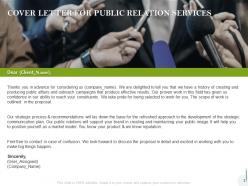
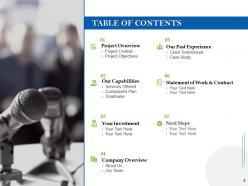
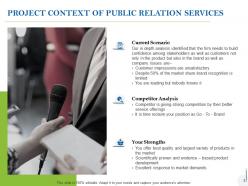
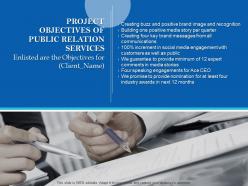
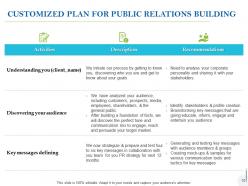
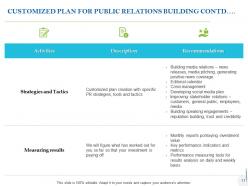
Public relations is an amazing way to build a brand’s image and market it across. Most companies need help marketing themselves, and so they hire PR experts to assist them. If you are PR consultant or other any other professional dealing with public relations, this Public Relations Proposal Template can prove very beneficial for you and your organization. This PPT slideshow can be used to create new PR campaigns, events, and consulting services proposals as it is designed after conducting thorough research and analysis by our experts at SlideTeam. Included in it are various sections like cover letter, project overview, project context, our capabilities and many others that help you present yourself efficiently. It is also very easy to state your objectives some of which are: creating buzz and positive brand image, 100% increment in social media engagement, provide nomination for four industry awards, etc in this PPT. This complete deck also allows you to present your investment summary, company overview, timeframe of completing the entire process after the project has been assigned to you. You can also very competently portray your unique services using this public relations PowerPoint presentation to attract the immediate attention of your clients. Also, with fully customizable slides and content, this deck can be presented in front of anyone and everyone without any difficulty or extra thought. The layout, the color scheme, and every other element can be altered to suit your personal needs and requirements. Therefore, download, configure and personalize this informative and practical PR proposal PPT slideshow to meet your goals, pitch your services and hence close maximum deals as possible.
People who downloaded this PowerPoint presentation also viewed the following :
Public relations proposal template powerpoint presentation slides with all 34 slides:
Use our Public Relations Proposal Template Powerpoint Presentation Slides to effectively help you save your valuable time. They are readymade to fit into any presentation structure.









FAQs for Public relations proposal template
So for your PR proposal template, start with an executive summary and situation analysis. Then map out your target audiences and key messages. The tactical plan is honestly where you make or break it - spell out your media strategy, content calendar, events, all that stuff. Budget breakdown comes next, plus your timeline. Oh, and write a solid cover letter because that's what they see first. Success metrics are crucial too, but focus on actual business results instead of just random impression numbers. Once you nail this format, you can reuse it forever.
Okay so first thing - figure out exactly who you're talking to. Like, actually break down your audiences with real demographics and where they hang out online. Gen Z scrolls TikTok, executives read industry newsletters, you know? Map out different messages for each group because what works for 22-year-olds definitely won't land with the boardroom crowd. Include actual sample content in your proposal so they can see what you're thinking. Set specific goals for each audience too. Shows you're not just throwing stuff at the wall and hoping something sticks. Honestly, this segmentation thing separates the pros from everyone else just blasting generic content everywhere.
Dude, research makes or breaks your proposal - seriously. You've gotta know their industry inside out, who they're competing with, what their audience actually wants. Generic proposals are basically dead on arrival. I learned this the hard way on a few pitches that bombed spectacularly. Use that research to back up every strategy you suggest and show specific data throughout. Otherwise you're just guessing and hoping something sticks. The clients can tell when you've actually done the work versus when you're winging it. Trust me on this one.
Honestly, visuals are a game changer for PR proposals. They break up those massive text blocks that make clients' eyes glaze over. Charts with projected reach, timeline graphics, social mockups - stuff like that makes your strategy actually click for people. I've literally watched proposals get the green light just because someone threw in a solid infographic. People absorb complex campaigns way faster when they can see the flow instead of reading through paragraphs. Oh, and don't go overboard - maybe 2-3 really strong visuals that back up your main points. Random stock photos just look desperate.
You want SMART goals - specific, measurable, achievable, relevant, time-bound. So instead of "boost brand awareness," try "get 25% more brand mentions in 6 months." Connect everything to actual business results, not just vanity metrics like follower counts (honestly, those numbers are pretty meaningless anyway). Use bullet points so it's easy to scan. Include quick wins for 3-6 months plus longer strategic stuff. Oh, and always lead with whatever goal hits their bottom line hardest - that's what they actually care about.
So basically, swap out the examples and media sections for whatever industry you're pitching. Tech companies? Focus on digital stuff and thought leadership. Healthcare needs all that compliance crap and patient education angles. The template structure doesn't really change much - just the tactics and channels do. I'd suggest making like 3-4 versions of your base template so you're not reinventing the wheel each time. Oh, and definitely research their key publications and influencers first. Some industries have weird regulatory stuff you'll need to know about too.
For your PR proposal, definitely include reach stuff like media impressions and share of voice - shows how far the message went. Engagement's equally important though: social shares, website traffic from coverage, sentiment analysis. Sentiment's honestly a pain to track but clients eat it up. Lead gen metrics are huge too - inquiries and conversions tied back to your PR work. Pick maybe 3-5 that actually connect to what your client cares about business-wise. Don't just throw in vanity numbers. Oh, and make sure you can realistically track whatever you promise - learned that one the hard way.
Think of their current situation as the "before" story - what's everyone saying about them now? Your PR strategy becomes the plot twist that flips the script. I always use that before/during/after framework because honestly, clients just get it faster. Map out specific story angles you'll pitch - customer wins, behind-the-scenes stuff, anything that makes them feel human. Each section should push their bigger narrative forward. The proposal itself needs to paint a picture of where they could be in six months. It's like you're not just selling PR services, you're selling them a better version of their own story.
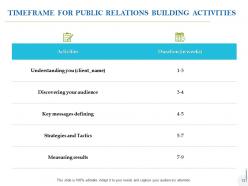
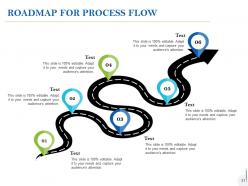
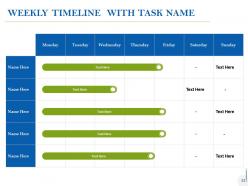
Ok so for your PR proposal, definitely include quick wins alongside the bigger picture stuff with actual dates. Get the easy things done first - media lists, initial outreach - maybe within 2 weeks? Then map out monthly goals for press releases and pitches. Honestly, I always build in extra time because journalists are... unpredictable lol. Quarterly check-ins are smart for reviewing what coverage you're actually getting. Don't rush story pitches though - that usually blows up in your face. A simple timeline or chart at the end helps everyone stay on the same page about deadlines.
Ugh, the worst thing you can do is be super vague about what you'll actually deliver and when. Clients absolutely hate that uncertainty. Also don't use those obvious template phrases - it's so transparent. I've watched people promise ridiculous stuff like "we'll get you 50 media mentions" which is just setting yourself up to fail. You should definitely research their recent PR disasters first too. Oh and here's the thing - don't go crazy low on pricing just to win it. That always backfires because then they expect miracles for pennies. Include real metrics so you can prove results later.
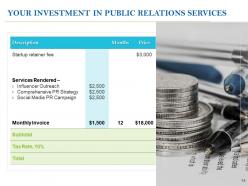
Break your PR budget into clear chunks - retainer fees, campaign costs, media monitoring tools, influencer payments, event stuff. Always tack on 10-15% for contingencies because trust me, weird shit always pops up mid-campaign. Show them monthly recurring costs AND one-time project expenses so they get the full picture. Don't just dump numbers on them though - explain what each line item actually covers. Oh, and if you can swing it, give them a few different budget tiers. People love options, plus it lets them pick what won't totally wreck their finances.
Honestly, templates are game-changers for client work. Your clients get a clear roadmap of what's coming - objectives, tactics, timelines, all that stuff. No more dealing with useless feedback like "hmm, something feels off." They can actually tell you what needs tweaking. It makes you look like you've got your shit together too, which clients love. Oh, and here's something I learned the hard way - that consistent format makes it super easy for them to pass your proposal around their office or stack it against competitors. Trust me, once you start using a solid template, those client calls become so much smoother.
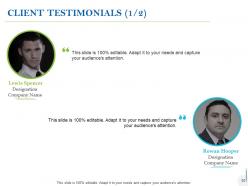
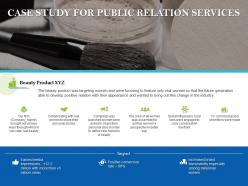
Honestly, sprinkle your case studies and testimonials throughout the whole proposal - don't just dump them at the end like most people do. Start strong with a killer testimonial right up front to hook them. When you're explaining your strategy, weave in case studies that match their specific problems. Use actual numbers from your past campaigns to back up each recommendation you make. Pick testimonials that focus on results they actually care about (not just generic "great work!" stuff). Oh, and definitely get written permission before using client names or sharing detailed results - learned that one the hard way!
A SWOT analysis seriously makes your PR proposal stand out. Most agencies don't bother with this step, which is wild to me because clients notice the difference. You're showing them you actually get their internal strengths and weaknesses, plus what's happening in their market. It helps you pick the right messaging and channels based on real data instead of just guessing. Clients eat this stuff up - they want to see you understand their competition and challenges. The key is connecting your SWOT findings directly to the PR tactics you're recommending. Makes everything feel way more strategic.
Add a "Risk Assessment" section - clients eat this stuff up. List your biggest 3-4 risks (budget issues, bad press, timeline problems) with your game plan for each. Two columns work great, or just bullet points. Don't overthink it though - stick to realistic problems, not every random thing that could go wrong. The key is showing you've got solutions ready, not just pointing out what might break. Makes you look way more prepared than competitors who pretend nothing will ever go sideways.
-
Great designs, Easily Editable.
-
Best Representation of topics, really appreciable.
-
Appreciate the research and its presentable format.
-
Really like the color and design of the presentation.