


Recruitment proposal template powerpoint presentation slides




Try Before you Buy Download Free Sample Product
 Impress Your
 Audience
 100%
100% Editable
 Save Hours
 of Time


If you are an organization offering various recruitment and hiring services to your potential clients, you must be knowing the importance of a well- constructed recruitment proposal. This recruitment proposal will help you present your knowledge and expertise in a way that entices your clients to opt for your services. Nowadays, many companies outsource their functions of hiring competent employees. This saves them a lot of time and provides them the benefits of better-hunted talent without putting any extra effort. Using this PPT slideshow show that you are experts in your field and will help in recruiting the best of the employees since you are a team of trained professionals with extensive knowledge. Pitch your comprehensive recruitment process to the company managers with ease. This template provides a lot of great opportunities for recruiting agencies to bag more projects and more leads. The content presented in this PPT slideshow can be used to generate new strategies to attract the best talent and therefore help the client in building a skilled team that can perform all the business functions efficiently. The scope of this template is widespread including various sections like the company overview, past experiences, project objectives, etc. Any recruiting agency whether it provides full-time services, freelancing services, consultation services, temporary services, etc. can download this Recruitment Proposal Template PowerPoint Presentation Slides to attract new clients and partner with them to deliver the best of the services.
People who downloaded this PowerPoint presentation also viewed the following :
Content of this Powerpoint Presentation
Slide 1: This slide introduces Recruitment Proposal.
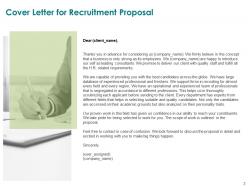
Slide 2: This slide shows Cover Letter for Recruitment Proposal.
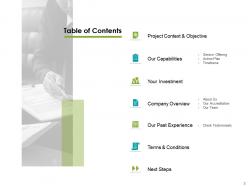
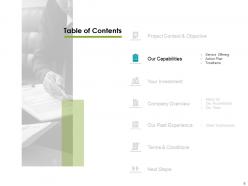
Slide 3: This slide depicts Table of Contents.
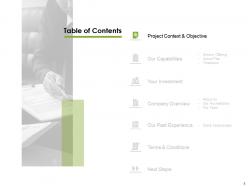
Slide 4: Table of Contents- Project Context & Objective, Service Offering, Action Plan, Timeframe, etc.
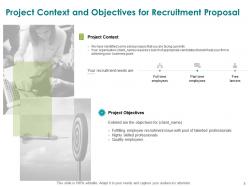
Slide 5: This slide shows Project Context and Objectives for Recruitment Proposal like-
Slide 6: This slide reveals the Project Context & Objective.
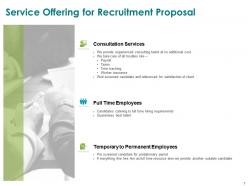
Slide 7: This slide showcases the Service Offering for Recruitment Proposal such as Payroll, Time tracking, Worker insurance, Consultation Services, etc.
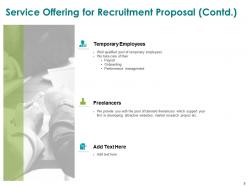
Slide 8: This slide is a continuation of the Service Offerings.
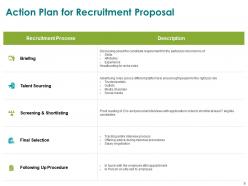
Slide 9: This slide shows the Action Plan for Recruitment Proposal.
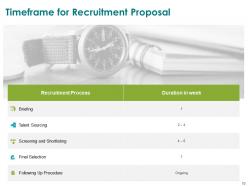
Slide 10: This slide depicts the Timeframe for Recruitment Proposal.
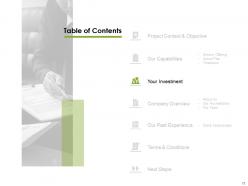
Slide 11: This slide reveals the Table of Contents.
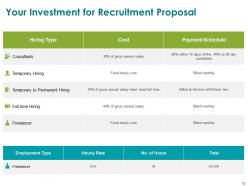
Slide 12: This slide shows Your Investment for Recruitment Proposal.
Slide 13: This slide shows Table of Contents.
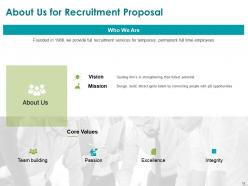
Slide 14: This slide contains About Us for Recruitment Proposal.
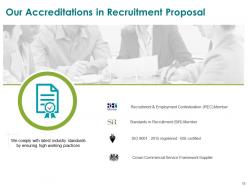
Slide 15: This slide illustrates Our Accreditations in Recruitment Proposal.
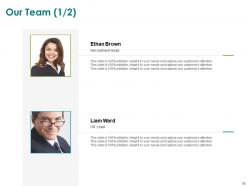
Slide 16: This slide shows the names of recruitment Head and HR Lead.
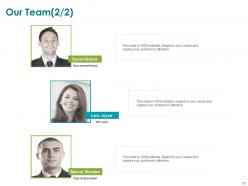
Slide 17: This slide shows names of team members.
Slide 18: This slide shows Table of Contents.
Slide 19: This slide depicts the Client Testimonials.
Slide 20: This slide shows the Client Testimonials.
Slide 21: This slide reveals the Table of Contents
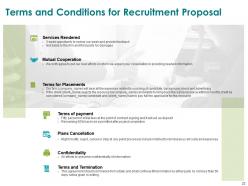
Slide 22: This slide shows the Terms and Conditions for Recruitment Proposal such as- Mutual Cooperation, Terms for Placements, Services Rendered, Terms of payment, Confidentiality.
Slide 23: This is again a Table of Contents slide.
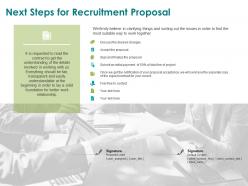
Slide 24: This slide contains Next Steps for Recruitment Proposal.
Slide 25: This slide is titiled as Additional Slides.
Slide 26: This slide shows information about Value Clients, target Audiences,premium Services.
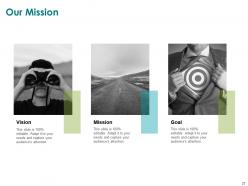
Slide 27: This slide shows Our Mission, Goal, Vision, and Mission.
Slide 28: This slide shows the 30 60 90 Days Plan.
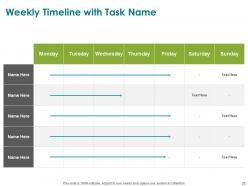
Slide 29: This slide depicts the Weekly Timeline with Task Name.
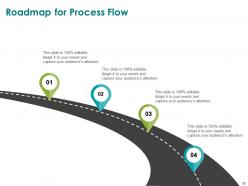
Slide 30: This slide depcits the Roadmap for Process Flow.
Slide 31: This is a contact us slide containing Address, contact Number, email Address.
Recruitment proposal template powerpoint presentation slides with all 31 slides:
Use our Recruitment Proposal Template Powerpoint Presentation Slides to effectively help you save your valuable time. They are readymade to fit into any presentation structure.

FAQs for Recruitment proposal template
Ok so first thing - nail down exactly what role you're filling and how you'll find people. Timeline's gotta be realistic or they'll hate you later. Pricing should be super clear upfront. I usually toss in some competitor research because honestly, hiring managers eat that up. Your screening process needs to be spelled out, plus how you'll present candidates. Got metrics from similar roles? Definitely include those - like how fast you typically fill positions. Oh and don't forget next steps and how often you'll update them. Keep it tight but give them enough to actually decide.
Okay so basically a recruitment proposal template keeps everything consistent when you're evaluating candidates. Same criteria for everyone = way less bias in your hiring decisions. Plus it makes things faster because hiring managers already know what they're looking for instead of winging it every time. During crazy busy seasons (which let's be real, feels like always), templates are honestly a game changer. Oh and you'll have solid documentation for why you picked certain people - super helpful later and keeps compliance happy. My advice? Start with your non-negotiable skills and build a scoring system around those first.
Honestly, you gotta customize these templates way more than people think. Tech roles? Hit them hard with your coding assessment process and how you screen for actual skills. Sales is completely different - they only care about personality fit and commission structure, period. Executive searches are all about showing off your network and how discreet you are. Don't use the same timeline for everything either. A junior dev role fills way faster than a VP of Engineering. Create maybe 3-4 base templates for your bread-and-butter roles, then swap out the generic fluff for terminology that proves you actually get what they're looking for.
Honestly, presentation matters way more than people think. You want clean layouts and professional fonts so hiring managers can actually find your timelines and costs without squinting. Trust me, they're not gonna wade through dense paragraphs when they've got ten other proposals to review. Throw in some charts showing your success rates - that stuff really makes you stand out. Keep your branding polished but don't go overboard. Think business casual, not trying-too-hard corporate. Spend like 20 minutes making it look decent and you'll already beat half the people who just wing it.
Focus on the metrics execs actually give a damn about - cost-per-hire, time-to-fill, and retention rates. Those three are your bread and butter. Performance ratings for new hires matter too since nobody wants to keep cycling through the same position. Oh, and if you can get candidate satisfaction data, that's solid gold for showing your employer brand isn't trash. The trick is having baseline numbers from their current process to compare against. Otherwise you're just throwing random stats at them. Make sure your proposed approach shows clear improvement over whatever mess they're dealing with now.
Grab your brand guidelines first - logo, colors, fonts, all that stuff. Your tone should match how you normally talk to clients. Don't go all corporate if you're usually chill, it'll just confuse people. Same language as your website too. Oh and don't forget those legal disclaimers your company probably makes you include (boring but necessary). The whole point is making everything look like it came from the same place. I'd save a master template somewhere so your whole team uses the same version instead of everyone doing their own thing.
Your intro is basically your "hey, notice me" moment, so don't blow it. Start with the problem you're solving for them specifically - not some generic hiring pain everyone has. Then briefly explain your approach and why you're not just another recruiter flooding their inbox. Short sentences work. Longer ones should actually flow naturally when you read them out loud. Honestly, most people write intros like they're applying to be their own client, which is backwards. Focus on what they're dealing with right now. Skip the credential dump - that comes later. Think of it more like "here's what I noticed about your situation and here's how I'd fix it."
You know how those stakeholder meetings always turn into chaos when you're trying to explain your hiring plan? A recruitment proposal template fixes that mess. It gives you sections for your sourcing strategy, timeline, budget - all laid out clearly so people actually get what you're proposing. Honestly, the best part is avoiding those annoying follow-up emails where someone's like "wait, what's the timeline again?" Everything's right there in black and white. Your conversations with stakeholders become way less painful when they can see the whole picture upfront. Trust me, try it once and you'll never go back to winging those presentations.
Definitely add a whole D&I section with your sourcing strategy for underrepresented folks. Track diversity metrics at each stage - that's key. Also include how you'll write inclusive job descriptions (seriously, they make a bigger difference than most people realize). You should outline bias mitigation during interviews and mention any partnerships with diversity orgs or specialized job boards. Oh, and timelines for when you'll submit diverse candidates - clients love concrete commitments. The main thing? Be super tactical about your approach, not just fluffy promises. That's what actually works.
Honestly, start with Canva or Google Docs templates - they'll save you hours right off the bat. ChatGPT is actually solid for writing those boring boilerplate sections that nobody wants to do manually. I've been using Notion lately to create templates that automatically fill in client details, which is pretty sweet. Zapier can pull candidate info straight into your proposals if you want to get fancy with it. Oh, and Airtable works great too for the database stuff. My advice? Pick whatever's driving you most crazy time-wise and tackle that first. Don't try to automate everything at once or you'll burn out.
Honestly, the biggest mistake is sending generic templates - you've got to tailor each proposal to what they actually need. Don't promise crazy timelines or oversell what you can deliver. Skip the corporate buzzword BS too, it makes you sound robotic. Be upfront about pricing instead of hiding fees later (clients hate that). Actually solve their problems instead of just listing your services. Oh, and this might sound obvious but proofread everything twice. Typos in recruitment proposals? That's just embarrassing. Keep it real and address their specific pain points.
Honestly, you'd be crazy not to dig through your old proposal feedback - it's basically free intel on what works. Pull comments from your last 3-5 proposals and look for patterns. Missing sections? Unclear timelines? Budget issues that keep popping up? Build fixes for those problems right into your template. I swear, so many teams just ignore this stuff and wonder why they keep getting the same pushback. Pay attention to formatting complaints too - stakeholders love their specific details presented just right. Create template sections that tackle these headaches from the start. Way easier than scrambling to fix things later.
You'll want to tweak the requirements and benefits mostly. Remote jobs need people who can handle digital communication and stay motivated working alone - plus decent tech/internet setup. Skip the office collaboration stuff. Benefits are totally different too. Play up flexible hours and no commuting instead of free lunch or whatever office perks you usually list. The screening questions matter way more than people realize though. Ask about their workspace and internet reliability for remote roles. For office jobs, focus on location and if they'd relocate. Just duplicate your current template and make separate versions. Saves time later when you're posting new roles.
Dude, you absolutely need timelines in there. Clients get super antsy when they don't know what's happening - like after two weeks they'll start blowing up your phone asking where their candidates are. It keeps you organized too, which honestly saves your sanity when you're juggling multiple searches. Build in extra time though because hiring always drags longer than anyone thinks it will. Clients actually respect the structure - shows you know what you're doing instead of just winging it. Plus it keeps everyone on the same page so nobody can later be like "I thought this would be done by now." Just makes the whole thing run smoother.
Honestly, stories work so much better than bullet points when you're pitching recruitment stuff. Hiring managers actually get to picture what you can do instead of just reading your resume. Like, tell them about that time you placed someone who completely turned around a struggling team - people eat that up. Opens with a quick story about a similar mess you fixed, then slide into your game plan. Way more memorable than throwing numbers at them. Plus it builds trust faster since they can see you've actually solved real problems before. Stories just stick, you know?
-
Easily Understandable slides.
-
Commendable slides with attractive designs. Extremely pleased with the fact that they are easy to modify. Great work!
-
Helpful product design for delivering presentation.
-
Informative presentations that are easily editable.