


Business Proposal For Recruitment Agency Powerpoint Presentation Slides






Try Before you Buy Download Free Sample Product
 Impress Your
 Audience
 100%
100% Editable
 Save Hours
 of Time


Find and attract the potential resources for your organization using Business Proposal For Recruitment Agency PowerPoint presentation slides. Incorporate talent acquisition PPT deck and follow a recruitment process to hire the best talent. This content ready business proposal for recruitment agency PPT sample will help you create a budget for the recruitment. Not just this, it also includes recruitment tracker, recruitment funnel and recruitment process to make this extensive process easy for you. HR managers can avail this readymade hiring process steps to recruit the best candidates for their company. This professionally designed business proposal for recruitment agency PPT deck will help HR recruiters undergo an organized procedure from sourcing the resources, arranging and conducting the interviews to finally selecting the right candidate. Download this ready-to-use business proposal for recruitment agency presentation to hire potential candidates from a pool of candidates. Our PowerPoint experts have crafted this deck with an extensive research and covers all the major aspects of the topic. Just click the download button below, add your content and make this hiring process simpler for you. Get geared for the exceptional with our Business Proposal For Recruitment Agency Powerpoint Presentation Slides. They don't let averages bother you.
People who downloaded this PowerPoint presentation also viewed the following :
Content of this Powerpoint Presentation
“There are no secrets to success. It is the result of preparation, hard work, and learning from failure”- Colin Powell.
Why write a business proposal to promote a recruitment agency? It is the most effective strategy for reaching out to clients. It may be difficult, but it helps establish your credibility as a recruitment agency. Therefore, it plays a huge role in a business's success.
In a business proposal, you must provide details about the team members, recruitment process, and other essential facts, such as the recruitment sources, in a concise and engaging way to stand out from the other competitors.
As we know, crafting a proposal for a recruitment agency on your own can be quite challenging, so you must seek the help of business proposal templates to develop competitive and effective proposals.
To find best-in-class business proposal templates for recruitment agencies, click here!
By using well-designed, 100% editable, and customizable templates offered by SlideTeam, you can create compelling proposals that would help attract and engage new clients. We provide templates highlighting every aspect and all the steps a recruitment agency conducts to hire a suitable candidate. You must refer to these templates for the introduction, summary, and other details about the recruitment agency.
Let’s explore the templates!
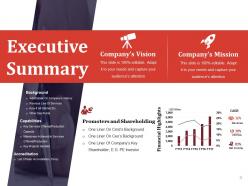
Template 1 – Executive Summary to Introduce Your Recruitment Agency

Use this Executive Summary PPT Template to showcase your company's strengths and objectives. This PPT Template introduces the company's mission, vision, background, capabilities, and accreditation. Here, you can also see a chart of financial highlights and a one-line brief on top executives, shareholders, etc., to display important information.
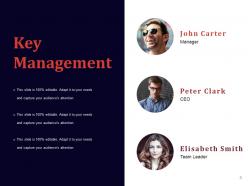
Template 2 - Key Management for highlighting Initial Point of Contact with Stakeholders

This PPT Slide provides a glance at the key managers. These managers are the initial point of contact between the company and its stakeholders. They are responsible for creating and implementing recruitment strategies to attract new clients. Additionally, they recognize potential clients and build strong relationships with them to ensure the smooth functioning and success of the organization. Develop an impressive proposal with a download of this template!
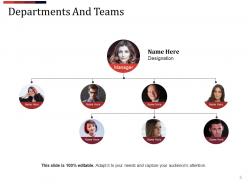
Template 3 - Departments and Teams to Illustrate Organizational Structure

Here, the PPT Template illustrates the departments and teams of a recruitment agency that work under the supervision of the top officials. These ensure the smooth functioning of the business. Use the template to showcase your organizational structure in a visually appealing style, with a name and designation to captivate the viewer's attention. Get it now!
Template 4 – Current Vacancies Available in the Recruitment Firm

Use this PPT Template to highlight the current vacancies in your recruitment agency. This will help build its reliability and stature in the market. Use this slide to display the department, job position, minimum experience required, and roles and responsibilities for the current vacancies. Download it to show the openings available in your company!
Template 5 - Recruitment Process Describing the Complete Method
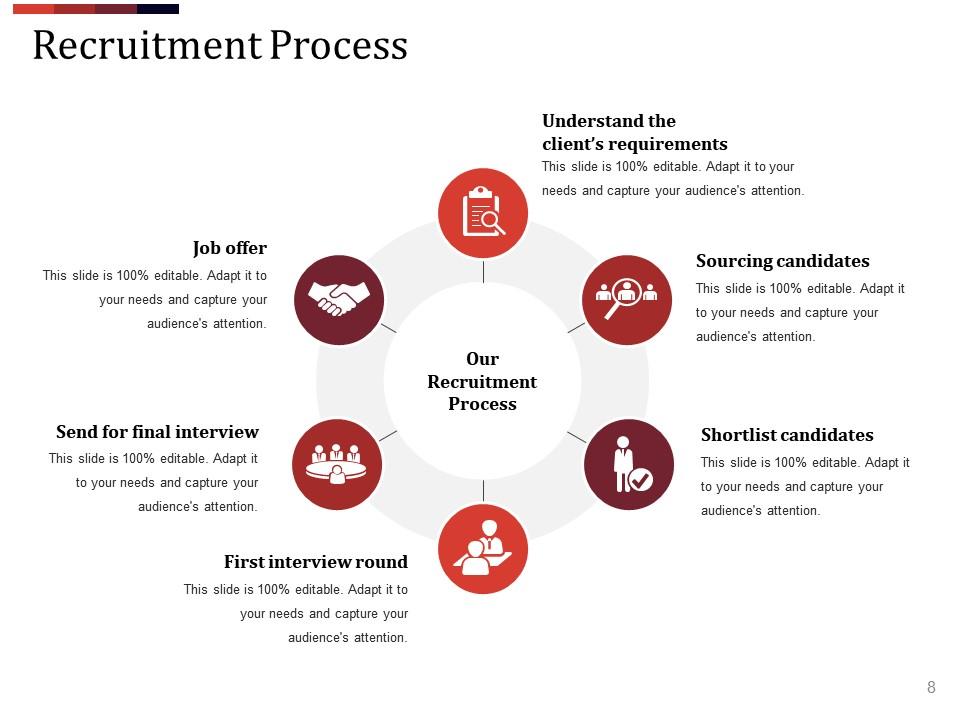
The recruitment process involves a sequence of steps for identifying, evaluating, and selecting the right candidate. Use this planned recruitment process to hire a good fit for the role. All the important steps are depicted, which begin with understanding the client's requirements, sourcing and shortlisting the right candidates, and conducting the first round of interviews, followed by the final round. After selection, a job offer is sent to the candidate.
Template 6 – Recruitment Sources help find the suitable candidate
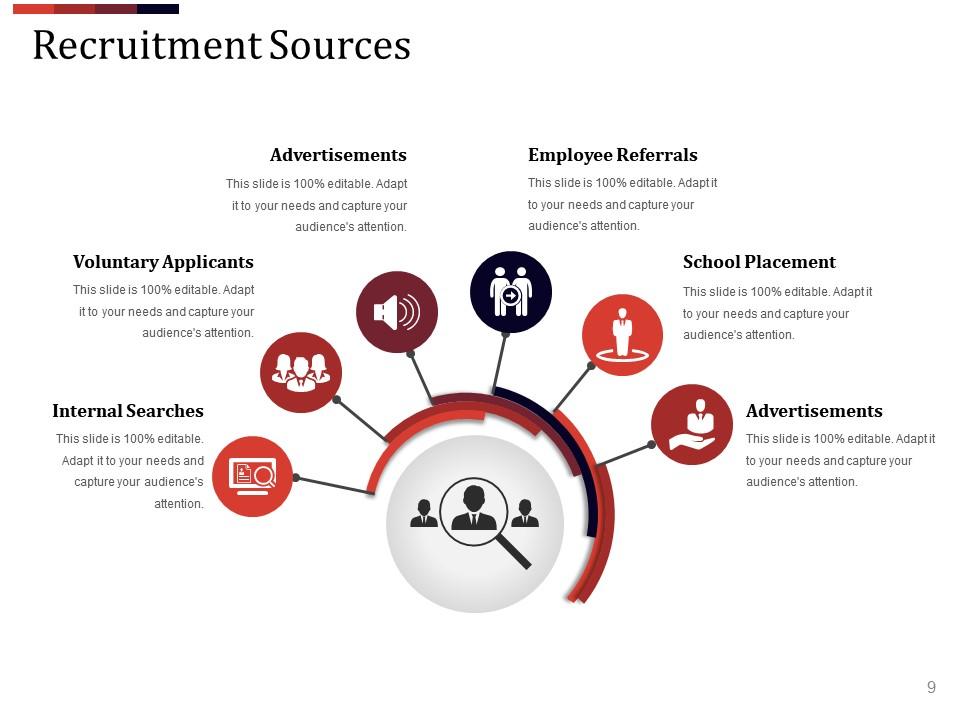
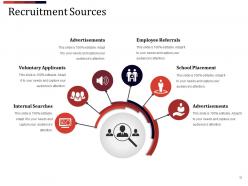
Organizations hunt for the best candidates using Recruitment Sources. This PPT Slide shows some of them, such as Employee Referrals, School Placement, and Advertisements. This will help you choose the candidate who matches the job description and possesses the right skills. Get this slide to demonstrate your sources when looking for an ideal candidate!
Template 7 - Job Description Providing an Overview of the Role

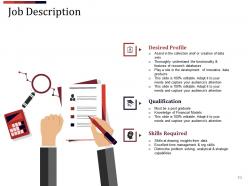
In this PPT Template, you can see the Job Description under three broad titles: Desired Profile, Qualification, and Skills Required. Use this to communicate the requirements of a specific role effectively. This helps attract potential candidates. Each segment in the slide can be elaborated in the form of points per your choice and need.
Template 8 – Recruitment Funnel for Choosing the Final Candidate

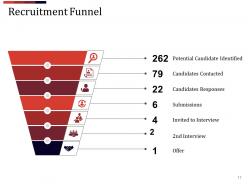
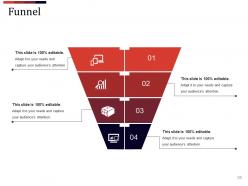
Do you know the meaning and significance of having a recruitment funnel during recruitment? It is a structured framework that describes the stages of the recruitment process from start to end. Use this PPT Template to illustrate the complete procedure right from identifying potential candidates to offering the job to a suitable one.
Template 9 - Recruitment Tracker for Checking Efficiency in Hiring

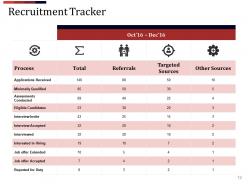
This PPT Template depicts the number of total applications received, candidates who are minimally qualified, assessments conducted, eligible candidates, interview invites, interviews accepted, job offers extended and accepted, reports for duty, etc., within 3 months. The results are finally compiled as total (which is the sum of candidates from referrals, targeted sources, and other sources). Download this template to provide an idea about the effectiveness of your recruitment procedure!
Template 10 - Recruitment Budget Showing the Expenses Incurred
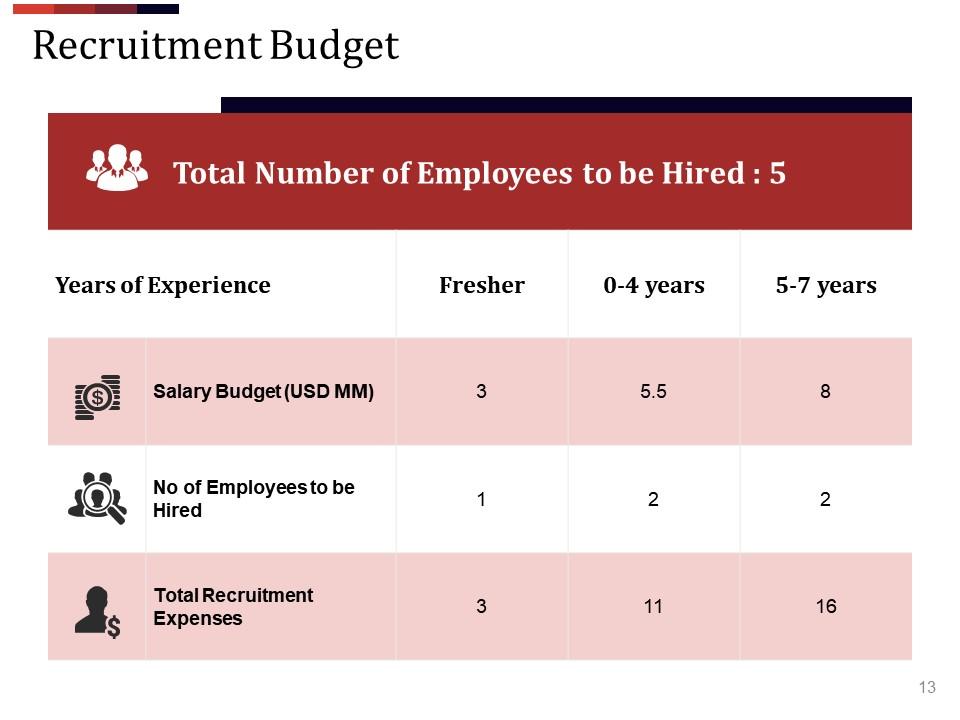
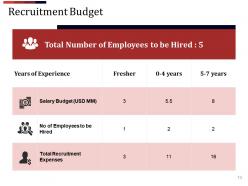
Every company has a recruitment budget to manage and track the expenses for hiring candidates. You can use this PPT Template to mention the total number of employees to be hired. Based on years of experience, you must add the salary budget, the number of employees to be hired, and total recruitment expenses. Get this template now!
Grab Your Client’s Attention to Grow Better
Understanding how to approach new clients is key to building a strong and reputed recruitment agency. If you are a recruitment consultant, you must adopt the right strategies to begin captivating the client's attention, which involves writing a business proposal with complete clarity.
PS Check out the best one-page business flyer for recruitment agency templates to create a decent business proposal.
Business Proposal For Recruitment Agency Powerpoint Presentation Slides with all 41 slides:
Our Business Proposal For Recruitment Agency Powerpoint Presentation Slides are created with great care and attention. You will find them aesthetically designed.





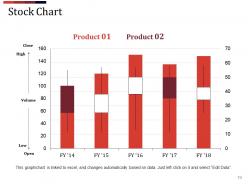

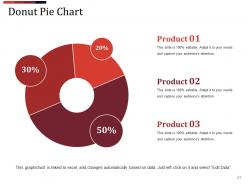
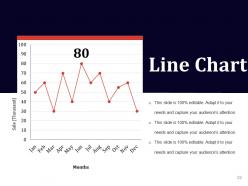


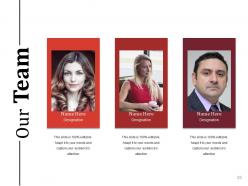






FAQs for Business Proposal For Recruitment Agency
So definitely cover your agency's track record and background first. Then get specific about the roles - detailed job descriptions, your sourcing plan, timeline, all that. Fee structure is huge (seriously, they'll grill you on this part). What makes you different from every other recruiter out there? Case studies work great if you've got them - nothing beats real success stories. Oh, and spell out your screening process and how often you'll update them. Honestly, being super clear about deliverables and deadlines upfront saves you headaches later. Don't leave room for confusion.
Dude, skip the fluff and hit them with hard numbers right away. Something like "we filled 85% of positions within 30 days" or "92% retention rate after one year." Case studies from similar companies are gold - way more convincing than vague promises. Talk up whatever makes you different, whether it's your screening process or industry contacts they can't get elsewhere. Oh, and definitely mention replacement guarantees. Honestly, I'd put together a whole portfolio of wins with actual data before you walk in there. Numbers don't lie, and that's what'll close the deal.
Track speed AND quality - that's the key. Sure, clients always want time-to-fill and cost-per-hire numbers, but those are pretty shallow honestly. What really matters? Retention rates at 6 months, how happy hiring managers are, offer acceptance rates. That stuff proves you're finding actual good fits, not just warm bodies. Source effectiveness is huge too - like knowing which job boards actually work vs. waste your money. I'd set up maybe 5-6 metrics on a simple dashboard and check them monthly. Way better than flying blind and hoping for the best.
Honestly, market trends are everything when you're writing these proposals. You've gotta show clients you actually get what they're dealing with - remote work chaos, talent shortages, whatever new hiring software they're struggling with. Generic proposals are the worst, they miss all the current pain points completely. Research what's happening in their specific industry first, then position your services as the fix. Like if tech talent is impossible to find right now, talk up your specialized sourcing methods. I swear this approach makes such a difference. Your proposal will actually feel relevant instead of cookie-cutter boring.
Honestly, client feedback is everything. It's your cheat sheet for nailing the next placement. When they tell you what sucked or what actually worked, you can tweak your whole approach - better screening, sharper candidate matches, proposals that actually solve their problems. I watched one agency do a complete 180 after getting roasted by a client (best thing that ever happened to them). Here's what's cool though - clients love seeing how their feedback changed your next pitch. Always ask for it, even when things go smoothly. That input makes your future proposals way stronger.
Look, you've gotta dig into what each industry actually cares about. Tech companies? They want niche skills yesterday. Healthcare is all about compliance and certs - super tedious but that's their world. Finance wants people who know regulatory stuff inside and out. Manufacturing focuses on safety training and flexible schedules. Honestly, the biggest mistake is using generic recruitment speak. Instead of "we find great talent," say "we source AWS-certified developers" or "we recruit Joint Commission-compliant nurses." Show them case studies from their exact field. Swap out the boring jargon for terms they actually use. Makes all the difference when they feel like you get it.
Start by calling out their actual pain points - are they losing candidates to other companies? Taking forever to fill roles? Most agencies just drone on about themselves, which is honestly why their proposals end up in the trash. Instead, show you get their specific challenges, then hit them with your solution plus real numbers and timelines. Throw in some case studies from companies like theirs. Oh, and don't hide your fees until later - that's so annoying. Wrap up with concrete next steps so they know exactly what happens if they say yes.
Don't dance around the tough stuff - just put it right out there in its own section. Cost worries, timeline concerns, questions about your experience? Hit them with real data and examples. I've watched agencies try to avoid this conversation and it always backfires. If you're new to their industry, just say so but explain how your skills transfer over. Here's the key part though: give them solutions for every concern you bring up. Shows you're actually thinking through their problems, not just chasing the contract. Way better than pretending issues don't exist.
Honestly, most agencies are lazy and just send the same generic crap to everyone. You'll crush them by actually showing real numbers - your placement stats, how fast you fill roles, retention rates, all that good stuff. Research their company first (like recent news or whatever) so you sound like you get their actual business problems, not just "we need Java developer." Throw in something different too - maybe video profiles of candidates or some kind of guarantee period. Oh, and definitely pitch building them a talent pipeline specific to their industry. Makes you look way more strategic than the competition.
Oh man, design is HUGE for recruitment proposals. Hiring managers are drowning in stuff, so if yours looks like a mess, they'll just skip it. I learned this the hard way actually - had a solid proposal that got ignored because it looked unprofessional. Clean formatting with headings and bullet points saves you. White space is your friend too. Honestly, it's like wrapping a present - doesn't matter how good what's inside is if the outside looks terrible. Make your success rates pop visually. Keep it scannable and you'll stand out from all the walls of text they usually get.
Honestly, the worst thing you can do is send some cookie-cutter proposal that screams "I didn't even read your job posting." So many people just blast the same generic services list to everyone. Another classic mistake? Lowballing your rates thinking it'll seal the deal - trust me, cheap usually signals amateur. Don't promise impossible timelines either. Like, if it's a super specialized role, don't say two weeks when you know it'll realistically take a month or more. Show them you actually understand their specific situation instead of just trying to sound impressive. Oh, and being upfront about realistic expectations actually builds way more trust than overpromising.
Case studies are seriously underrated - they're proof you can actually walk the walk. Pick ones that match your prospect's world as closely as possible. Same industry, similar roles, whatever challenges they're facing. Numbers are everything here, so throw in your time-to-fill improvements or quality metrics. I usually structure mine: problem, what I did, boom - results. Don't just list your actions though. Show how it actually moved the needle for their business. Oh and obviously get permission first - some companies get weird about sharing details, even anonymized ones.
Talk benefits, not features - what they'll actually gain from working with you. "We placed 15 candidates in 30 days" beats generic promises any day. Mirror their exact words from the job post so they know you get it. Honestly? Most proposals sound like robots wrote them. Don't be that person. Drop in some social proof - companies you've helped or quick client quotes work great. Oh, and always end with a specific next step, not that weak "hope to hear from you" stuff. Numbers and stories sell way better than fancy descriptions of your process.
Look, you gotta actually understand their business first - none of this generic pitch BS. Ask them about growth targets, what's keeping them up at night, what winning looks like this year. I've watched so many people bomb because they assumed they knew what the client needed. Once you get that intel, connect each hire directly to their goals. Show them how this person moves the needle on revenue or whatever matters to them. Skip the usual recruiting metrics - they don't care about time-to-fill if it doesn't solve their problems. Honestly, just get on a call and listen properly. Sometimes what they're NOT saying tells you everything.
Honestly, PandaDoc or Proposify are total lifesavers for recruitment stuff. Templates save you tons of time, plus you can auto-fill candidate info instead of typing everything manually. The tracking feature shows when clients open proposals - feels weird but it's actually super helpful. HubSpot or Salesforce integration means no more copying contact details back and forth (ugh, hate that). Oh, and throw Canva in there for making things look decent, DocuSign for signatures. Just pick one tool first though - I made the mistake of trying everything at once and it was chaos.
-
Very unique, user-friendly presentation interface.
-
Illustrative design with editable content. Exceptional value for money. Highly pleased with the product.