


Practicing Inclusive Leadership To Foster Positive Workplace Culture DTE CD




Try Before you Buy Download Free Sample Product
 Impress Your
 Audience
 100%
100% Editable
 Save Hours
 of Time


Inclusive leadership means being able to lead a diverse group of people while demonstrating respect for each persons unique characteristics without bias. Get our professionally created PowerPoint presentation on Practicing Inclusive Leadership to Foster Positive Workplace Culture. This complete deck introduces the major challenges faced by the company in terms of inclusivity and highlights the concept of inclusive leadership and its benefits. Furthermore, the Leadership Styles PPT templates include the six signature traits of inclusive leadership, which are courage, commitment, cognition, curiosity, cultural intelligence, and collaboration. Moreover, the Team collaboration PPT slides present the role of leadership in shaping inclusive workplace culture and strategies to build inclusive workplace culture. These include creating a secure workplace, building a diverse workforce, developing organizational inclusivity policies, aligning business objectives, providing inclusive and diverse training, and building transparent feedback systems. To learn more about inclusive leadership, download our 100 percent editable and customizable template, also compatible with Google Slides.
People who downloaded this PowerPoint presentation also viewed the following :
Content of this Powerpoint Presentation
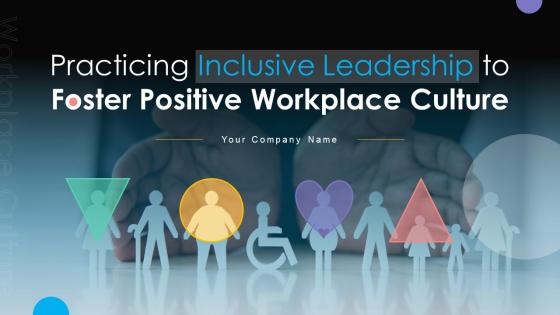
Slide 1: This slide introduces Practicing Inclusive Leadership to Foster Positive Workplace Culture. State your company name and begin.
Slide 2: This is an Agenda slide. State your agendas here.
Slide 3: This slide shows Table of Content for the presentation.
Slide 4: This slide shows title for topics that are to be covered next in the template.
Slide 5: This slide covers major issues faced by the workforce, such as disengagement, disconnect, misunderstanding, inefficient communication, lower productivity, dissatisfaction etc.
Slide 6: This slide presents other key issues faced by organizational staff, such as innovation stagnation, resistance to change, unconscious bias, limited collaborative culture etc.
Slide 7: This slide shows title for topics that are to be covered next in the template.
Slide 8: This slide covers all possible solutions to organizational issues, including inclusive leadership, cross-functional teams, an open communication culture etc.
Slide 9: This slide shows title for topics that are to be covered next in the template.
Slide 10: This slide covers a brief overview of inclusive leadership approach and its key characteristics such as open-mindedness, empathy, adaptability, integrity and transparency.
Slide 11: This slide also presents a brief overview of inclusive leadership approach and its key characteristics such as open-mindedness, empathy, adaptability, integrity and transparency.
Slide 12: This slide shows title for topics that are to be covered next in the template.
Slide 13: This slide covers the six major characteristics of inclusive leadership such as commitment, courage, cognizance of bias, curiosity, cultural intelligence, and collaboration.
Slide 14: This slide presents major focus areas for leaders and depicts traits of commitment, such as personal values and belief in the business case.
Slide 15: This slide covers major focus areas for leaders and depicts traits of courage, including humility and bravery.
Slide 16: This slide displays significant focus areas for leaders and depicts traits of cognizance of bias, including self-regulation and fair play.
Slide 17: This slide covers significant focus areas for leaders and depicts traits of curiosity, including openness, perspective-taking, and coping with uncertainty.
Slide 18: This slide presents significant focus areas for leaders and depicts traits of cultural intelligence, including drive, knowledge, and adaptability.
Slide 19: This slide covers significant focus areas for leaders and depicts traits of collaboration, including Empowerment, teaming and voice.
Slide 20: This slide shows title for topics that are to be covered next in the template.
Slide 21: This slide covers the key role of leadership in building inclusive organizational culture, such as recognizing and celebrating diversity, promoting diversity etc.
Slide 22: This slide shows title for topics that are to be covered next in the template.
Slide 23: This slide covers major strategies for establishing a secure workplace, such as diverse safety committee involvement, address unconscious bias, and flexible work arrangements.
Slide 24: This slide displays major strategies for developing diverse teams, such as inclusive job descriptions, diverse recruitment channels, and unbiased hiring practices.
Slide 25: This slide covers major strategies for creating inclusivity policies such as anti-harassment policy, accommodation for disabilities policy, and transgender inclusivity policy.
Slide 26: This slide presents strategies for aligning team and organizational goals, such as training and development, collaborative tools and technology, flexible work arrangements, etc.
Slide 27: This slide covers a training plan for providing training on topics such as introduction to diversity, unconscious bias awareness, bystander intervention training etc.
Slide 28: This slide displays major strategies for establishing a clear and honest feedback system, such as linking to inclusive practices, diversifying feedback channels, celebrating successes etc.
Slide 29: This slide covers other strategies for establishing an inclusive work culture, such as getting buy-in from leadership, using inclusive language, and expanding the company holiday calendar.
Slide 30: This slide shows title for topics that are to be covered next in the template.
Slide 31: This slide covers major expense categories for budget distribution including workplace security, diverse workforce hiring, inclusivity policies, diversity training, and feedback system.
Slide 32: This slide shows title for topics that are to be covered next in the template.
Slide 33: This slide covers major positively impacted areas due to inclusive leadership, such as employee engagement, perceptions of fairness, opportunities and resources, etc.
Slide 34: This slide presents the positive results of inclusive leadership, such as increased engagement, motivation, increased representation of diverse backgrounds, genders, and cultures etc.
Slide 35: This slide shows title for topics that are to be covered next in the template.
Slide 36: This slide covers key solutions to address major inclusion issues organizations face, such as slower decision-making, role ambiguity, and potential power struggles.
Slide 37: This slide shows title for topics that are to be covered next in the template.
Slide 38: This slide covers major organizations taking inclusivity initiatives, such as women in tech upskilling programs, review of high-potential talent pools, framework for male employees, etc.
Slide 39: This slide shows all the icons included in the presentation.
Slide 40: This slide is titled as Additional Slides for moving forward.
Slide 41: This slide showcases Statistics highlighting the benefits of inclusive leadership approach.
Slide 42: This slide presents 7 key attributes of highly inclusive leaders.
Slide 43: This slide showcases Inclusive meeting preparation checklist.
Slide 44: This slide displays Anti-racist leadership best practices.
Slide 45: This slide covers the major roles of managers in inclusive organizational culture, such as designing company policies, training hiring managers, revising communication content etc.
Slide 46: This slide depicts Venn diagram with text boxes.
Slide 47: This is Our Vision, Mission & Goal slide. Post your Visions, Missions, and Goals here.
Slide 48: This slide presents Roadmap with additional textboxes. It can be used to present different series of events.
Slide 49: This is an Idea Generation slide to state a new idea or highlight information, specifications etc.
Slide 50: This slide shows Post It Notes for reminders and deadlines. Post your important notes here.
Slide 51: This slide also depicts Venn diagram with text boxes.
Slide 52: This is a Thank You slide with address, contact numbers and email address.
Practicing Inclusive Leadership To Foster Positive Workplace Culture DTE CD with all 60 slides:
Use our Practicing Inclusive Leadership To Foster Positive Workplace Culture DTE CD to effectively help you save your valuable time. They are readymade to fit into any presentation structure.











FAQs for Practicing Inclusive Leadership To Foster Positive Workplace
Key traits of inclusive leaders include cultural competency, active listening skills, empathy, psychological safety creation, and bias awareness. These competencies can be developed through mentorship programs, diversity training workshops, cross-functional team leadership, and regular feedback mechanisms, with many organizations finding that structured development programs ultimately enhance team performance and drive innovation.
Inclusive leadership enhances team performance by leveraging diverse perspectives, fostering psychological safety, encouraging open communication, and creating equitable opportunities for all team members. Organizations implementing inclusive practices see improved collaboration, higher innovation rates, and increased employee retention, with companies like Microsoft and Salesforce finding that inclusive teams deliver 35% better performance and significantly higher engagement scores.
Leaders can implement strategies including diverse hiring practices, inclusive decision-making processes, mentorship programs, bias training, and equitable advancement opportunities. These approaches streamline cultural transformation by fostering psychological safety, enhancing team collaboration, and leveraging diverse perspectives, with many organizations finding that inclusive leadership ultimately delivers improved innovation, employee retention, and competitive advantage in increasingly diverse markets.
Diverse teams contribute to innovative problem-solving by bringing varied perspectives, experiences, and cognitive approaches that challenge assumptions, identify blind spots, and generate creative solutions. Through collaborative frameworks, organizations in sectors like technology, healthcare, and finance leverage this diversity to enhance strategic decision-making, reduce groupthink, and ultimately deliver more comprehensive outcomes that better serve diverse markets.
Emotional intelligence enables inclusive leaders to recognize diverse perspectives, manage unconscious biases, and respond empathetically to varied team experiences and cultural backgrounds. Through enhanced self-awareness and social skills, leaders create psychologically safe environments where all employees feel valued and heard, ultimately driving higher engagement, innovation, and organizational performance across diverse teams.
Leaders can assess their biases through unconscious bias assessments, 360-degree feedback from diverse team members, regular self-reflection exercises, and seeking mentorship from colleagues with different backgrounds. These approaches enable leaders to identify blind spots, understand their impact on decision-making, and develop more equitable practices, ultimately creating more inclusive environments where all team members thrive.
Effective approaches include creating psychological safety through regular check-ins, implementing structured dialogue sessions with clear guidelines, establishing anonymous feedback channels, facilitating cross-cultural mentoring programs, and hosting inclusive storytelling workshops. These methods enhance team cohesion by building trust, increasing cultural awareness, and fostering mutual respect, with many organizations finding that consistent dialogue ultimately delivers stronger collaboration and innovative problem-solving capabilities.
Leaders can leverage employee resource groups by integrating their insights into strategic decision-making, amplifying diverse voices in leadership discussions, and utilizing their networks for inclusive recruitment and retention strategies. These groups enhance organizational culture by providing mentorship opportunities, driving policy recommendations, and creating cross-cultural understanding, with many companies finding that ERG-informed initiatives significantly improve employee engagement and competitive positioning.
Leaders should measure inclusive leadership effectiveness through employee engagement surveys, retention rates across demographic groups, promotion and advancement equity data, psychological safety assessments, and team innovation metrics. These measurements enable organizations to track progress in creating belonging, identifying disparities in career development, and fostering environments where diverse perspectives drive business results, ultimately delivering competitive advantage through enhanced talent retention and innovation.
Inclusive leadership significantly enhances talent attraction and retention by creating environments where diverse employees feel valued, heard, and empowered to contribute authentically. Organizations with inclusive leaders experience higher employee engagement, reduced turnover costs, and access to broader talent pools, with companies like Unilever and Microsoft finding that inclusive practices deliver stronger recruitment outcomes and long-term workforce stability.
Leaders face challenges including unconscious bias, resistance to change, inadequate training, limited diverse talent pipelines, and measuring inclusion progress effectively. While overcoming these obstacles requires commitment, organizations can address them through comprehensive bias training, transparent communication strategies, and robust mentorship programs, with many companies finding that consistent leadership accountability and data-driven approaches ultimately deliver enhanced innovation and competitive advantage.
Cultural contexts significantly shape inclusive leadership through varying communication styles, hierarchy expectations, decision-making processes, and relationship-building approaches across different regions and organizations. While Western cultures often emphasize direct feedback and flat structures, many Asian and Latin American contexts prioritize consensus-building and respect for authority, with successful inclusive leaders adapting their strategies to honor local values while fostering belonging, ultimately delivering enhanced team performance and global competitive advantage.
Organizations should provide unconscious bias training, cultural competency workshops, inclusive communication skills development, mentoring programs, and regular diversity metrics analysis. These resources enable leaders to recognize blind spots, build empathy across different backgrounds, and create psychologically safe environments, with many companies finding that structured inclusive leadership development ultimately delivers higher employee engagement, improved retention rates, and stronger innovation outcomes.
Storytelling enables inclusive leaders to connect with diverse audiences by sharing varied perspectives, highlighting different cultural experiences, and creating emotional bridges across backgrounds. Through authentic narratives that represent multiple viewpoints, leaders foster empathy, build trust, and demonstrate genuine understanding of their team's diverse experiences, ultimately enhancing engagement and creating more cohesive organizational cultures.
Inclusive leadership significantly enhances company reputation by fostering diverse perspectives, transparent communication, and equitable practices that resonate with customers and stakeholders. Organizations with inclusive leaders often experience stronger brand loyalty, improved customer trust, and competitive differentiation, with many companies finding that inclusive cultures drive both employee engagement and market positioning in an increasingly values-conscious business environment.
-
The templates are handy and I can personalize them as per my needs. Glad to be your subscriber!
-
SlideTeam makes creating presentations easy. Unlimited products, premium quality designs and affordable.