


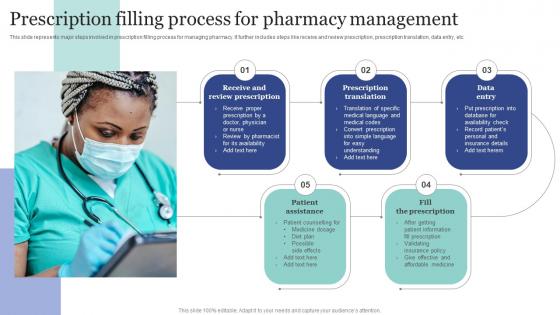
Prescription Filling Process For Pharmacy Management




Try Before you Buy Download Free Sample Product
 Impress Your
 Audience
 100%
100% Editable
 Save Hours
 of Time


This slide represents major steps involved in prescription filling process for managing pharmacy. It further includes steps like receive and review prescription, prescription translation, data entry, etc.
People who downloaded this PowerPoint presentation also viewed the following :
Prescription Filling Process For Pharmacy Management with all 6 slides:
Use our Prescription Filling Process For Pharmacy Management to effectively help you save your valuable time. They are readymade to fit into any presentation structure.





FAQs for Prescription Filling Process
So first you get the prescription and verify everything's legit. Check their insurance, med history, look for any sketchy drug interactions or allergies - that's honestly where you catch most problems so don't rush through it. Then dispense the meds and do your final check before counseling them on how to take it properly. Documentation is super important for compliance stuff, but the real deal is double-checking dosage and patient info before you hand anything over. I've seen pharmacists mess up those tiny details and it can really screw someone over. Oh and always use contractions when talking to patients - makes you sound way less robotic.
So these systems are basically your backup safety net - they catch drug interactions, check if dosages make sense for the patient's age/weight, and flag allergies before you mess up. Plus they handle the boring insurance verification stuff and track controlled substances so you don't get in trouble later. The audit trail thing is actually pretty clutch if something goes sideways. Oh, and pro tip - don't just click through all those alerts without reading them. I know they're annoying but they'll save your butt eventually.
Honestly, tech does pretty much everything these days. The pharmacy management system handles your inventory, insurance stuff, and drug interactions all at once. Those automated dispensing robots count pills - though they're not perfect and you'll still need people double-checking their work. E-prescribing from doctors is a game changer too, no more squinting at terrible handwriting. Oh, and make sure your team knows basic troubleshooting because these systems crash at the worst possible times. When everything connects properly though, it's pretty smooth from prescription scan to pickup.
So basically they have this whole system - first they check DEA schedules and match patient info with their records. Then they verify the dosing makes sense. Most places have alerts built in that catch sketchy stuff (honestly pretty smart). Everything gets documented like crazy since audits are constant. They also cross-check insurance rules and whatever your state requires. Oh and pro tip - if you're ever confused about their compliance stuff, just ask them to explain their process. They're usually cool about walking you through it.
Honestly, you're gonna deal with three main headaches: stock shortages, insurance drama, and doctors who apparently can't write legibly. Generics are especially brutal right now for inventory issues. Get tight with your suppliers and maybe look into automated reordering - trust me on this one. Insurance stuff? Verify everything upfront and keep those prior auth forms ready. Saves you from wanting to tear your hair out later. Don't guess on sketchy prescriptions either. Just call the doctor's office right away. Oh, and barcode scanning helps cut down on mix-ups. Build good systems that catch problems early instead of dealing with angry customers at pickup.
Yeah, it totally depends on what you're getting. Controlled stuff like ADHD meds or painkillers? They'll need extra verification, sometimes prior auth - could be hours or days. Specialty drugs are the worst since they don't usually stock them. You'll probably wait for ordering. Antibiotics are super quick though, pharmacies always have those ready. Generic meds are usually fast too. Your insurance can really mess things up if they want step therapy or you're getting something not on their preferred list. I learned this the hard way lol. Just call ahead for anything weird to check if they have it.
Dude, patient counseling is honestly your safety net before they leave with their meds. You're double-checking they get the dosing right and won't take it with the wrong foods or whatever. People get confused way more than you'd expect - sometimes they're too embarrassed to ask their doctor questions, so you catch that stuff. Most states require it anyway, but beyond that legal box-checking, just have a real conversation with them. Don't just read the label like a robot. Ask what questions they have and actually pay attention when they answer.
So basically, pharmacies have these automated systems that track what they're dispensing and reorder stuff when inventory gets low. The system learns your patterns and predicts what you'll need based on past data and seasonal trends - pretty smart actually. Most places work with multiple wholesalers too, which is clutch when your main supplier runs out. They can do emergency orders for urgent meds or even borrow from other pharmacies in the chain. The trick is setting reorder points high enough for delivery delays but not so high that you're stuck with expired drugs sitting around.
Usually takes 15-30 minutes at most places. CVS and Walgreens are pretty consistent - like 15-20 minutes tops. Independent pharmacies can be way faster since they're not dealing with crazy lines. Grocery store ones are weird though, sometimes you're in and out, other times you're stuck behind someone buying their entire week's groceries lol. If there's insurance drama or you need something specialty, obviously that'll take longer. I always call ahead or use their app to get in line before I show up. Trust me, don't go during lunch hour or right after 5pm unless you want to wait forever.
Oh man, insurance verification is such a pain - it can add like 15-30 minutes or sometimes even hours to picking up your prescription. The pharmacy basically gets stuck waiting when they can't verify your coverage or copay right away. Super annoying, especially when you're in a rush. Usually happens because of outdated info, plan changes, or their system just being weird. Pro tip: always bring your current insurance card and maybe call ahead for expensive stuff or specialty meds since those almost always need pre-approval. Learned that one the hard way!
Honestly, it's all about timing vs. money. Retail pharmacy gets you meds the same day but you'll pay more in copays - plus they run out of stuff sometimes which is annoying. Mail-order is way cheaper for stuff you take regularly and they send 90-day supplies straight to your house. Takes like a week though, so forget about it if you need something ASAP. I usually grab new prescriptions at the pharmacy first to make sure they work okay, then switch my daily meds to mail-order once I know the dose is right. Oh and check your insurance - some plans heavily favor one over the other.
So controlled substances are a whole different beast. You've got to verify DEA numbers, check those state monitoring databases religiously, and document literally everything. Storage is separate - locked safes and all that. Honestly, the database checks saved my butt more times than I can count when spotting sketchy patterns. Never skip those, seriously. You'll be doing constant inventory counts too, tracking every single pill. It sounds like a pain but once you get the routine down it's not terrible. Just way more hoops to jump through than regular scripts, but your license depends on getting it right.
So basically there are tons of checks happening behind the counter. First, the pharmacist looks at your prescription and checks it against your profile - making sure there's no weird drug interactions or allergies. They verify the dose makes sense too. Then someone physically grabs the right medication and counts it out. Most places have those barcode scanners now which is pretty neat, honestly cuts down on mistakes. The pharmacist does one final review before handing it over. Oh and if you're ever sketched out about something, just ask them to double-check - they won't mind.
Honestly, it's all about pace and how much time you get with patients. Acute care is crazy fast - we're talking stat orders where you've got minutes, not hours. Everything's streamlined but you still can't cut corners since patients are being monitored right there. Outpatient though? Way more chill. You actually have time to dig into drug interactions, deal with insurance headaches, and really educate people since they're taking stuff home. The patient counseling part is probably my favorite thing about outpatient work. Speed wins in acute care, but outpatient lets you be thorough.
So the big stuff happening right now? Automated dispensing systems are everywhere - robots doing the basic prescription fills while pharmacists get to do more clinical work. Telepharmacy is huge too, especially for rural areas where people can video chat with pharmacists instead of driving hours. AI's getting better at catching drug interactions and managing inventory. Oh, and digital prescription platforms are making everything way smoother. Honestly the robot thing still feels weird to me but it makes sense. If you're thinking about upgrades, I'd definitely check out automation tools that could give your team more time for actual patient stuff.
-
“As you have innovative ideas and they are all customizable, this saves a huge chunk of your time to prepare well-read presentations.”
-
Loved the fact that SlideTeam provides clean, high-definition, and professional PowerPoint products.