


Process Safety Management Powerpoint Ppt Template Bundles





Try Before you Buy Download Free Sample Product
 Impress Your
 Audience
 100%
100% Editable
 Save Hours
 of Time


Elevate workplace safety with our comprehensive PPT on Process Safety Management. Dive into the intricacies of process safety control, safety process oversight, and hazard control management. This presentation equips you with a robust framework for risk mitigation planning, ensuring the highest level of safety in industrial operations. Learn how to implement effective safety protocols, supervise processes, and prevent potential incidents. Whether you are an industry professional or a safety enthusiast, this PPT empowers you with insights into maintaining a secure work environment. Uncover strategies to prevent hazards and optimize risk control, safeguarding your team and operations. Revolutionize your approach to process safety today for a secure tomorrow.
People who downloaded this PowerPoint presentation also viewed the following :
Process Safety Management Powerpoint Ppt Template Bundles with all 24 slides:
Use our Process Safety Management Powerpoint Ppt Template Bundles to effectively help you save your valuable time. They are readymade to fit into any presentation structure.

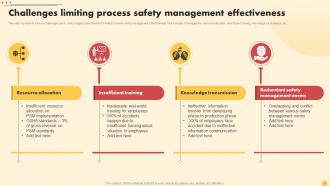
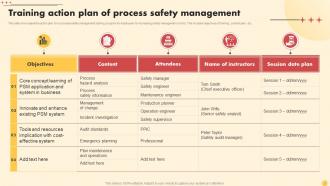
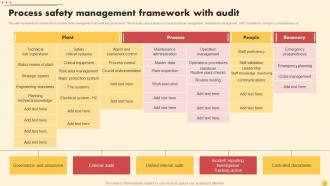
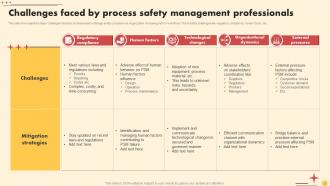










FAQs for Process Safety Management Powerpoint
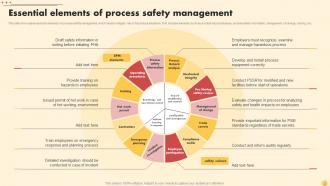
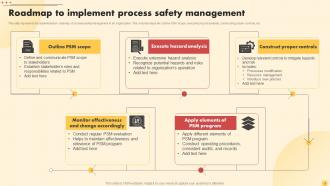
**INPUT**: What are the key components of a successful Process Safety Management (PSM) program? **OUTPUT**: Successful PSM programs include process hazard analysis, operating procedures, mechanical integrity, training programs, and incident investigation protocols. These components work together by systematically identifying risks, standardizing operations, and maintaining equipment reliability, with many manufacturing and chemical processing facilities finding that comprehensive PSM implementation delivers enhanced safety performance and regulatory compliance. *Word count: 54 words*
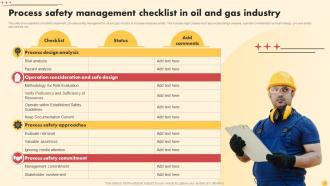
PSM standards differ across industries through specific regulatory frameworks, hazard profiles, operational complexities, and risk assessment methodologies tailored to each sector's unique challenges. While chemical manufacturing emphasizes reactive hazard management and batch process controls, oil and gas operations focus on drilling safety, pipeline integrity, and exploration risks, with both industries ultimately delivering enhanced worker protection and operational reliability through industry-specific compliance approaches.
Employee training serves as the foundation of effective process safety management, encompassing hazard recognition, emergency response procedures, equipment operation protocols, and regulatory compliance requirements. Through comprehensive safety programs, organizations significantly reduce incident rates, improve operational efficiency, and ensure regulatory adherence, with many manufacturing and chemical processing facilities finding that well-trained employees proactively identify risks, ultimately delivering enhanced workplace safety and competitive operational advantage.
Organizations effectively identify and assess process hazards through systematic hazard analysis techniques like HAZOP studies, fault tree analysis, bow-tie analysis, and process hazard assessments, combined with regular safety audits and employee feedback systems. These methodologies enable companies across chemical manufacturing, oil refining, and pharmaceutical sectors to proactively minimize risks, ensure regulatory compliance, and maintain operational continuity while protecting workforce safety.
Common pitfalls include inadequate employee training, insufficient documentation, poor hazard identification, lack of management commitment, and failure to conduct thorough process hazard analyses. These challenges often stem from treating PSM as a compliance checkbox rather than a comprehensive safety culture, with many manufacturing and chemical processing facilities finding that successful implementation requires sustained leadership engagement, cross-functional collaboration, and continuous improvement mindset.
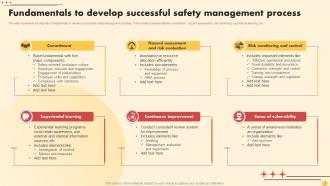
Leadership commitment significantly influences PSM effectiveness by establishing safety culture, allocating adequate resources, and ensuring consistent policy enforcement across all organizational levels. When executives actively champion process safety through visible participation, strategic investment, and accountability measures, organizations experience enhanced compliance, reduced incident rates, and improved operational reliability, with many industrial facilities finding that committed leadership directly correlates with sustained safety performance.
Near-miss reporting significantly enhances process safety by identifying hazardous conditions before incidents occur, enabling proactive risk mitigation, and creating comprehensive safety databases for trend analysis. Through systematic near-miss programs, organizations in chemical manufacturing, oil refining, and pharmaceuticals streamline hazard identification, accelerate corrective actions, and ultimately reduce accident rates while fostering stronger safety cultures.
Technology and automation enhance PSM practices by streamlining hazard identification, automating safety monitoring systems, and accelerating incident response protocols. Through predictive analytics and real-time sensors, chemical plants, refineries, and manufacturing facilities significantly reduce human error, enable proactive maintenance scheduling, and deliver faster emergency responses, ultimately minimizing operational risks while improving regulatory compliance.
Key PSM metrics include leading indicators like safety training completion rates, hazard identification frequency, and management of change compliance, alongside lagging indicators such as process safety events, near-miss reporting, and regulatory violations. These comprehensive measurements enable organizations to track both proactive safety culture development and reactive incident prevention, with many industrial facilities finding that balanced scorecards combining operational reliability with safety performance ultimately deliver sustained risk reduction and regulatory compliance.
Regulations and compliance requirements fundamentally drive PSM strategies by establishing mandatory safety standards, documentation protocols, risk assessment procedures, and incident reporting frameworks that organizations must integrate into their operations. These regulatory frameworks, particularly OSHA's PSM standard and EPA's RMP requirements, enable companies to systematically identify hazards, implement preventive measures, and maintain operational excellence, ultimately delivering enhanced safety performance and competitive advantage.
Process safety culture significantly reduces incidents by fostering shared accountability, proactive hazard identification, continuous learning from near-misses, and consistent adherence to safety protocols across all organizational levels. Organizations with strong safety cultures, particularly in chemical manufacturing, oil refining, and pharmaceuticals, experience substantially fewer catastrophic events while enhancing operational reliability and regulatory compliance.
Risk assessment methodologies integrate into PSM through systematic hazard identification, consequence analysis, probability evaluation, and risk ranking protocols that inform decision-making across all PSM elements. These methodologies enhance process hazard analyses, management of change procedures, and incident investigation processes, while supporting compliance audits and emergency planning, ultimately delivering more robust safety systems and regulatory adherence.
Major industrial accidents like Bhopal, Deepwater Horizon, and Texas City reveal critical PSM lessons including inadequate hazard analysis, poor emergency response planning, insufficient training protocols, and weak safety culture enforcement. These disasters demonstrate that comprehensive risk assessment, robust management of change procedures, and continuous safety auditing are essential, with many organizations finding that proactive PSM investment prevents catastrophic failures while delivering operational resilience and regulatory compliance.
Economic conditions significantly influence PSM priorities by affecting budget allocations, regulatory compliance timelines, and risk tolerance levels across organizations. During economic downturns, companies often face pressure to reduce safety investments, while periods of growth enable enhanced training programs and infrastructure upgrades, with many industrial facilities finding that maintaining robust PSM standards ultimately delivers competitive advantages and operational resilience.
Continuous improvement ensures process safety systems evolve through regular risk assessments, incident analysis, performance monitoring, and technology updates. This systematic approach enables organizations to identify emerging hazards, implement preventive measures, and enhance safety protocols, with industries like petrochemicals and pharmaceuticals finding that proactive improvements significantly reduce incident rates while maintaining operational excellence.
-
Such amazing slides with easy editable options. A perfect time-saver.
-
Time saving slide with creative ideas. Help a lot in quick presentations..