

Process Improvement Timeline Powerpoint Ppt Template Bundles





Try Before you Buy Download Free Sample Product
 Impress Your
Audience
 100%
Editable
 Save Hours
of Time


Our Process Improvement Timeline Powerpoint Ppt Template Bundles are topically designed to provide an attractive backdrop to any subject. Use them to look like a presentation pro.
People who downloaded this PowerPoint presentation also viewed the following :
Process Improvement Timeline Powerpoint Ppt Template Bundles with all 21 slides:
Use our Process Improvement Timeline Powerpoint Ppt Template Bundles to effectively help you save your valuable time. They are readymade to fit into any presentation structure.
-

Process Improvement Timeline
-

Process improvement timeline Gantt chart
-
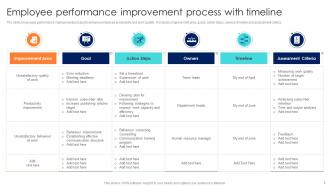
Employee performance improvement process with timeline
-

Steps to build process improvement timeline
-

Process improvement plan with responsible timeline
-
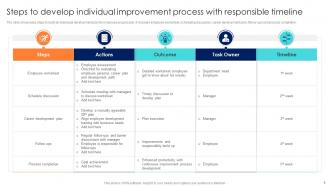
Steps to develop individual improvement process with responsible timeline
-

Business process improvement plan timeline
-
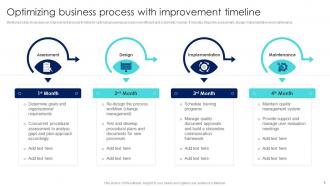
Optimizing business process with improvement timeline
-
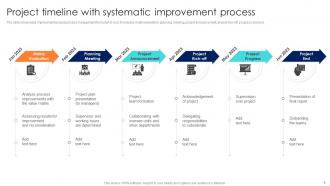
Project timeline with systematic improvement process
-
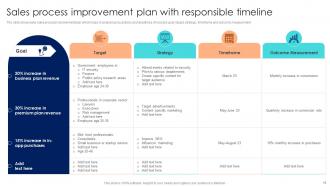
Sales process improvement plan with responsible timeline
-
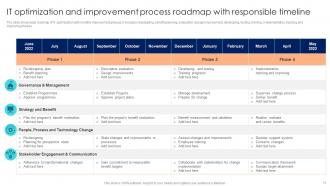
IT optimization and improvement process roadmap with responsible timeline
-
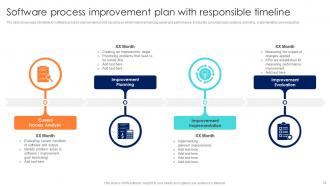
Software process improvement plan with responsible timeline
-

Process quality improvement timeline icon
-

Training process improvement timeline icon
-
Manufacturing quality improvement process timeline icon
-
Thanks for watching
-

-

-

-

-

FAQs for Process Improvement Timeline Powerpoint
So there's basically five steps to this whole thing. You start by figuring out what's actually broken or could be better. Then comes the analysis part - honestly, this always drags on way longer than anyone expects. After that you design the new process, roll it out, and keep an eye on things to make sure they don't slide back to the old way. Most projects take like 3-6 months depending on how messy things are. Oh, and definitely nail down what "success" looks like before you get lost in all the data analysis stuff.
So first thing - get your baseline numbers locked down before you change anything. Track the same metrics consistently: cycle time, error rates, cost savings, all that good stuff. Don't forget the softer metrics either like how your team's feeling about things and customer feedback. Here's the annoying part though - you gotta be patient. Some improvements won't show up for months, which honestly drives me crazy but that's just how it works. Set up monthly or quarterly reviews instead of obsessing over daily numbers. Oh and seriously, document everything because your boss will definitely ask for ROI proof later.
Honestly, start with mapping out your current process first - that's where most people mess up. Lean Six Sigma is everywhere for good reason, plus Kaizen events for the continuous improvement stuff. I swear half the time teams are solving different problems because nobody's on the same page about what's actually broken. Tools like fishbone diagrams and 5 Whys work great for root cause analysis. DMAIC gives you a decent framework to follow if you like structure. Visio or Lucidchart help visualize everything. Pick one methodology that clicks with your team and actually stick with it though.
Trust between teammates is everything for process changes. When people actually talk to each other, you catch issues early and don't have to fight for every little improvement. But if there's drama or everyone's doing their own thing? Good luck getting anything done. I swear, even brilliant ideas just die in meeting hell. Getting everyone on the same page about WHY you're changing stuff first - that's where you start. Skip that step and you'll be pulling your hair out later when nothing sticks. Oh, and expect the first try to suck. Teams that work well together just roll with it and fix things as they go.
Honestly, your leadership team is what makes or breaks the whole timeline. They're the ones who actually get you the budget and people you need. Plus they can clear out all those annoying roadblocks that pop up - and trust me, there will be roadblocks. Without them backing you up, projects just kinda... fade away into nothing. Get solid executive support right from the start. Schedule regular check-ins too, because executives have the attention span of goldfish sometimes. They also handle the politics with other departments when priorities start clashing. Strong leadership keeps everything moving forward instead of getting stuck in committee hell forever.
Start by looking at what's broken right now - where are things constantly getting stuck or where customers complain most? Those spots are your best bet for quick wins. I'd hit the customer-facing stuff first since fixing that makes you look like a hero to the bosses. After that, go for the internal processes that make everyone roll their eyes. You know the ones - where people constantly grumble "this is so stupid." Honestly, just make a simple chart: high impact vs low effort. Knock out those easy high-impact fixes first to get some momentum going, then you can tackle the messier stuff later.
Honestly, most people mess up by going too fast and skipping proper training. Don't try changing everything at once either - that's a recipe for disaster. Get the actual users on board first or you'll regret it later (learned that one the hard way). Measure how things work before you start so you can actually prove it helped. Oh, and communication breakdowns will kill your whole project faster than anything else. People need to know why stuff is changing. My advice? Start with something small, train people properly, and keep talking to everyone throughout the process.
Honestly, tech can totally transform how you tackle process improvement. Start with data analytics - it'll spot bottlenecks way faster than doing everything by hand. Automation handles the boring repetitive stuff instantly. For visualizing workflows, tools like Lucidchart are amazing (seriously, they make meetings so much less painful when everyone can actually see what you're talking about). Project management platforms keep everything organized and show real-time progress. My advice? Pick one manual process that's driving you crazy and find a tech solution for that first. You'll see results pretty quickly.
Honestly, just track three things. Did you actually hit those KPIs you promised - the cycle time stuff, error rates, whatever? Then ask if people genuinely like the new process (not just what they tell management). Seriously, amazing metrics mean nothing if everyone's miserable using it. Also check that changes stick after a few months - I'd do a casual review around 90 days to see if you're still getting those wins. Oh, and make sure you're asking the right people, not just the managers who signed off on it.
Honestly? Monthly check-ins work best for me - quarterly feels way too spread out. Give major changes like 30-60 days to actually settle in before judging them. I learned this the hard way when I kept tweaking things too early and screwed up what was already working fine. For smaller stuff, weekly reviews are totally doable. The main thing is just being consistent about it. Even 15 minutes beats doing nothing for months then panicking. Oh, and definitely set a calendar reminder right now or you'll forget (I always do). Trust me on this one.
Dude, you HAVE to get stakeholders involved from day one. These people deal with the process every single day - they'll either make your project succeed or watch it crash and burn. Honestly, I've watched so many "brilliant" improvements fail because nobody bothered asking the actual users what they thought. They know all the annoying little issues that never show up in your fancy data analysis. Without their buy-in, you're just creating something that looks impressive in PowerPoint but totally flops in real life. Keep them engaged throughout the whole thing and they'll become your biggest supporters instead of roadblocks.
Honestly, culture trumps everything when it comes to process improvements. I've seen amazing changes fail completely because teams just wouldn't buy in. Trust issues with leadership? Good luck getting anyone on board. But when you've got people who actually like trying new things and learning, stuff gets adopted way faster. Departments that don't talk to each other are the worst bottlenecks - collaborative teams just move quicker. Here's what I'd do: figure out your culture situation first. Deal with the resistance before you even start changing processes, because otherwise you're just banging your head against the wall.
Track both early signals and final results - that's what actually matters. Early stuff like training rates, process changes, engagement scores. Then the real outcomes: faster cycle times, fewer defects, happier customers, money saved. Honestly, most people go overboard with metrics and get lost in spreadsheets. Stick to maybe 3-5 max that you can check monthly. Build a simple dashboard you'll actually look at. You're basically answering two questions: "Are we doing what we said we'd do?" and "Is it making any difference?" That balance keeps improvement projects from going off the rails.
Honestly, just start with one good feedback system this week and grow from there. Monthly check-ins with your stakeholders work great. Simple surveys too - nothing fancy. Real-time data tools are clutch if you can swing them. The biggest mistake I see? Teams obsessing over metrics that look impressive but don't actually help. Focus on stuff that tells you if things are genuinely working. Oh, and make it automatic - like scheduled reviews - so you don't forget to do it. Most critical part though: actually use what you learn. Otherwise you're just collecting data for no reason.
Dude, the payoff is massive once you stick with it. Quality gets way more consistent and your team stops scrambling to fix stuff last minute. Small wins pile up fast - I'm talking six months and you'll be like "holy shit, look at these numbers." Plus your boss actually sees real progress instead of just hearing excuses. Best part? You're not firefighting anymore, so there's actual time for the big picture stuff. Everyone starts thinking ahead instead of just reacting. Honestly sounds cheesy but people get hooked on finding ways to improve things. Track everything, even tiny improvements - trust me on this one.
-
Such amazing slides with easy editable options. A perfect time-saver.
-
Very unique and reliable designs.