


Product marketing framework for service launch powerpoint presentation with slides go to market





Try Before you Buy Download Free Sample Product
 Impress Your
 Audience
 100%
100% Editable
 Save Hours
 of Time


To hone up a framework for service launch we have designed a readymade PPT example. Now, you have to simply click and download our sample of PPT presentation to cover all significant aspects about launching a new service. With help of our PowerPoint show you can brief your sales and marketing force about the blueprint of your product planning and development process. There in more as you can utilize this PPT model to illustrate market and market needs for better comprehension of market opportunities for new products. Moreover, an engaging service launch visual communication supports to exert a pull on new companies to come forward for partnerships. To accomplish more our presentation deck comprises of templates slides like customer need analysis, SWOT analysis, marketing mix, contingency plan etc. In short, complete packages for product managers and marketing managers having all in one spot. There has never been a better chance to get on track. So, quickly download our 100 pecrntage editable product marketing PowerPoint slide deck . Display intense determination with our Product Marketing Framework For Service Launch Complete Powerpoint Deck With Slides. Demonstrate that you are driven by ambition.
People who downloaded this PowerPoint presentation also viewed the following :
Content of this Powerpoint Presentation
Slide 1: This slide introduces Product Marketing Framework for Service Launch. State Your Company Name and start confidently.
Slide 2: This is an Agenda slide. State your agendas here.
Slide 3: This is Our Mission slide with imagery. State your mission aspects here.
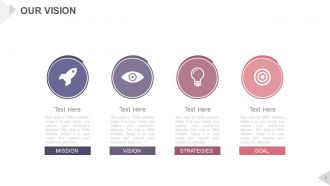
Slide 4: This is Our Vision slide. State mission, vision, goals, strategies here.
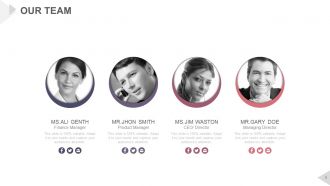
Slide 5: This is Our Team slide with image boxes to fill name, designation.
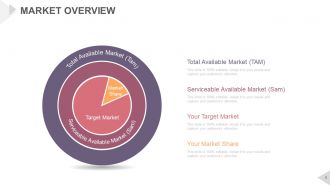
Slide 6: This slide presents MARKET OVERVIEW comprising of- Total Available Market (TAM), Serviceable Available Market (Sam), Your Target Market, Your Market Share, Market Share, Target Market.
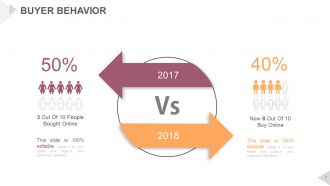
Slide 7: This slide presents Buyer Behavior of the customer. State customer aspects here.
Slide 8: This slide shows Compare imagery of a balancing scale. Show comparison, etc. here.
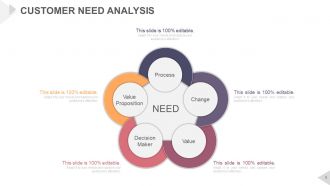
Slide 9: This slide shows Customer Need Analysis showcasing- Process, Change, Value, Decision Maker, Value Proposition.
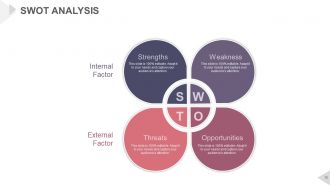
Slide 10: This slide presents a SWOT ANALYSIS as Internal Factor and External Factor.
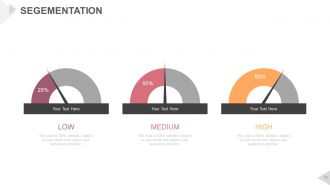
Slide 11: This slide shows Segmentation in terms of High, Medium and Low.
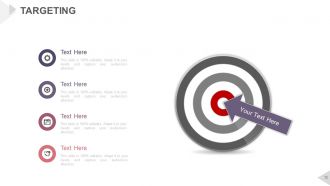
Slide 12: This slide showacses Targeting. State customer targeting aspects etc. here.
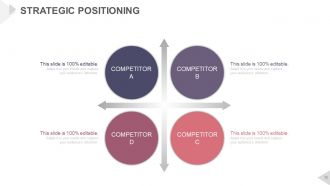
Slide 13: This slide shows Strategic Positioning in matrix form.
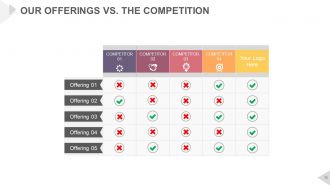
Slide 14: This slide presents Our Offerings vs The Compaetition. State these aspects here.
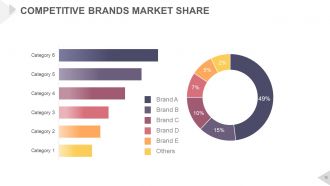
Slide 15: This slide showcases Competitive Brands Market Share.
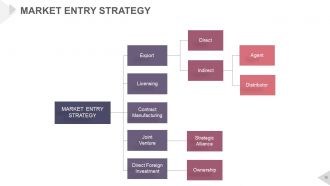
Slide 16: This slide showcases Market Entry Strategy with the following points- Strategic Alliance, Ownership, Agent, Distributor, Direct, Indirect, Export, Licensing, Contract Manufacturing, Direct Foreign Investment, Joint Venture.
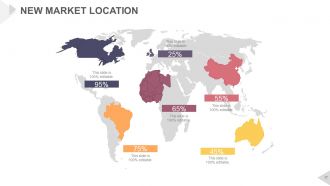
Slide 17: This slide shows New Market Location in world map image.
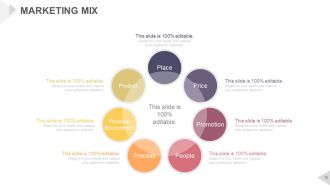
Slide 18: This slide presents Marketing Mix: Place, Price, Promotion, People, Process, Physical Environment, Product.
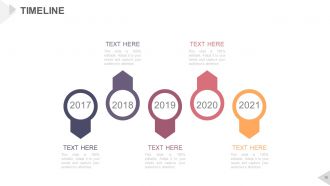
Slide 19: This is a Timeline image slide to show growth factors, milestones etc.
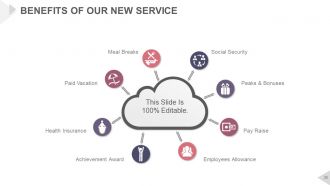
Slide 20: This slide shows Benefits Of Our New Service with the following points- Health Insurance, Paid Vacation, Meal Breaks, Social Security, Peaks & Bonuses, Pay Raise, Employees Allowance, Achievement Award.
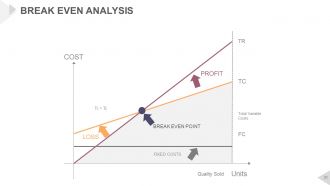
Slide 21: This slide shows Break Even Analysis graph.
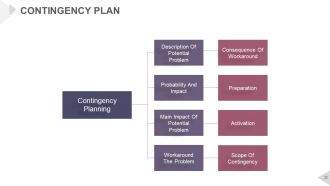
Slide 22: This slide presents a CONTINGENCY PLAN comprising of- Description Of Potential Problem Probability And Impact Main Impact Of Potential Problem Workaround The Problem Consequence Of Workaround Preparation Activation Scope Of Contingency
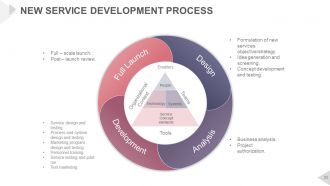
Slide 23: This slide presents New Service Development Process with the following content- Development: Service design and testing, Process and system design and testing, Marketing program design and testing, Personnel training, Service testing and pilot run, Test marketing. Analysis: Business analysis, Project authorization, Formulation of new services objective/strategy, Idea generation and screening, Concept development and testing, Full Launch: Full – scale launch, Post – launch review. Teams, Enablers, Tools, Organizational Context, People, Service Concept elements, Systems, Technology, Design.
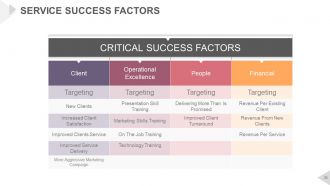
Slide 24: This slide showcases Service Success Factors in tabular form.
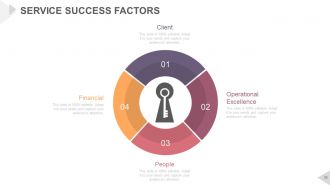
Slide 25: This slide showcases Service Success Factors with- Client, Operational Excellence, Financial, People.
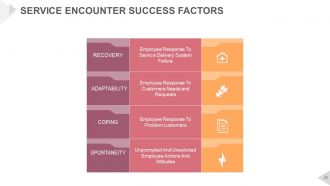
Slide 26: This slide showcases Service Encounter Success Factors in tabular form.
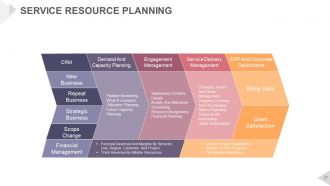
Slide 27: This slide displays Service Resource Planning with- CRM, Demand And Capacity Planning, Engagement Management, Service Delivery Management, ERP And Corporate Dashboards, Pipeline Monitoring, What-if-scenarios, Utilization Planning, Future Capacity Planning, Statements Of Work Details, Activity And Milestone Scheduling, Resource Assignment, Financial Planning, Changes, Issues, And Risks Management, Progress Tracking And Re-planning, Status Reporting, Financial Re-forecasting, Client Deliverables, Billing Data, Client Satisfaction, New Business, Repeat Business, Scope Change, Strategic Business, Financial Management, Monitor Project Expenditure, Monitor Work In Progress, Plan Billable Milestones, Forecast Revenue And Margins By Services Line, Region, Customer, & Project and Track Revenue By Billable Resources.
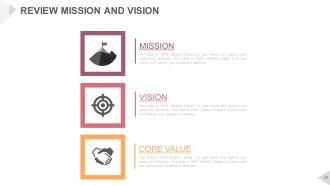
Slide 28: This slide presents Review Mission And Vision. Review them here.
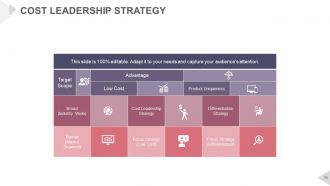
Slide 29: This slide presents Cost Leadership Strategy in blocks form.
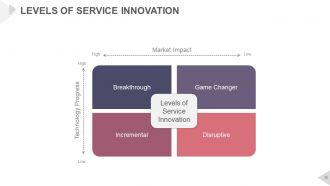
Slide 30: This slide displays Levels Of Service Innovation in matrix form consisting of- Breakthrough, Disruptive, Incremental, Game Changer in terms of Technology Progress, High Low Market Impact.
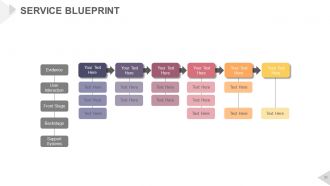
Slide 31: This slide presents Service Blueprint containing- Evidence, Front Stage, Backstage, Support Systems, User Interaction.
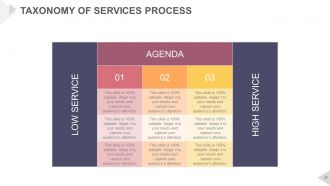
Slide 32: This slide displays Taxonomy Of Services Process with Low and High Service.
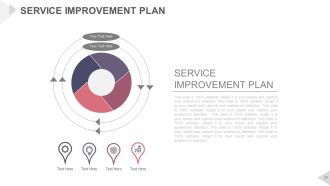
Slide 33: This slide presents a Service Improvement Plan with imagery to showcase with.
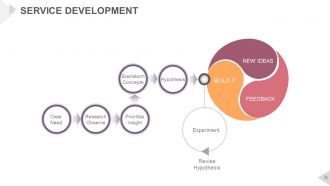
Slide 34: This slide showcases Service Development containing- Clear Need, Research Observe, Prioritize Insight, Brainstorm Concepts, Hypothesis, New Ideas, Feedback, Build It, Experiment, Revise Hypothesis.
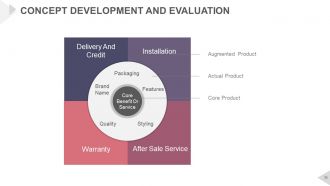
Slide 35: This slide shows Concept Development And Evaluation with- Warranty, After Sale Service, Installation, Delivery And Credit, Brand Name, Quality, Packaging, Features, Styling, Core Benefit Or Service, Augmented Product, Actual Product, Core Product.
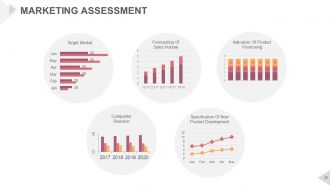
Slide 36: This slide presents Marketing Assessment graphs on- Target Market, Forecasting Of Sales Volume, Indication Of Product Positioning, Competitor Reaction, Specification Of New Product Development.
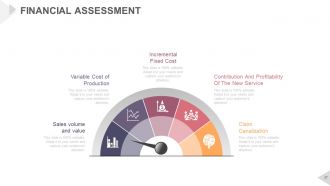
Slide 37: This slide showcases Financial Assessment containing- Claim Canalization, Variable Cost of Production, Sales volume and value, Incremental Fixed Cost, Contribution And Profitability Of The New Service.
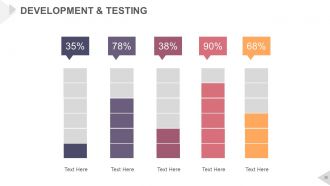
Slide 38: This slide shows Development & Testing in a creative bar graph form.
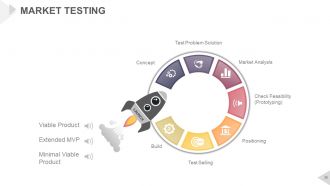
Slide 39: This slide shows Market Testing with the following content- Viable Product, Extended MVP, Minimal Viable Product, Concept, Test Problem Solution, Market Analysls, Check Feasibility, (Prototyping), Positioning, Test Selling, Build, LAUNCH.
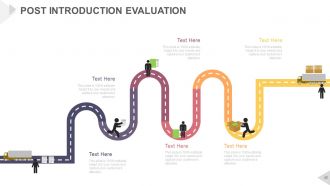
Slide 40: This slide shows Post Introduction Evaluation in roadmap form.
Slide 41: This slide presents Delivery Process in creative arrrow and icon imagery.
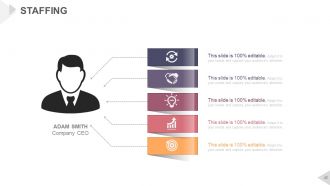
Slide 42: This is a Staffing slide. Present members, employees in a creative way.
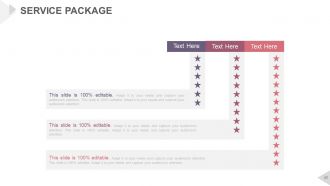
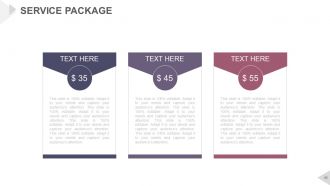
Slide 43: This slide shows a Service Package table.
Slide 44: This slide shows anotehr Service Package table.
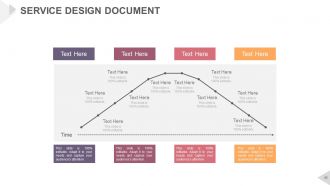
Slide 45: This slide shows Service Design Document graph.
Slide 46: This slide shows Service Design Document.
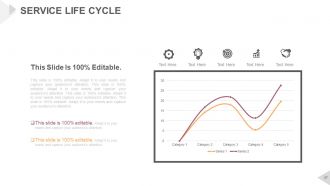
Slide 47: This slide shows Service Lifecycle graph.
Slide 48: This is a Business Quotes slide to convey company's message, beliefs etc.
Slide 49: This is a Thank You slide with Address# street number, city, state, Contact Numbers, Email Address.
Product marketing framework for service launch powerpoint presentation with slides go to market with all 49 slides:
Acquire abundant applause with our Product Marketing Framework For Service Launch Complete Powerpoint Deck With Slides. Gain accolades for individual brilliance.



FAQs for Product marketing framework for service launch powerpoint presentation with slides
So you'll want to hit five main areas: market research, competitive analysis, positioning/messaging, go-to-market strategy, and performance metrics. Honestly, messaging is where everyone thinks they're good but most teams totally bomb it. Customer research should be your starting point since everything else flows from that. Don't forget buyer personas, value props, pricing, and channel planning - oh and make sure all these pieces actually talk to each other instead of existing in separate bubbles. I learned that the hard way at my last job.
Honestly, knowing your audience is everything - it's what drives your entire marketing approach. Figure out their actual problems and where they spend time online first. That shapes how you position your product, what messages hit, and which channels matter. You can't market B2B software like it's skincare, you know? Your audience research also dictates content strategy and pricing approach. I always tell people to nail down those buyer personas early because everything else should flow from there. It sounds obvious but most companies skip this step and wonder why their messaging feels off.
Honestly, you can't build good messaging without knowing what your competitors are saying to the same customers. I spend way too much time doing competitor teardowns – probably more than I should, but whatever. It's your reality check for finding white space and actually differentiating yourself. Map out your top 3-5 competitors' messaging first. Then figure out where you can authentically stand apart. The whole point is spotting pricing opportunities and feature gaps that customers care about. Just don't get stuck collecting data forever – use those insights to inform your actual go-to-market strategy.
Focus on three main buckets: awareness, engagement, and conversions. Brand surveys and website traffic show if people actually know you exist. Content downloads, demo requests, social stuff - that's your engagement data telling you if your messaging hits right. Then there's the money stuff - lead quality, how long your sales cycle drags on, customer acquisition costs. Honestly, most people get stuck tracking vanity metrics that look pretty but don't matter. The real win is connecting everything back to revenue so you know what's actually working vs. what just feels good.
Start with talking to your actual customers - figure out what's bugging them and what they really care about. Check out your competitors too, see where they're missing the mark. That's where you can swoop in. Map your product's best stuff against those gaps you found. There's this trick I love: finish the sentence "Unlike [competitor], we're the only ones who..." It really forces you to get specific about what makes you different. Oh, and use something like a value proposition canvas to visualize everything. Just don't forget to test your messaging with real people first - saves you from looking silly later.
Honestly, you've gotta stay on your toes with this stuff. Customer behavior changes overnight, tech evolves, competitors do weird things - your framework needs to roll with it all. Build in quarterly check-ins where you figure out what's actually affecting your audience vs. what's just industry hype. When the whole "AI-powered everything" craze hit, smart companies pivoted their messaging fast. Don't lose your core value though - that stays consistent. The messaging and positioning? Yeah, that shifts. I learned this the hard way watching teams stick to outdated frameworks while their competitors ate their lunch.
Positioning is like your marketing blueprint - everything flows from there. Once you've got it locked down, your messaging gets way sharper and campaigns actually hit the right audience instead of random people who don't care. Sales teams love it too because they finally know what to say. Honestly, most companies skip this step and wonder why their marketing feels all over the place. Different from your positioning work, I'd say audit what you're putting out there first - does it even match what you think you're selling? Strong positioning makes everything feel connected across channels and helps you stand out from whoever you're competing against.
Get both teams in the same room when you're building buyer personas and messaging - seriously, don't let them do this stuff separately or you'll regret it later. Sales needs to share what objections they're actually hearing so marketing can tweak campaigns. Make your lead scoring super clear too, otherwise everyone argues about lead quality. Monthly pipeline reviews work well - just sit down together and see what's actually working. Oh, and those feedback loops between teams? Game changer. You'll probably need to be the one pushing for this at first, but it's worth it.
Okay so basically you gotta match your marketing to where your product actually is in its lifecycle - not where you think it should be, which honestly most people mess up. Early on? Focus on demos and getting people to understand what you're even selling. Growth phase is when you double down on what's working and expand to new audiences. Once you hit maturity, you're scrapping for market share against competitors. If you're in decline, either find new use cases or start planning your exit strategy. The whole trick is being realistic about which stage you're actually in. Don't waste money on growth tactics when you should be educating people about the basics.
So you want to track stuff at both ends - awareness metrics like brand mentions and website traffic to see if people are actually hearing about you. Then flip to the conversion side: lead quality, trial signups, actual sales from the campaign. Customer retention and NPS scores matter too, though honestly everyone forgets about those until later. The mix really depends on what you're trying to achieve. Oh, and set up tracking before you launch - I've seen too many people scrambling afterward trying to piece together what worked. Short sentences mixed with longer ones keep it interesting.
So first thing - do some customer research to figure out what's actually keeping them up at night. Then build your whole story around that. Make them the hero, not your product (I learned this the hard way lol). The narrative should flow through everything - your website copy, sales decks, even how your team talks about it internally. People need to see themselves in the story, you know? Map out what you've got now and swap those boring feature bullets for actual story beats. Sounds kind of fluffy but honestly? It works way better than you'd think.
Honestly? Content marketing and email campaigns are your best bets, plus whatever social platform your people actually use. Don't try to be everywhere at once - pick like 2-3 things max and nail those instead. Write blog stuff that solves real problems your customers have, set up email sequences for different stages of buying, and get some case studies going. Oh, and retargeting ads are pretty solid for catching people who already checked you out. Map out how people find you and buy from you first though. That'll show you where to focus your energy instead of just guessing.
Honestly, customer feedback is like a mirror for your whole framework - shows you what's actually working vs what you *think* is working. I've completely torn apart strategies because customers were telling me something totally different than what I expected. Pay attention to the exact words they use when describing your product's value. Notice pain points you somehow missed. Look for patterns in how they're actually using your stuff (usually way different than you planned, lol). Steal their language for your messaging and tweak those customer personas. Set up regular check-ins through surveys or interviews so you're not just operating on assumptions.
Honestly? Getting marketing, product, and sales aligned is like herding cats - everyone's got different priorities. Messaging gets all over the place too because people interpret your framework however they want. Data's another headache since it's scattered across random tools and platforms. Oh, and don't even get me started on how fast these things become useless when the market shifts. I've literally seen strategy docs collecting digital dust after like 6 months. Start simple though - assign clear owners and do regular check-ins. That's really the only way to keep it from becoming another forgotten Google doc.
Build flexibility right into your framework from day one. Monthly or quarterly reviews work best - depends how fast your market moves. Gather feedback constantly from sales, customers, actual market data instead of guessing. I've watched teams cling to dead frameworks for way too long because they never planned for changes. Short sentences help here. Create specific triggers for pivoting, like when competitors make big moves or customer behavior suddenly shifts. Oh, and honestly? Keep the whole thing simple enough that you can actually tweak it fast when everything inevitably changes.
-
Great designs, Easily Editable.
-
Professional and unique presentations.