

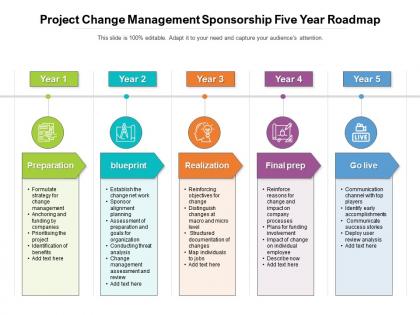
Project change management sponsorship five year roadmap




Try Before you Buy Download Free Sample Product
 Impress Your
 Audience
 100%
100% Editable
 Save Hours
 of Time


Visualize your work plan and communicate your ideas impactfully with our pre designed Project Change Management Sponsorship Five Year Roadmap. Showcase the detailed overview of the project, the key deliverables, and the milestones to be achieved with the help of our fully customizable PowerPoint layout. You can easily emphasize on the project goals and discuss all the activities involved in an easy to comprehend manner by utilizing our professionally designed PPT theme. This roadmap PowerPoint layout is a perfect strategic planning tool that can help in keeping the project on track. With our attractive PowerPoint theme, you can articulate the workflow, track the work progress, and have a clear vision of the goal to be achieved. Download this versatile Project Change Management Sponsorship Five Year Roadmap and save your hours of work.
People who downloaded this PowerPoint presentation also viewed the following :
Project change management sponsorship five year roadmap with all 2 slides:
Use our Project Change Management Sponsorship Five Year Roadmap to effectively help you save your valuable time. They are readymade to fit into any presentation structure.
FAQs for Project change management sponsorship
Okay so basically you gotta tell people WHY you're changing things - that's where most companies mess up big time. Get your leadership actually on board first, then bring employees into the planning early. Resistance is gonna happen no matter what, so just roll with it and give people proper training. Oh and definitely start with small pilot programs instead of going all-in right away - learned that one the hard way at my last job lol. Quick wins help too because people need to see it's actually working. The whole "announce major changes out of nowhere" thing never ends well.
Honestly, most companies screw this up by assuming everyone's ready without actually checking. Start with a quick survey - ask your team how they feel about the change, whether they can handle it, and if leadership seems genuinely committed. Check what happened with past changes too. Did they work or totally flop? That'll tell you everything about your company's track record. Also figure out if you've got enough time, money, and decent ways to communicate with people. I'd run this assessment with key stakeholders before jumping into anything major - saves you a ton of headaches later.
Look, leaders are absolutely everything when it comes to making change actually stick. Without them fully bought in, your whole initiative just dies - people can smell fake commitment from miles away. The best leaders don't just announce something and vanish. They're out there coaching people, dealing with complaints, and honestly? Making sure to celebrate the small stuff too. You need someone who'll model what they're asking for and keep communicating the why behind everything. If your leaders are just checking boxes, you're basically screwed before you start.
Honestly, you can't communicate enough during big changes - it'll feel like overkill but trust me, it's not. Figure out who you're talking to first and what they actually give a shit about. Your finance team cares about different stuff than your developers, you know? Mix up how you reach people too - some prefer emails, others want face-to-face conversations or quick Slack messages. The tricky part is keeping your main message consistent while switching up delivery. Oh, and don't make it one-sided! People hate feeling like they're just being lectured at. Create ways for them to ask questions and actually listen to their concerns. Check in regularly to see if your message is actually getting through.
Honestly, the worst mistake is terrible communication - like, people won't just figure it out themselves. Don't rush the timeline either. I've watched so many projects crash because leadership got antsy and skipped crucial steps. Most teams obsess over the technical stuff but totally ignore how people actually feel about changes. Everyone needs to know why this matters to *them* personally, not just what's different. Oh and resistance? That's totally normal, not them being difficult. Find your office influencers first and win them over - makes everything way easier.
Honestly, you've gotta be super upfront about why this change is happening - people freak out when they're left guessing. Get them involved in planning it so they don't feel like stuff is just happening TO them, you know? Actually listen when they complain (some concerns are legit). Training helps tons because most resistance comes from people being scared they'll mess up. Oh, and definitely talk to your key people first - they can basically do half the work for you convincing everyone else. Small wins help too. Makes the whole thing feel less overwhelming.
You need both hard numbers and soft stuff to really know what's happening. Track adoption rates, how fast people get up to speed, and if you're hitting deadlines/budget. But honestly? I've watched changes that looked perfect on spreadsheets completely fail because nobody asked how employees actually felt about it. So get engagement scores and feedback surveys too. Also watch for red flags - turnover spikes, tons of help desk tickets, that kind of thing. Oh, and set your baseline metrics first or you'll have no clue if anything actually improved.
Look, culture pretty much determines if your change thing will work or crash and burn. Some places love trying new stuff - those teams will jump on board fast. Others? Good luck breaking the "but we've always done it this way" mindset. I mean, I've watched incredible plans completely tank because nobody bothered checking if people were actually ready for it. Your culture decides whether folks see change as exciting or scary, whether they trust you're not just messing with them for no reason. Honestly assess where you're at first, then tackle the cultural stuff before diving into the big changes.
Honestly, you've got to get stakeholders involved from the very beginning - none of this "we'll tell them later" nonsense. Map out who actually matters first. Then hit them with surveys, focus groups, whatever works to get their input. I'd do regular check-ins through emails, team meetings, town halls. But here's the thing - make it a real conversation, not just you talking at them. Give them actual roles in planning if you can. Oh, and be straight up about when things go sideways too. People hate being lied to, but they'll stick around if you're honest about both the good stuff and the mess-ups.
So basically, you've gotta figure out what's actually changing first. Tech stuff? People freak out about new systems, so go heavy on training and support. Cultural changes are different - they need tons of communication and stories. Like, you literally can't talk about it enough. When you're restructuring, be super transparent about roles and timelines because uncertainty makes everyone crazy. Process changes work better if you test with small groups first and actually listen to feedback. Here's what I'd do: think about what scares your people most, then build your whole approach around fixing that specific thing. Works way better than generic change management stuff.
Honestly, skip the boring company-wide presentations - nobody retains that stuff anyway. Focus on hands-on training that's actually relevant to each person's role. Set up peer mentors and maybe a Slack channel for quick questions (people hate feeling dumb). Don't overwhelm them with everything at once. Break it into smaller pieces over a few weeks. Oh, and find your change champions first - those enthusiastic people who'll help sell everyone else on the idea. Most important thing? Let people know it's totally fine to screw up while they're figuring it out. Makes the whole process way less stressful.
Honestly, tech makes change management way less of a headache. Project management tools help you track who's actually adopting stuff, and automated updates keep people informed without you having to send a million emails. Dashboards are clutch for spotting pushback before it becomes a real problem. E-learning platforms let people figure things out on their own timeline - way better than those soul-crushing company-wide meetings we all hate. Digital feedback channels are solid too since people will actually use them. My advice? Pick one tool that fixes your worst issue first, then add more later.
Honestly, you need those feedback loops or you're just guessing the whole time. It's like driving without checking your mirrors - sure, you might make it, but why risk it? Catch problems while they're still small instead of waiting for everything to blow up. Plus you'll actually know what's working instead of assuming your brilliant plan is going perfectly. Regular check-ins from the start are way better than panic meetings later. Oh, and people feel more bought-in when you're actually listening to what they're saying throughout the process, not just at the end.
Honestly, you can't just treat change like a one-off project and expect it to stick. Most teams do this victory lap after launch then immediately get distracted by whatever's next - it's like corporate ADHD or something. Build it into your day-to-day stuff instead. Update job descriptions, tweak performance reviews, keep doing training. Your managers need to actually coach people through the new way of doing things (not just assume everyone gets it). Set up regular check-ins to catch backsliding early. Oh, and create ways for people to tell you what's working and what totally isn't.
Honestly, those case studies are gold because they show you what actually happens vs all the textbook BS. Early communication always matters way more than people think. Leadership support can totally make or break the whole thing - I've seen it go both ways. The failed projects teach you just as much, if not more. You'll spot the same resistance patterns everywhere, which is kinda helpful actually. Most wins had real change champions, not just some PM trying to juggle everything. Oh, and map out your stakeholders super early. That's where everything usually falls apart first if you're not careful.
-
Much better than the original! Thanks for the quick turnaround.
-
Editable templates with innovative design and color combination.
-
Very unique, user-friendly presentation interface.