


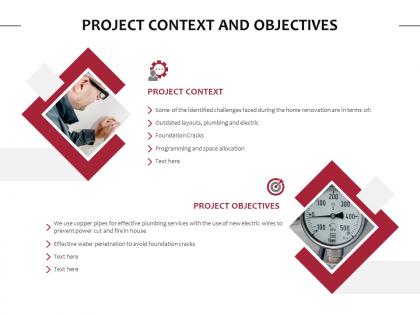
Project context and objectives ppt powerpoint presentation slides




Try Before you Buy Download Free Sample Product
 Impress Your
 Audience
 100%
100% Editable
 Save Hours
 of Time


Instill a bit of humility in individuals with our Project Context And Objectives Ppt Powerpoint Presentation Slides. Be able to correct the irreverent.
People who downloaded this PowerPoint presentation also viewed the following :
Project context and objectives ppt powerpoint presentation slides with all 5 slides:
Counsel the irreverent with our Project Context And Objectives Ppt Powerpoint Presentation Slides. Get them to accept the importance of humility.


FAQs for Project context and objectives ppt
You've gotta make your project objectives SMART - specific, measurable, achievable, relevant, time-bound. Basically the classic framework but it actually works. Write down what success looks like in concrete terms first. Then work backwards to your deliverables and milestones. Here's the thing though - run everything through the "so what?" test. Your objectives should connect to real business goals or user needs, not just sound impressive. Don't write anything so vague that your team could interpret it three different ways. I learned this the hard way on a project last year. Clear objectives save you so many headaches later.
SMART criteria basically make you stop being vague about your goals. Like instead of "improve customer satisfaction" (which means nothing tbh), you'd write "increase customer satisfaction scores from 3.2 to 4.0 by Q3." Way clearer, right? The acronym stands for Specific, Measurable, Achievable, Relevant, Time-bound. My favorite part is "achievable" - it stops you from setting those crazy ambitious goals that everyone knows won't happen but nobody wants to say it. Once you hit all five criteria, there's no confusion about what winning actually looks like. Just run through the checklist before finalizing anything.
Dude, stakeholder input is everything when you're setting project goals. Get the business angle from execs, what users actually want, tech limitations from developers - the whole picture. I've watched projects do complete 180s after talking to stakeholders because leadership was totally wrong about user needs. It's wild how often that happens. Early feedback helps you prioritize what really matters and catch conflicts before they blow up. Seriously though, do those interviews before you write anything down. You'll thank me later when you're not rewriting objectives for the third time.
So basically, goals are your big "why" - like wanting happier customers or more revenue. Objectives are the measurable steps that actually get you there. I always think of it like this: goals are where you want to end up, objectives are your turn-by-turn directions with real deadlines. You can't just say "increase sales" and expect your team to know what that means, right? Break each goal into maybe 3-5 concrete objectives with actual numbers. Otherwise you're just hoping things work out. Your team needs to know exactly what winning looks like and when they've hit it - saves everyone a headache later.
Look, you gotta figure out what could go wrong before setting your goals. Otherwise you'll just stress everyone out with impossible deadlines. I learned this the hard way on a project last year - total disaster because we ignored the obvious stuff during planning. Budget issues, timeline problems, technical roadblocks - map all that out first. Then you can actually set realistic targets instead of pie-in-the-sky nonsense. Trust me, it's way better than explaining to your boss later why everything's behind schedule. Your objectives should reflect what's actually doable, not what sounds impressive in meetings.
Honestly, you've got to stay on top of this stuff or you'll end up building something nobody wants anymore. Set up quarterly check-ins with stakeholders where you actually compare your project goals to what the business cares about right now. I learned this the hard way - priorities change so fast that January's big initiative might be irrelevant by summer. Don't wait for someone to tap you on the shoulder and say "hey, this isn't what we need." Make those alignment conversations happen regularly. Also, treat your project charter like it's alive - update it when things shift.
Start with a kickoff meeting - walk through everything face-to-face first. Then send out a simple one-pager afterward with deadlines and specific outcomes. I've watched so many projects crash because everyone thought they were on the same page but weren't. Use whatever channels you already have going - Slack, email, whatever. Mix it up: dashboards, quick mentions in standups, docs they can actually find later. The repetition thing really works. Oh and don't forget to actually ask if people have questions. Half the time someone's confused but won't speak up.
Yeah, market changes mess with project goals all the time. What felt super important six months ago? Probably not so much now if customer needs shifted or new competitors popped up. I'd check in on your objectives every quarter or so - maybe more if there's big industry drama happening. The economy stuff especially throws everything sideways. Don't get stuck being stubborn about old goals either. Pivoting isn't failure, it's just smart. Better to adjust than waste time and money chasing something that doesn't matter anymore.
Honestly, the worst thing you can do is be vague about what you're actually trying to accomplish. Like saying "improve customer satisfaction" - okay, but what does that even mean? How are you measuring it? I've watched so many projects completely fall apart because someone promised an impossible deadline just to make stakeholders happy. Don't do that to yourself! Be specific about what you can realistically deliver with your current team and budget. Getting everyone on the same page early saves you from so much headache later.
Don't make sudden changes - that's how projects blow up. First figure out how it affects your timeline and budget. Then explain to your team WHY you're changing things, because honestly nothing pisses people off more than random new objectives with zero context. Break big changes into smaller chunks if you can. Get everyone in a room first to walk through what's happening before you actually do anything. Document the changes (boring but necessary) and loop in anyone who'll be impacted. Oh and definitely get buy-in from your team - makes everything smoother later.
Track completion rates, budget variance, and timeline stuff - the usual suspects. Revenue impact matters if your project actually affects sales. Customer satisfaction too, but only if relevant. Pick metrics that match what you're trying to accomplish (sounds dumb but everyone messes this up). ROI always makes the bosses happy. User adoption rates are clutch for new launches. Don't go crazy though - maybe 3-5 solid metrics you'll actually check regularly. I've seen teams drown in dashboards they never look at. Way better to focus on fewer things consistently.
Look, start with the MoSCoW thing - Must have, Should have, Could have, Won't have. Basic but it works. Figure out what's absolutely critical first. You'd think this is obvious but honestly, most teams just dive in randomly. After that, rank your "should haves" by thinking about who gets screwed if you skip them and what the business impact is. I usually make a quick matrix - urgency vs importance. Sounds nerdy but it stops you from wasting time on stuff that feels urgent but doesn't actually matter. Dependencies are worth considering too since some things unlock others.
Honestly, just grab a good project management tool like Asana or Monday and you'll save yourself so much headache. Real-time dashboards show you exactly where things stand without having to bug everyone for updates constantly. Gantt charts are clutch for catching problems early - way better than scrambling when deadlines hit. The best part? Everything syncs automatically between your different systems. I'd start simple though. Pick whatever meshes with what you're already using and set up some basic automated reports. Seriously cuts down on the weekly status meeting drama. You'll wonder how you managed without it.
Just make a simple tracking doc honestly - Google Sheets or whatever your team's already using works fine. Log your original goals and stamp any changes with dates. Monthly check-ins are clutch because stuff shifts constantly (quarterly if you're swamped). Write down what changed and why someone approved it. Oh, and definitely keep old versions around so you can see how everything evolved - that's saved me before. Set phone reminders for reviews or you'll totally space it. Don't overthink the system, just pick something that actually gets used.
Honestly, having clear project goals is a game changer for team motivation. People actually want to show up when they know what they're building and why it matters. Think of it like a road trip - you wouldn't just start driving without knowing where you're going, right? Your team members can see how their work connects to something bigger. That makes everything feel less like busy work. You can hit those milestones and actually celebrate wins too. Just keep talking about these goals regularly - I swear people forget faster than you'd think. Connect the boring daily stuff back to the big picture whenever you can.
No Reviews