

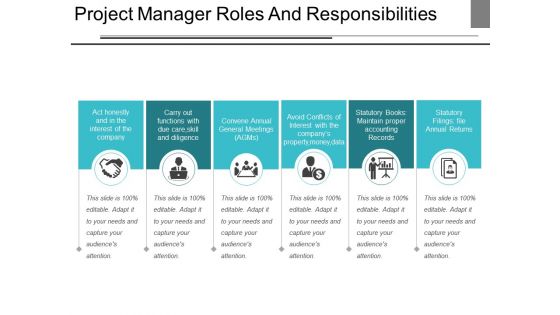
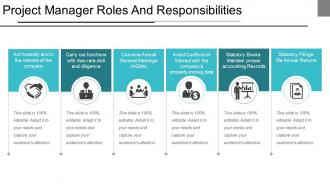
Project manager roles and responsibilities ppt images




Try Before you Buy Download Free Sample Product
 Impress Your
 Audience
 100%
100% Editable
 Save Hours
 of Time


Whether it is having a particular way of organizing the activity or offering career advice or even managing teams, every project manager has one trick that makes his work, if not easier then at least more enjoyable. Apart from professionals team to help them in finishing a project, there are some strategies that an individual can share by using the project management PPT template. The project manager responsibility PowerPoint slide is useful for describing the different ways of coordinating and monitoring different projects throughout the different phases. The business professionals can use our manager roles and responsibilities presentation template design to illustrate how to establish or direct project expectations with external stakeholders as well as internal stakeholders. The project manager responsibilities slide is perfect to highlight that a project manager needs to arrange the meeting as well as participate in client meetings. A user can explain a manager have to collaborate with sponsors and the project management office by using the manager role PowerPoint slide design. A manager needs to set scope of a project for his team and explain them thoroughly with the help of our roles & responsibility design template. When you find yourself in a presentation and more than half of the audience is nodding their heads and then you know you are witnessing a bad presentation. If you don?t one to find yourself in a similar situation then Project Manager Roles And Responsibilities Ppt Images are what you need.
People who downloaded this PowerPoint presentation also viewed the following :
Project manager roles and responsibilities ppt images with all 5 slides:
Generate action to get the graph climbing again with our Project Manager Roles And Responsibilities Ppt Images. It helps arrest the decline.


FAQs for Project manager roles and
Honestly, communication is probably the biggest one - you're always stuck in the middle translating between different teams and managing everyone's expectations. Time management's obvious, but adaptability might be even more important since nothing ever goes to plan anyway. Emotional intelligence helps too when people start getting cranky with each other. Oh, and being able to spot risks early before they become disasters. The technical stuff matters, but I'd say work on whichever people skill feels weakest first. That's usually where most PMs struggle anyway.
Okay so first thing - dump everything onto paper with deadlines. Then use that Eisenhower Matrix thing to figure out what's actually urgent vs just important. Time-blocking changed my life, seriously. Don't get caught up doing busy work that feels productive but doesn't move anything forward. Batch similar stuff together so you're not constantly switching gears. Also delegate whatever you can - took me way too long to learn that one. Things shift constantly so I review my priorities every week. Tomorrow just pick your top 3 must-dos for the week and start there.
Think of yourself as the go-to person who keeps everyone in the loop. Map out who your stakeholders are first - then figure out what info they actually need and how often. Some people want detailed updates, others just the highlights. When stuff inevitably goes wrong (and it will), you're the one managing expectations and doing damage control. Honestly, half the job is just translating tech speak for the business folks. Don't wait for people to ask questions - be ahead of it. Set up regular check-ins and maybe throw some meetings together when different teams need to actually talk to each other.
Honestly, as a PM you're like the project's professional worrier - it's literally your job to think about what could go wrong. Start by spotting potential issues early and figuring out how bad they'd be if they actually happened. Then make backup plans before everything hits the fan. I'd suggest creating a simple risk register (sounds fancy but it's just a list) and updating it weekly. Trust me, future you will thank present you. Keep your stakeholders in the loop about the big scary stuff too. New risks pop up constantly, so this isn't a one-and-done thing.
Honestly, you gotta jump on conflicts before they blow up into bigger drama. Get everyone together - video call works fine - and let each person say their piece without getting interrupted. I'd focus on the actual problem, not who said what three months ago (that stuff just makes it worse). If people are really heated, maybe talk to them separately first. Ask good questions to figure out what's really bothering everyone underneath all the noise. Try finding something they all actually agree on to build from there. And write down whatever you decide - trust me, people's memories get super selective when they're annoyed.
Honestly, map your deliverables to actual business outcomes first - like specific KPIs they care about. Check in with stakeholders regularly too. I've watched way too many PMs obsess over deadlines but completely lose sight of why they're doing the work in the first place. Business priorities shift constantly, especially on longer projects, so validate your scope monthly. Set up those alignment reviews with your sponsor. If needs change, pivot. Don't just plow ahead because it was in the original plan - that's how you end up delivering something nobody actually wants anymore.
You'll want something like Asana or Monday.com to keep track of everything - those are lifesavers for deadlines. Slack's pretty much essential for team chat, and obviously you need Zoom or whatever for meetings. I'm personally obsessed with Notion for docs and notes, but honestly Google Workspace does the job fine too. Oh, and if you're tracking billable hours, Toggl's solid for that. My advice? Pick maybe 3-4 tools max and actually stick with them. I've seen teams try to use like 10 different apps and it just becomes chaos.
Honestly, most PMs just do weekly check-ins and use tools like Asana to see what's actually getting done. The old-school way is measuring against your original timeline, budget, and scope - though scope creep is gonna happen no matter what you do. I always track schedule variance and how happy stakeholders are, but here's the thing: document literally everything from day one. Sounds boring but you'll be so glad you did when review time comes around. Oh, and don't stress too much about hitting every single metric perfectly - sometimes projects just get messy.
So basically, Waterfall is super linear - you finish planning, then design, then coding, then testing. No going back. Works fine if you know exactly what you want from day one. Agile's the opposite - short sprints where you're constantly tweaking stuff based on feedback. Way more flexible when clients inevitably change their minds (and trust me, they always do). Most teams now just mix both approaches honestly. I'd go Agile for anything complex or unclear, Waterfall for straightforward projects with locked-in requirements.
Okay so first things first - actually think about who's good at what before dumping tasks on people. Be super specific about deadlines and what you're expecting, otherwise you'll end up like me waiting three weeks for something that should've taken two days lol. Don't breathe down their necks, but maybe check in once or twice. Oh and start small! Give them easier stuff first so you both get comfortable with how it works. Most importantly though, make sure they know they can bug you with questions without feeling weird about it.
Honestly, you affect team morale way more than you think. How you communicate and handle stress? That stuff trickles down fast. I've watched teams completely flip just because they got a PM who actually listened and celebrated the small wins. Being clear about what you expect helps, but so does protecting your people from all the corporate nonsense above them. Regular check-ins make a difference too - not just "how's the project going" but actually asking how they're doing. Sounds cheesy, but people will bust their ass for someone they trust. Start there.
Ugh, scope creep is the worst! Document every change request first - write down what they want and figure out how it'll mess with your timeline and budget. Get approval in writing before your team touches anything. Trust me, I made this mistake early on saying yes to "tiny" changes that definitely weren't tiny. Be honest about trade-offs too. Want that shiny new feature? Cool, but we're probably pushing back the launch date. Don't just wing it or you'll end up working weekends for months. The formal process feels annoying but it'll save your sanity.
Honestly, just be upfront about everything - timelines, risks, the whole mess. Don't sugarcoat bad news because that always bites you later. Treat everyone fairly (no playing favorites with vendors or team members). Your decisions impact way more people than just the C-suite, so think beyond profit margins. Set realistic expectations from day one and stick to them - executives will try to pressure you into impossible promises but don't cave. Oh, and definitely nail down ethical guidelines with your team early on. Saves you from super awkward conversations down the road. Also keep data privacy in mind when you're allocating resources.
Honestly, psychological safety is huge - people won't speak up if they're worried about looking dumb. I always set team norms upfront and actually stick to them (shocking, I know). Mix up your meeting styles because some folks hate big groups but love small breakouts. Don't just ask "any questions?" - call on specific people for their take. Oh, and pick tools everyone can handle tech-wise. Regular check-ins help you catch weird team dynamics early. Celebrate wins together too. The key is making space for different communication styles instead of forcing everyone into the same box.
Dude, scope creep will kill you - stakeholders keep adding "just one tiny thing" until your 2-week project becomes 2 months. Document literally everything upfront, even stuff that seems obvious. Regular team check-ins save your ass before problems explode. Oh, and make people fill out actual change request forms instead of casually mentioning additions in Slack. Trust me on this one. Be super transparent about project status, especially when things get messy. Unclear requirements are another nightmare, but weekly stakeholder meetings help catch misunderstandings early. Your future self will definitely thank you.
-
Design layout is very impressive.
-
Really like the color and design of the presentation.
-
Great designs, Easily Editable.
-
Excellent template with unique design.