


Project progress against baseline schedule project strategy process scope and schedule ppt tips
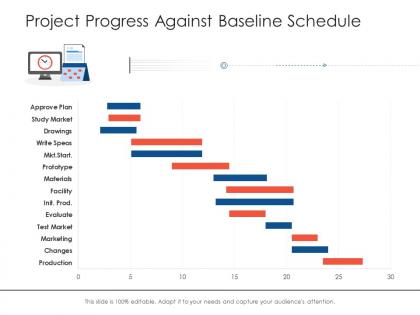




Try Before you Buy Download Free Sample Product
 Impress Your
 Audience
 100%
100% Editable
 Save Hours
 of Time


Our Project Progress Against Baseline Schedule Project Strategy Process Scope And Schedule Ppt Tips are topically designed to provide an attractive backdrop to any subject. Use them to look like a presentation pro.
People who downloaded this PowerPoint presentation also viewed the following :
Project progress against baseline schedule project strategy process scope and schedule ppt tips with all 2 slides:
Use our Project Progress Against Baseline Schedule Project Strategy Process Scope And Schedule Ppt Tips to effectively help you save your valuable time. They are readymade to fit into any presentation structure.
FAQs for Project progress against baseline schedule project strategy process scope and
Track three things: when deliverables are done, budget hits (25%, 50%, 75%), and timeline progress vs what you planned. Don't forget stakeholder approvals - honestly those can derail everything if you're not careful. You'll want enough milestones to spot problems early, but not so many you're just tracking for the sake of tracking. Red/yellow/green dashboard works great for this stuff. Weekly team check-ins keep everyone honest. The trick is finding that balance where you're informed but not overwhelmed by data.
Honestly, just pick one tool like Asana or Monday and get everyone using it consistently first. Don't try to do everything at once - that's where most teams mess up. Set up those automated dashboards for real-time updates, but here's the thing: they're completely useless if your team doesn't actually update their task statuses. I've seen too many pretty charts with zero meaningful data. Configure milestone tracking so you can catch bottlenecks early, and create different views for different people. Your boss probably wants the big picture while you need all the messy details. Oh, and dependency mapping is clutch for spotting problems before they blow up your timeline.
Sprint goals getting hit on time? Budget tracking with your projections? You're probably doing fine. But watch out for missed deadlines stacking up - that's when I start getting nervous. Scope creep without adjusting timelines is another big one. Oh, and if your team's pulling constant overtime, something went sideways weeks ago and nobody caught it. Communication breakdowns between stakeholders will kill you too. Honestly, the second you notice any of this stuff, just call a quick team huddle. Better to reassess early than let everything spiral.
Dude, I've learned this the hard way - realistic timelines literally make or break everything. Your team stays sane when deadlines are actually doable, and the work doesn't turn to garbage from everyone scrambling. Unrealistic ones? Project death spiral every time. Sure, some pressure helps people focus (I kinda work better with a bit of urgency tbh), but only if it's based in reality. You've gotta pad things for when stuff inevitably goes sideways. Just be honest upfront about what you can actually pull off with your resources.
Honestly, regular check-ins are like your project lifeline. They catch problems before they blow up into total chaos. I've watched teams disappear for weeks then suddenly everything's on fire - don't be those people. You'll spot blockers faster, keep priorities straight, and actually know if you're on track. Stakeholders won't ambush you with panic meetings either, which is honestly half the battle. The key is picking a schedule and actually sticking to it, even when things get crazy.
Honestly, accountability is huge for staying on schedule. Nobody wants to be *that person* who holds up the whole team, so when you're clear about who's doing what by when, people actually follow through. It stops one person's mess from becoming everyone's headache too. I've seen projects where nobody knew who was supposed to handle what - total disaster. The trick is spelling out responsibilities upfront and then checking in regularly. You'll get real updates instead of people just saying "yeah it's going fine" when it's clearly not.
Dude, you'll love how gantt charts show your whole project timeline instantly. Dependencies become obvious - like when one task blocks another from starting. The visual aspect is clutch for spotting delays before they wreck everything. Your team actually gets how their piece fits the puzzle too, which is nice since people usually work in silos. Start with something basic like Asana or Excel to try it out. Fair warning though - once you see how much clearer everything becomes compared to random task lists, you'll probably want to use them for everything.
Honestly, stakeholder feedback can totally derail your project - or save it, depending on the day. You'll probably end up reprioritizing features or pushing deadlines around based on what they want. The tricky part is figuring out which feedback actually helps versus the stuff that's just scope creep in disguise. I've learned it's way better to get their input early and often rather than waiting until the end when fixes cost a fortune. Oh, and definitely set some ground rules upfront about how you'll handle their suggestions - otherwise you'll be scrambling to accommodate every random idea they throw at you.
Honestly, just track what your bosses actually care about - timeline, budget, and whether you're delivering quality stuff. I used to go crazy tracking like 20 different things (total waste of time). Team velocity and client satisfaction are good early warning signs when things start going sideways. Oh, and resource utilization if you're running multiple projects at once. But seriously, pick maybe 4-6 metrics tops and check them weekly. Any more than that and you'll just drown in spreadsheets you never look at anyway.
Honestly, agile is pretty great for staying flexible. You break everything into these short 1-2 week sprints instead of planning months ahead like some corporate dinosaur. When feedback comes in or requirements change, you can actually pivot quickly. The retrospectives are where the magic happens though - catching problems before they explode into disasters. Daily standups keep everyone synced up, and those frequent stakeholder check-ins? Total lifesaver. You'll build what they actually want instead of guessing. Try starting with two-week sprints and see how much more responsive your team gets.
Honestly, you're gonna hit three main issues: vague milestones, scope creep, and teammates who say they're "almost done" for like three weeks straight. Break everything into smaller pieces first - makes it way harder for people to hide behind that 90% complete BS. Check-ins should focus on actual deliverables, not just "how's it going" updates. Oh and track what's blocking people too, not just what they finished. Sounds obvious but most people skip that part. You'll catch problems way earlier instead of scrambling at the deadline.
Honestly, risk management is what stops your project from completely imploding. You spot potential disasters early and actually have a game plan ready - way better than scrambling when everything hits the fan. My old boss used to say it's like checking the weather before a road trip (cheesy but true). One random issue pops up without warning? Suddenly you're behind schedule, your team's frustrated, and stakeholders are breathing down your neck. I always start each phase by thinking "okay, what's gonna blow up here?" Then map out Plan B. Saves me every time.
Ugh, project delays are the worst but don't panic yet. Figure out what's actually causing it first - usually it's either not enough people, the scope getting out of hand, or waiting on someone else. Be upfront with everyone about what happened and how you're gonna fix it. Seriously, hiding it just makes everything worse later. Focus on the stuff that absolutely has to get done and see if you can work on multiple things at once. Maybe you can cut some features or grab extra help for a few weeks? The trick is catching this stuff early with regular check-ins so you're not scrambling.
So retrospectives are just your team sitting down after a project wraps up to figure out what worked and what was a total disaster. Get everyone together while the chaos is still fresh in your memory - like within a week max. Talk through the wins, the stuff that made you want to scream, and those random roadblocks nobody saw coming. Here's the thing though - you want to spot patterns. Maybe you always underestimate how long things take, or Sarah from marketing disappears right when you need feedback. Once you know your team's weird habits, you can actually plan for them next time instead of just hoping it'll be different.
Look, think of constant communication as your project's smoke detector - catches fires before they burn everything down. Your team needs to share updates and blockers regularly, otherwise you're finding out about disasters way too late. I can't tell you how many projects I've watched crash because someone stayed quiet about being stuck. Daily standups or weekly check-ins keep people honest and focused on what actually matters. The trick is making it feel normal, not like homework nobody wants to do. Set up channels where sharing feels easy, and you'll catch problems while they're still manageable.
-
Easy to edit slides with easy to understand instructions.
-
Appreciate the research and its presentable format.
-
Out of the box and creative design.