Project Rollout Plan For Software Implementation

Rating:
90%
Project Rollout Plan For Software Implementation
Slide 1 of 6
Favourites Favourites

Try Before you Buy Download Free Sample Product

Audience Impress Your
Audience
Editable 100%
Editable
Time Save Hours
of Time
The Biggest Sale is ending soon in
0
0
:
0
0
:
0
0
Rating:
90%
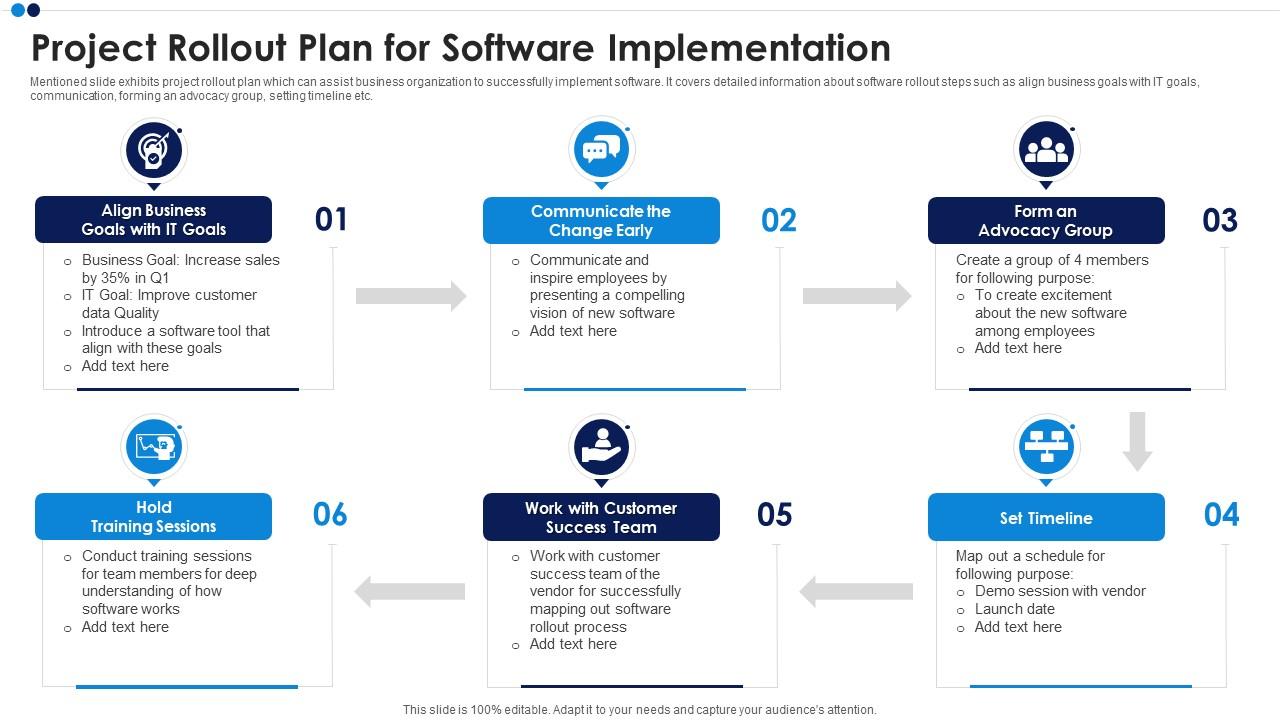
Mentioned slide exhibits project rollout plan which can assist business organization to successfully implement software. It covers detailed information about software rollout steps such as align business goals with IT goals, communication, forming an advocacy group, setting timeline etc. Introducing our premium set of slides with Project Rollout Plan For Software Implementation. Ellicudate the six stages and present information using this PPT slide. This is a completely adaptable PowerPoint template design that can be used to interpret topics like Align Business Goals With IT Goals, Communicate The Change Early, Form An Advocacy Group, Hold Training Sessions, Customer Success Team, Set Timeline. So download instantly and tailor it with your information.

FAQs for Project Rollout Plan

So basically it's planning, design, coding, testing, and deployment. But honestly? Those textbook phases are kinda BS - everything bleeds together in real life. You start with requirements and architecture stuff, then jump into actually writing code. Testing never really stops but gets crazy intense before you go live - unit tests, integration, user acceptance, the whole nine yards. After deployment you're watching everything like a hawk. Oh and don't expect it to be linear at all. You'll be going back to fix earlier stuff constantly when requirements change or things break.

Dude, seriously - get a good project manager from the start. I can't stress this enough after watching so many software rollouts completely crash and burn. Clear timelines and regular check-ins keep everyone on the same page, plus you catch problems early before they snowball into major disasters. The projects that fail? Usually it's because nobody's tracking dependencies or managing what stakeholders expect. Don't let them rush the testing phase either - that's where things go sideways fast. Yeah, it costs upfront, but trust me, you'll save yourself tons of headaches and budget chaos later.

Dude, don't skimp on user training - I'm serious about this one. People will literally find ways to avoid using your new software if they don't get it. I've watched so many companies blow their budgets on fancy systems that just collect dust because nobody knows how to use them properly. You've got to teach the "why" behind changes, not just button-clicking. Oh, and plan this stuff early! Don't wait until launch day to think about training. Budget for the initial sessions plus ongoing help afterward - people forget things. Trust me, good training is what separates successful rollouts from expensive disasters.

Oh man, you definitely need to get people on board early - find those team champions who'll actually spread good vibes about the change. Training makes or breaks everything tbh. Nobody wants to look clueless with new tools, so make it hands-on and tied to what they actually do daily. Pizza helps too lol. Be super upfront about timelines and when stuff might suck. Celebrate the small wins! I'd honestly start with just one pilot group first. Way easier to fix problems with like 10 people instead of the whole company. Trust me on that one.

So you'll need to track the hard numbers plus what users actually think. Adoption rates are huge - also how fast people can finish important tasks and error rates. Are you hitting those original goals you set? But honestly, user surveys matter just as much because I've seen projects where the data looked amazing but everyone hated actually using it. Productivity gains and cost savings are good to measure too. Oh, and set your benchmarks before launch, not after - learned that one the hard way. Start tracking within the first month so you can pivot if things go sideways.

Scope creep will absolutely destroy you - I've watched it happen so many times. Lock down those requirements early and don't let anyone convince you to squeeze in "just one tiny feature." Testing phases always get cut when deadlines loom, but seriously don't do it. Keep stakeholders in the loop constantly about progress and any roadblocks. Oh, and data migration from old systems? That'll bite you if you don't plan it properly. Make a solid checklist upfront and actually follow it, even when people start pressuring you to skip steps.

Oh definitely get your stakeholders involved from day one. They're using this thing every day, so they'll spot problems you'd never think of. I learned this the hard way on a project last year - we thought we knew what users needed but were totally off base. Regular check-ins are crucial too, not just the kickoff meeting and final demo. People resist change way less when they feel like they actually had a say in how things work. Plus they're honestly better at predicting what'll flop in real-world scenarios than most of us give them credit for.

Oh man, integration stuff will totally mess with your timeline if you're not careful. Legacy systems are the worst - you'll be dealing with custom APIs and data that doesn't want to play nice together. Modern platforms usually have decent APIs so that's less painful. Here's the thing though - most integration headaches don't show up until you're already testing, which is honestly the most frustrating timing ever. Do yourself a favor and really dig into what systems you're connecting upfront. And definitely pad your schedule because something weird always pops up.

Dude, you absolutely need post-implementation support - I can't stress this enough. Bugs will pop up that testing missed. Users get confused and need help figuring things out. The software might not play nice with your other systems right away. I've watched solid projects completely tank because teams thought they were done after launch. Newsflash: you're not! Your system needs regular updates to stay secure and work with everything else that keeps changing. Oh, and budget around 15-20% of your implementation costs just for that first year of support. Trust me on this one.

Honestly, do a full data audit first - I know it's boring but it'll save your ass later. Back everything up (multiple times) and test the whole process on just a small chunk of data before going all-in. Run validation checks as you go because catching errors early beats scrambling at the end. Plan for downtime too - this stuff never goes as smooth as you think it will. Have a rollback plan ready just in case everything goes sideways. Oh, and definitely get your actual users involved early. They'll catch weird stuff you totally missed.

So feedback loops are basically your reality check - they show you what's actually happening vs what you thought would happen. You'll catch problems early and get real data from users to guide what you build next. Honestly, I've watched teams spend months on features that totally flopped because they never checked if people actually wanted them. Set up both the technical stuff (monitoring, logs, performance) and user insights (analytics, surveys, how people actually use it) right from the start. Even basic error tracking will change how you think about your next release.

Honestly, don't wait until the end to think about security - that's when things get messy and expensive. Code reviews are non-negotiable, even when your PM is breathing down your neck about deadlines. Build in proper authentication and access controls from the start. Encrypt everything - data moving around AND stored data. Regular vulnerability scans should be part of your routine, not an afterthought. Oh, and definitely run pen testing before launch. I learned that one the hard way. Create yourself a security checklist and actually follow it.

Oh man, bad software rollouts are budget killers. You're looking at double or triple your original costs, easy. Extended timelines eat money. Consultants get expensive fast when you're in panic mode. Then there's the productivity hit - your whole team's stuck dealing with broken systems instead of actual work. Honestly, I've watched companies spend way more fixing their mess than they paid for the software originally. Some even had to keep old and new systems running simultaneously, which is just painful. Bottom line: spend the money upfront on decent planning. Way better than paying for a disaster cleanup later.

Honestly, agile is perfect for software stuff because you're not just building blindly for months. You ship working pieces every couple weeks so people can actually play with it and tell you what sucks. Daily standups catch problems before they blow up your timeline (learned that the hard way). The whole thing keeps your team laser-focused on what actually matters instead of nice-to-have features. Start with 2-week sprints and keep your user stories bite-sized - you'll be shocked how much faster and cleaner your deliveries get. Way better than the old "pray it works" approach.

Honestly, you HAVE to set clear objectives first or your team will just build random stuff that doesn't matter. Those concrete goals guide every tech decision and help you figure out what features actually matter. I learned this the hard way - without them, you get scope creep everywhere and developers constantly getting mixed signals about what they're supposed to be working on. It's super frustrating for everyone. Plus you can actually measure if you're succeeding and catch issues while they're still easy to fix. Write everything down and keep checking back on it.

Ratings and Reviews

90% of 100
Review Form
Write a review
Most Relevant Reviews
  1. 80%

    by Denny Salazar

    I was confident and well prepared for my presentation for the first time ever. With SlideTeam’s templates, I could deliver one of my best presentations. Will be coming back for more!
  2. 100%

    by Christian Brooks

    Wonderful ideas and visuals. I'm really pleased with the templates, which are unique and up to date.

2 Item(s)

per page: