

Property inspection process ppt slide




Try Before you Buy Download Free Sample Product
 Impress Your
 Audience
 100%
100% Editable
 Save Hours
 of Time


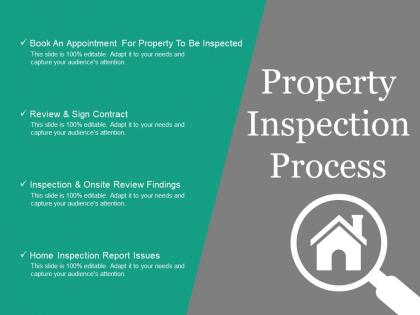
Learn or tell about property inspection process buy downloading the above link on “Property inspection process PPT slide”.A property inspection is a thorough and systematic evaluation of the condition of a residential property. All pertinent findings are detailed in a written report for the buyer's reference and review, and the inspector will make a complete verbal presentation of these conditions for those who attend the inspection.So, the designers at Slide Team bring you a ready made presentation template which presents the process in an interesting format.It covers 4 stages which includes Booking an Appointment For Property To Be Inspected,review And Signing Contract,Inspection And Onsite Review Findings,Home Inspection Report Issues.The PPT can come into use by home inspectors who can use the template to train the new joinees and he can also use template to present to the real estate brokers or agents to tell them about the entire process and sell themselves as a home inspector.Just download the content-ready presentation PPT, add your data in the editable PowerPoint templates and diagrams, and present with confidence on stage. Encourage folks to adopt a consensual approach with our Property Inspection Process Ppt Slide. It helps get around the impasse.
People who downloaded this PowerPoint presentation also viewed the following :
Property inspection process ppt slide with all 5 slides:
Convince folks you can do a brilliant job with our Property Inspection Process Ppt Slide. Broadcast your impeccable credentials.



FAQs for Property inspection
Key components include structural assessment, electrical and plumbing systems evaluation, HVAC inspection, roof and exterior analysis, and safety compliance checks. These comprehensive evaluations streamline property transactions by identifying potential issues early, reducing liability risks, and ensuring regulatory compliance, with real estate professionals and property managers finding that thorough inspections ultimately enhance investment decisions and buyer confidence.
Homebuyers can prepare for property inspections by researching the property's history, reviewing disclosure documents, preparing a list of specific concerns, and scheduling utilities to be active during inspection. This preparation enables buyers to ask informed questions, identify potential issues early, and make strategic decisions about negotiations or repairs, ultimately ensuring they secure properties that align with their investment goals and budget expectations.
Inspectors typically examine structural integrity, electrical systems, plumbing functionality, HVAC performance, roofing conditions, and safety compliance issues like fire hazards or code violations. These comprehensive assessments enable property managers, real estate professionals, and facility teams to identify maintenance priorities, negotiate repairs, and ensure regulatory compliance, ultimately delivering cost savings and minimizing liability risks across residential and commercial properties.
Residential inspections focus on livability, safety systems, structural integrity, and individual homeowner concerns, while commercial inspections emphasize building codes, accessibility compliance, environmental factors, and business operational requirements. Commercial properties require specialized expertise for complex HVAC systems, fire safety protocols, and zoning regulations, with inspections often taking longer and costing significantly more than residential assessments.
Property inspection serves as a critical due diligence step that protects buyers by identifying structural issues, safety concerns, mechanical problems, and code violations before finalizing purchase agreements. This comprehensive evaluation enables informed negotiation strategies, price adjustments, and repair requests, while providing sellers transparency opportunities, ultimately streamlining transactions and minimizing post-closing disputes across residential and commercial markets.
Property inspectors should hold certifications from recognized organizations like the American Society of Home Inspectors (ASHI), International Association of Certified Home Inspectors (InterNACHI), or National Association of Home Inspectors (NAHI). These credentials ensure comprehensive training in structural, electrical, plumbing, and HVAC systems, with many real estate professionals finding that certified inspectors deliver more thorough assessments and enhanced client confidence.
Property inspection tools include digital cameras, moisture meters, thermal imaging cameras, drone technology, and mobile inspection apps. These technologies streamline documentation, enhance accuracy through automated measurements and aerial photography, and enable real-time reporting, with many real estate professionals and inspection companies finding that integrated digital solutions reduce inspection time while delivering more comprehensive property assessments.
Buyers can interpret property inspection findings by focusing on safety issues, structural concerns, major system problems, and estimated repair costs, while distinguishing between critical defects and minor cosmetic items. Through careful review with their agent and inspector, buyers negotiate repairs, request credits, or adjust offers accordingly, with many finding that prioritizing health, safety, and expensive fixes ultimately delivers informed purchasing decisions and stronger negotiating positions.
Costly repairs often uncovered include foundation issues, roof replacement, HVAC system failures, electrical rewiring, plumbing overhauls, and structural damage from water or pests. These discoveries enable buyers to negotiate strategically, reassess financing options, and plan renovation budgets, while sellers can address critical issues proactively, ultimately delivering transparency and competitive positioning in increasingly dynamic real estate markets.
Sellers can ensure inspection-readiness by addressing visible maintenance issues, cleaning HVAC systems, testing electrical outlets and plumbing fixtures, clearing access to crawl spaces and utility areas, and organizing maintenance records. These proactive steps streamline the inspection process by minimizing potential red flags, reducing negotiation delays, and demonstrating property care, ultimately delivering faster sales and stronger buyer confidence in an increasingly competitive real estate market.
When significant inspection issues are discovered, homeowners should prioritize problems by safety and cost, obtain detailed repair estimates from licensed contractors, and negotiate with sellers for credits, repairs, or price reductions. This strategic approach enables informed decision-making about proceeding with purchase, renegotiating terms, or walking away, while many buyers find that professional consultation delivers leverage in negotiations and long-term property value protection.
Homeowners should conduct basic property inspections quarterly, focusing on HVAC systems, plumbing, electrical components, roof conditions, and exterior maintenance needs. These regular assessments enable early detection of potential issues, minimize costly emergency repairs, and maintain property values, with many homeowners finding that consistent quarterly inspections ultimately deliver significant long-term savings and enhanced home safety.
Property inspection significantly impacts purchase price negotiations by revealing structural issues, safety concerns, maintenance needs, and code violations that weren't initially apparent. These findings enable buyers to request price reductions, demand repairs, or negotiate seller credits, with many real estate transactions seeing adjustments of thousands of dollars based on inspection results, ultimately delivering stronger negotiating positions and informed investment decisions.
Real estate agents can effectively communicate inspection findings by providing clear, prioritized summaries that distinguish between critical safety issues, major repairs, and minor cosmetic concerns, while offering cost estimates and timeline expectations. Through visual aids, detailed explanations, and strategic consultation, agents help clients understand implications for negotiations, budgeting, and decision-making, ultimately delivering transparency and confidence throughout the transaction process.
Failing to disclose inspection findings can result in breach of contract claims, fraud allegations, financial liability for repairs, and potential license suspension for real estate professionals. These legal consequences vary by state regulations and disclosure requirements, with many buyers successfully pursuing litigation for undisclosed defects, ultimately leading to significant monetary damages and professional reputation harm.
-
Great designs, really helpful.
-
Design layout is very impressive.