


Real Estate Development Plan Powerpoint Ppt Template Bundles




Try Before you Buy Download Free Sample Product
 Impress Your
 Audience
 100%
100% Editable
 Save Hours
 of Time


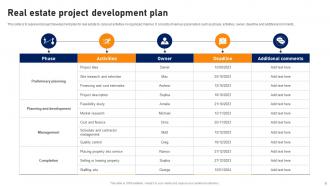
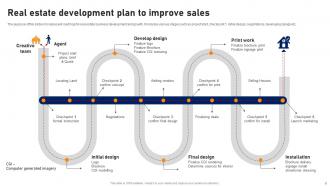
Venture into the dynamic realm of property ventures with our Real Estate Project Planning PPT. Crafted meticulously, it offers a panoramic view into Property Development Strategy, ensuring every project maximizes its potential. Delve deep into Urban Development Planning, orchestrating projects that resonate with modern urbanites. Equip yourself with robust Real Estate Market Analysis tools, enabling data-driven decisions for maximum ROI. Understand the intricacies of Land Acquisition Strategies, ensuring seamless procurement for optimal project locales. This presentation is an indispensable asset for realtors, developers, and urban planners aiming to transform visions into tangible real estate masterpieces.
People who downloaded this PowerPoint presentation also viewed the following :
Real Estate Development Plan Powerpoint Ppt Template Bundles with all 20 slides:
Use our Real Estate Development Plan Powerpoint Ppt Template Bundles to effectively help you save your valuable time. They are readymade to fit into any presentation structure.









FAQs for Real Estate Development Plan Powerpoint
Key components include market analysis, financial projections, site evaluation, regulatory compliance, design specifications, construction timelines, and risk management strategies. These elements work together by ensuring project viability, securing investor confidence, and streamlining approval processes, with many developers finding that comprehensive planning ultimately delivers faster project completion and higher returns.
Market analysis influences real estate feasibility by evaluating demand patterns, pricing trends, competitor developments, demographic shifts, and economic indicators within target locations. Through comprehensive market research, developers identify optimal property types, pricing strategies, and timing decisions, while assessing absorption rates and revenue projections, ultimately determining project viability and competitive positioning.
Zoning and land use planning determine what types of developments are permitted, building heights, density requirements, setback regulations, and infrastructure specifications for any given area. These regulatory frameworks guide developers in project feasibility analysis, design decisions, and timeline planning, while municipalities use them to manage growth patterns, preserve community character, and ensure adequate public services, ultimately balancing development opportunities with sustainable urban planning.
Real estate development financing includes construction loans, permanent mortgages, private equity partnerships, mezzanine financing, and government-backed programs. These funding mechanisms enable developers to streamline project execution by covering land acquisition, construction costs, and operational expenses, with many commercial developers finding that strategic financing combinations ultimately deliver enhanced cash flow and competitive market positioning.
Environmental regulations significantly shape development timelines, costs, and project feasibility by requiring comprehensive impact assessments, permitting processes, and compliance with zoning restrictions. While these requirements present initial challenges, they ultimately deliver long-term value through sustainable design practices, reduced operational costs, and enhanced marketability, with many developers finding that early environmental integration streamlines approvals and creates competitive advantages.
Risk mitigation strategies include comprehensive market analysis, diversified financing sources, thorough due diligence, strategic partnerships, and phased development approaches. These methods streamline project execution by reducing market exposure, securing stable funding, and enabling adaptive responses to changing conditions, with many developers finding that strategic risk management ultimately delivers enhanced profitability and sustainable growth.
Stakeholder engagement during planning is crucial for project success, as it identifies community needs, regulatory requirements, potential obstacles, and market demands early in the development process. Effective engagement with local governments, residents, investors, and regulatory bodies helps developers avoid costly delays, ensures smoother approvals, and ultimately delivers projects that meet market expectations while minimizing opposition.
Best practices for creating real estate project timelines include conducting thorough site analysis, establishing clear milestone markers, building in contingency buffers, coordinating regulatory approvals early, and maintaining stakeholder communication schedules. These approaches streamline development by minimizing delays, enhancing resource allocation, and ensuring permit compliance, with many developers finding that structured timelines ultimately deliver faster project completion and improved cost control.
Community sentiment significantly influences development success through public support levels, regulatory approval processes, and market acceptance rates. Positive community engagement enables smoother permitting, reduces project delays, and enhances property values, while negative sentiment can trigger costly opposition campaigns, zoning challenges, and prolonged approval timelines, ultimately determining whether developments achieve their financial and timeline objectives.
Developers should track financial metrics like ROI, profit margins, and cost variance, alongside operational indicators including construction timeline adherence, budget compliance, and quality benchmarks. These comprehensive measurements enable real estate firms to optimize resource allocation, minimize project risks, and enhance investor confidence, with many developers finding that consistent metric tracking ultimately delivers improved project outcomes and competitive market positioning.
Technology enhances real estate development planning through Building Information Modeling (BIM), Geographic Information Systems (GIS), predictive analytics, drone surveying, and virtual reality visualization. These tools streamline project timelines, minimize construction costs, and improve stakeholder collaboration, with many developers finding that integrated tech platforms ultimately deliver faster approvals and enhanced investment returns.
Critical elements of a site development plan include land use layout, infrastructure systems, environmental impact assessments, zoning compliance, and construction phasing schedules. These components work together by ensuring regulatory approval, optimizing resource allocation, and minimizing development risks, with many real estate firms finding that comprehensive planning ultimately delivers faster project timelines and enhanced investment returns.
Sustainable design revolutionizes modern real estate development by incorporating energy-efficient systems, eco-friendly materials, and green building certifications that reduce operational costs and enhance property values. Through LEED-certified construction and renewable energy integration, developers attract environmentally conscious tenants, achieve premium pricing, and meet increasingly stringent regulatory requirements, ultimately delivering competitive advantage and long-term profitability.
Urban development presents challenges including higher land costs, complex zoning regulations, infrastructure constraints, community resistance, and environmental compliance requirements. Suburban projects face different obstacles like transportation access, utility extensions, and market saturation, with many developers finding that urban developments offer higher returns despite increased complexity, while suburban projects provide more predictable timelines and lower regulatory hurdles.
Real estate development impact is assessed through environmental studies, traffic analyses, economic projections, community benefit evaluations, and infrastructure assessments, then communicated via public hearings, impact reports, and community forums. These comprehensive evaluations enable developers and municipalities to address concerns transparently while demonstrating project benefits, ultimately building community support and ensuring regulatory compliance in an increasingly collaborative development landscape.
-
Informative and engaging! I really like the design and quality of the slides.
-
I am a big fan of their newsletters because that is how I found my perfect requirement at the time of urgency. Thank God, I kept opening those.