

Real estate marketing plan for sellers powerpoint presentation slides





Try Before you Buy Download Free Sample Product
 Impress Your
 Audience
 100%
100% Editable
 Save Hours
 of Time


Introducing our real estate marketing plan for sellers PowerPoint presentation slides. Analyze the key real estate market with the help of our property investment PowerPoint deck. This estate analysis PPT theme consists of a slide that talks about the overall objectives and goals of the company. Assimilating this property finance PPT layout helps you graphically represent the effect of the current marketing plan on the volume of sales of the company. This property marketing PowerPoint design contains a slide that talks about the real estate marketing goals and the method to achieve them. Incorporating this particular plot investment PPT theme lets you segment the market and target specific customers. This property cost inspection PowerPoint creative set contains a slide that showcases the conversion of leads.This estate appraisal PPT deck lets you make required variations to icons and colors. Choose this property inspection PowerPoint design to showcase organization and assurance. Download this PPT slide to explore true perfection.
People who downloaded this PowerPoint presentation also viewed the following :
Content of this Powerpoint Presentation
Slide 1: This template represents the topic Real Estate Marketing Plan For Sellers.
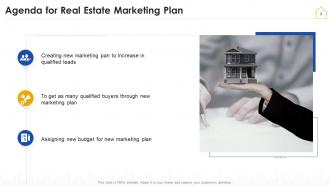
Slide 2: This is an Agenda slide illustrating the topic Real Estate Marketing Plan.
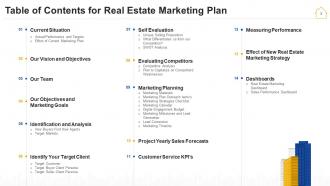
Slide 3: This is a Table of Contents slide illustrating the Real Estate Marketing Plan, Current Situation, Team, Vision, Objectives, and more.
Slide 4: This is a Table of Contents slide illustrating the Current situation for the Real Estate Marketing Plan.
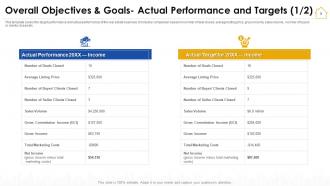
Slide 5: This template covers the target performance and actual performance of the real estate business.
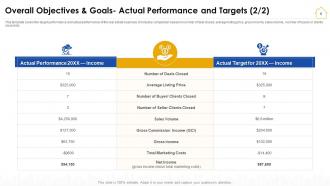
Slide 6: This template illustrates the overall objectives/Goals, actual performance, and target.
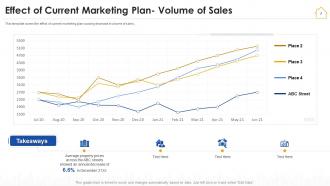
Slide 7: This template covers the effect of the current marketing plan causing a decrease in the volume of sales.
Slide 8: This is a Table of Contents slide that illustrates the Vision, Objectives, Team, and Marketing Goals of the Real Estate Marketing Plan.
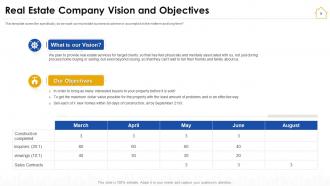
Slide 9: This template covers the parameters explaining if a company wants their real estate business to achieve or accomplish the goals in the midterm and long-term.
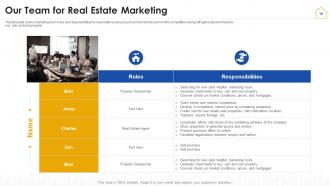
Slide 10: This template covers the marketing team roles and responsibilities for the real estate business, such as tracking trends and monitoring competition, and generating client leads to buy, sell, and rent a property.
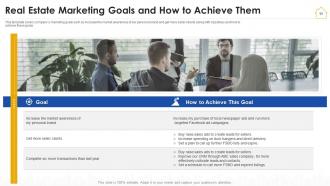
Slide 11: This template covers the company’s marketing goals, such as increasing the market awareness of the personal brand and getting more seller clients along with objectives and how to achieve these goals.
Slide 12: This is a Table of Contents slide illustrating How Buyers Find Their Agents, Target Markets, and Identification and Analysis in the Real Estate Marketing Plan.
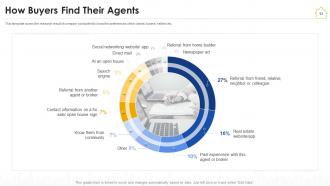
Slide 13: This template covers the research result of the company conducted to know the preferences of the clients/ buyers/ sellers etc.
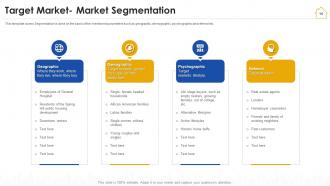
Slide 14: This template covers how Segmentation is done on the basis of the mentioned parameters such as geographic, demographic, psychographic, and referral.
Slide 15: This is a Table of Contents slide that illustrates the Target Customer for the Real Estate Marketing Plan.
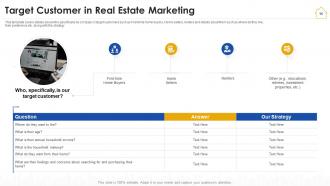
Slide 16: This template covers details about who specifically are the company’s target customers, such as First-time home buyers, home sellers, or renters.
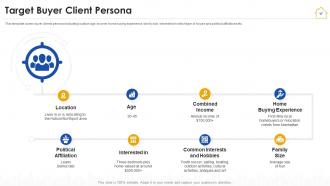
Slide 17: This template covers buyer clients’ persona including location, age, income, home buying experience, family size, type of house, and political affiliations.
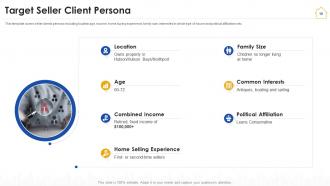
Slide 18: This template covers the seller client’s persona, including location, age, income, home buying experience, family size, interest in which type of house, or political affiliations.
Slide 19: This is a Table of Contents slide that illustrates the Unique Selling Proposition for a Real Estate Marketing Plan.
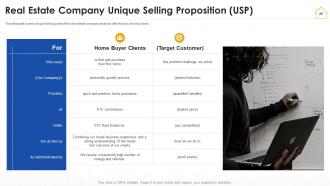
Slide 20: This template covers the unique selling point of the real estate company.
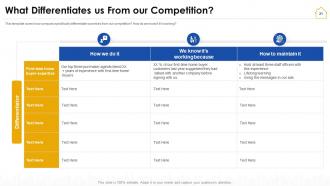
Slide 21: This template covers how a company specifically differentiates itself from the competition.
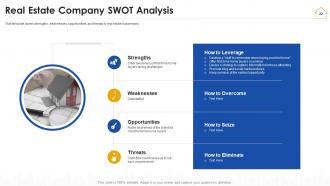
Slide 22: This template covers strengths, weaknesses, opportunities, and threats to real estate businesses.
Slide 23: This is a Table of Contents slide that illustrates Competitive Analysis, Plan to Capitalize on Competitors’ Weaknesses, Evaluating Competitors, and more.
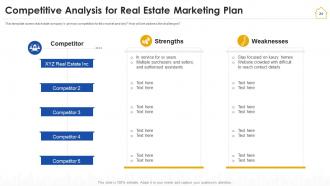
Slide 24: This template covers real estate company’s primary competition for this market.
Slide 25: This template covers a real estate company’s plan to bring advantage to their company through competitors’ weaknesses, plan to capitalize, etc.
Slide 26: This is a Table of Contents slide that illustrates Marketing Planning for Real Estate.
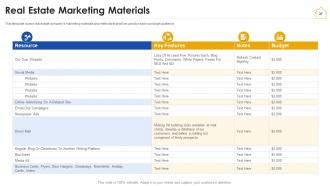
Slide 27: This template covers real estate company’s marketing materials and methods that will be used to reach the target audience.
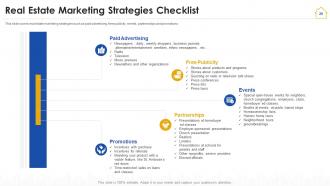
Slide 28: This slide covers real estate marketing strategies such as paid advertising, free publicity, events, partnerships, and promotions.
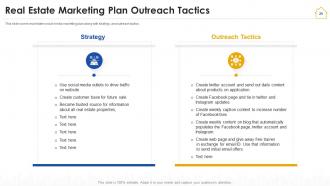
Slide 29: This slide covers the real estate social media marketing plan along with strategy and outreach tactics.
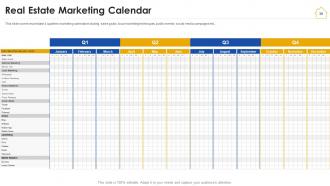
Slide 30: This slide covers the real estate four quarters marketing calendar, including sales goals, local marketing techniques, public events, social media campaigns, etc.
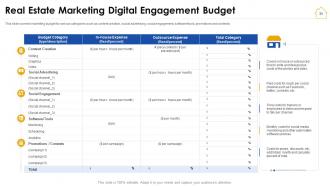
Slide 31: This slide covered the marketing budget for various categories, such as content creation, social advertising, social engagement, software/tools, promotions, and contests.
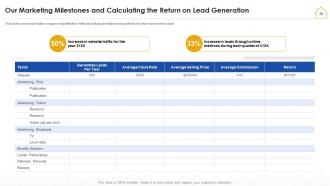
Slide 32: This slide covers a real estate company’s most effective methods of lead generation.
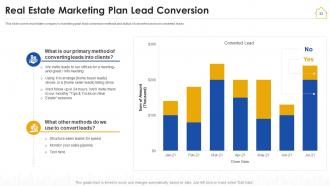
Slide 33: This slide covers a real estate company’s marketing plan lead conversion methods and the status of converted/non-converted leads.
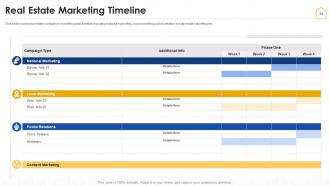
Slide 34: This slide covers the real estate company’s marketing plan timeline including national marketing, local marketing, public relation social media marketing, etc.
Slide 35: This is a Table of Contents slide that illustrates the Project Yearly Sales Forecasts, Customer Service KPIs, Measuring Performance, Effect of New Real Estate Marketing Strategy, and more.
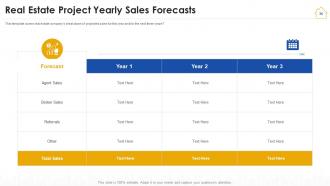
Slide 36: This template covers the real estate company’s breakdown of projected sales for this year and for the next three years.
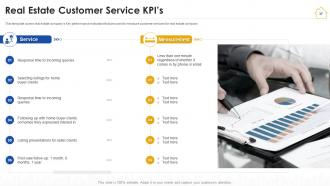
Slide 37: This template covers a real estate company’s Key performance indicators that are used to measure customer services for a real estate company.
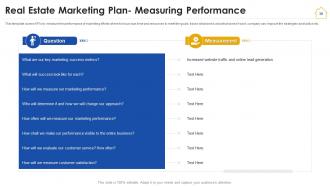
Slide 38: This template covers KPIs to measure the performance of marketing efforts and the time/ resources required to meet the goals.
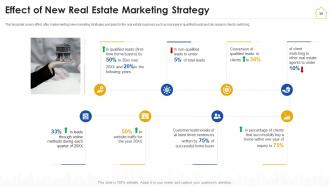
Slide 39: This template covers effects after implementing new marketing strategies and plans for the real estate business, such as an increase in qualified leads, and a decrease in client switching.
Slide 40: This is a Table of Contents slide that illustrates the Real Estate Marketing Dashboard, Sales Performance Dashboard, and more.
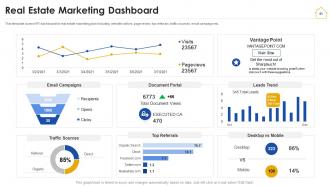
Slide 41: This template covers the KPI dashboard for real estate marketing plans, including website visitors, page reviews, top referrals, traffic sources, email campaigns, etc.
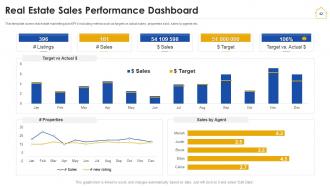
Slide 42: This template covers real estate marketing plan KPIs including metrics, such as targets vs actual sales, properties sold, sales by agents, etc.
Slide 43: This is an icon slide that illustrates the Real Estate Marketing Plan for Sellers.
Slide 44: This is a template that illustrates the beginning of Additional Slides.
Slide 45: This is a company introduction slide that illustrates the Vision, Mission, and Goals.
Slide 46: This slide illustrates the company Goals.
Slide 47: This is an About Us slide that illustrates information about the Creative, Talented, and Professional Employees.
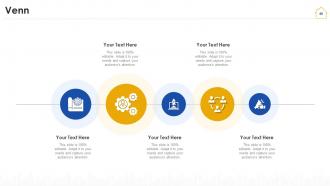
Slide 48: This is a Venn Diagram slide that is 100% editable and can capture your audience's attention.
Slide 49: This is a Post-it Notes slide that can be used to illustrate important pointers.
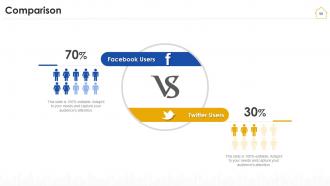
Slide 50: This is a Comparison slide that can be used to display two parameters – Facebook Users and Twitter Users.
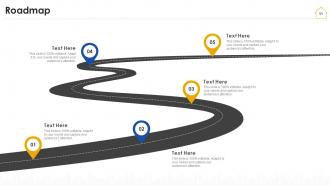
Slide 51: This is a Roadmap template that can be used to display the process of a project or framework.
Slide 52: This is an Idea Generate template that can be used to share new and innovative ideas.
Slide 53: This is a Thank You slide that includes the company Email, Contact Details, Address, and more.
Real estate marketing plan for sellers powerpoint presentation slides with all 53 slides:
Use our Real Estate Marketing Plan For Sellers Powerpoint Presentation Slides to effectively help you save your valuable time. They are readymade to fit into any presentation structure.





FAQs for Real estate marketing plan for sellers
Okay so first figure out who you're actually targeting - like are we talking first-time buyers or luxury clients? Then work on your brand identity so people remember you. Pick your marketing channels based on where those people actually are, not just everywhere (I see agents waste so much money on this). Set a realistic budget and some deadlines to keep yourself honest. Most people skip the audience research part which is honestly why their marketing feels all over the place. Track what's bringing in real leads, not just engagement. Oh and don't spread yourself too thin across channels.
Dude, you gotta stop just listing specs and start telling stories! Like instead of "updated kitchen," talk about how that breakfast nook gets amazing morning light for coffee. Ask your sellers what they loved most about the house - maybe that backyard was perfect for weekend BBQs or whatever. People honestly buy based on feelings way more than square footage. I mean, nobody fantasizes about "3BR/2BA," right? Work these stories into your descriptions and social posts. Make each place feel like someone actually lived there and loved it, not just another property to flip through.
Honestly, you can't ignore social media anymore - that's where everyone's looking at houses now. Instagram and Facebook let you target ads super specifically by location and income, which is huge. Post quality photos, virtual tours, maybe some behind-the-scenes stuff so people trust you more. TikTok's weird but actually works great for younger buyers. Don't spread yourself too thin though - pick like 2-3 platforms max and stay consistent. The engagement part matters too, so actually respond to comments and DMs. I'd probably start with Instagram and Facebook if I were you.
Dude, start tracking where your leads come from and their conversion rates - you'll be shocked at the results. Analytics shows you which marketing channels actually bring in serious buyers versus tire-kickers. Plus you can see what property features people obsess over and the best times to post listings. Demographic breakdowns help you focus on the right neighborhoods too. I swear it's like reading people's minds sometimes. Most agents just throw money everywhere hoping something sticks, but you can actually see what's worth your budget and what's totally wasting it.
Honestly, go all-in on social media since these buyers are glued to their phones anyway. Those "Homebuying 101" TikTok series work really well - people eat up educational content when it's not boring. I'd also hit up local coffee shops or gyms to do casual meetups, though that might feel weird at first. Facebook ads targeting renters who've been in the same spot for 2+ years? Gold mine. The whole thing is about making the process less scary because most first-timers are totally intimidated. Pick one platform first and actually get good at it before you spread yourself thin everywhere.
Look, demographics basically tell you who you're selling to and how to reach them. Millennials moving in? Go heavy on social media, play up the tech features and walkability - they want those Instagram-worthy spots. Boomers downsizing though? That's print ads and open houses, focusing on low maintenance stuff. Gen Z's honestly the trickiest - they're super digital but hate anything that feels too corporate or fake. You can't just throw money at glossy campaigns with them. Short bursts work better. Keep tracking what's happening in your area and switch up your approach accordingly.
Dude, virtual tours are game changers for real estate. Buyers spend 40-60% more time checking out properties when they can actually walk through them online. Time on market drops by weeks too. Out-of-town people don't have to make the trek just to see if they're interested. I've watched listings with solid 3D tours get multiple offers way faster than the old photo-only approach. Honestly, if you're not doing this yet, you're missing out. Start with your pricier listings first - easier to justify the cost and see if it's worth it.
Build your email list from website opt-ins and open houses first. Then segment people based on where they're at - just browsing vs ready to buy. Nobody wants another generic "hire me" newsletter (seriously, those are the worst). Send actual useful stuff instead: neighborhood updates, new listings, buying tips. Make everything hyper-local and personal. Your subject lines matter way more than you think. Set up different automated sequences for different buyer types. Oh, and always give them a clear next step to take. Track what's working and ditch what isn't.
Facebook and Google Ads are your best bet to start - you can test with small budgets and see what sticks. Facebook's targeting is crazy good for hitting specific neighborhoods. Google grabs people who are actually searching for homes right now. Zillow costs more but honestly, that's where buyers spend their time anyway. I've seen agents do well with LinkedIn too, especially for investors or higher-end stuff. Don't get distracted by TikTok or whatever's trendy until you nail these basics first. Once something's working, just throw more money at it.
Dude, you NEED SEO for your real estate site. Like seriously - people are constantly googling "homes for sale in [whatever city]" and "agents near me." If you're not showing up on page one, you're invisible. Think about it - when's the last time you scrolled to page 2 of Google? Exactly. Real estate is crazy competitive online, so you're basically bleeding potential clients without proper SEO. Local search is where it's at. Oh, and definitely claim your Google Business Profile if you haven't already - that's like the easiest win you can get.
Honestly, social media is your best bet when you're broke - Instagram and Facebook don't cost anything and you can show off listings while building your brand. I'd focus on stuff like neighborhood spotlights or market updates that actually help people. Door knocking feels super awkward but it works (trust me on this one). Open houses are great too since you get to meet potential clients without spending money. Oh, and partnering with local businesses is smart - coffee shops, moving companies, whoever. Just pick one or two things and stick with them. You'll burn out trying to do everything at once.
Honestly, partnering with local businesses is such a game changer for getting real referrals instead of chasing random leads. Think mortgage brokers, contractors, home inspectors - they're already talking to your ideal clients. Cross-promotion costs way less than ads too. You help them, they help you. I saw this one agent partner with a bakery for open houses (free croissants brought in SO many more people). Coffee shops work great too, weirdly enough. Just find businesses hitting the same crowd you want and suggest simple referral swaps or maybe joint events.
Content marketing is like your secret weapon for building trust before people even think about buying. Share market updates, neighborhood stuff, buying tips - whatever shows you actually know your area. Pretty house pics are nice, but honestly? People want to see your expertise and personality way more than another generic listing post. Most agents just blast out "JUST SOLD!" all day and wonder why nobody calls them. Pick one platform first - Instagram, Facebook, whatever - and stick with it. Posting twice a week consistently beats going crazy for a month then disappearing.
Look, market research just shows you who's actually buying around you and what drives them. Pull your MLS sales data first - that's gold. Then survey some past clients about their buying process. Demographics, income, how they like to be reached... all that stuff helps you build real buyer personas instead of throwing spaghetti at the wall. Way more effective than those generic luxury lifestyle ads everyone runs. The data might surprise you - maybe you should be targeting first-time buyers on Instagram, not empty nesters through direct mail. Honestly saves you tons of wasted ad spend too.
Honestly, the biggest thing I see agents mess up is spreading themselves too thin across every platform. Pick like 2-3 max and actually get good at those first. Also - and this might sound obvious but whatever - you gotta know WHO you're talking to. That generic "everyone needs a house!" stuff doesn't work anymore. Keep your branding consistent too because nothing screams amateur like having totally different vibes on Instagram vs your website. Oh, and track your damn results! I can't tell you how many people dump money into Facebook ads without knowing if they're actually getting leads. Start small, figure out what works, then expand.
-
Unique research projects to present in meeting.
-
Great designs, Easily Editable.