


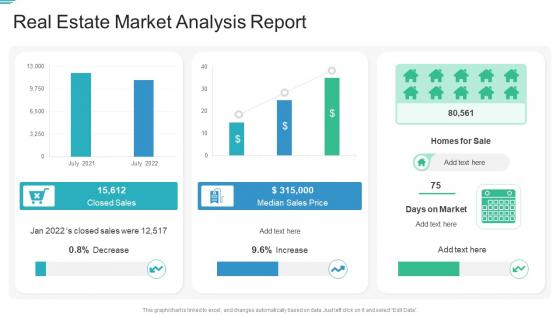
Real estate market analysis report




Try Before you Buy Download Free Sample Product
 Impress Your
 Audience
 100%
100% Editable
 Save Hours
 of Time


Our Real Estate Market Analysis Report are topically designed to provide an attractive backdrop to any subject. Use them to look like a presentation pro.
People who downloaded this PowerPoint presentation also viewed the following :
Real estate market analysis report with all 2 slides:
Use our Real Estate Market Analysis Report to effectively help you save your valuable time. They are readymade to fit into any presentation structure.
FAQs for Real estate
Honestly, it's kinda messy out there right now. High interest rates are scaring off buyers, but sellers won't list either since they don't wanna lose their sweet 3% mortgages. So we're stuck in this weird standoff with barely any inventory. Remote work's still pushing people toward smaller cities - way better value there. Cash buyers? They're crushing it with way less competition than before. My cousin just got outbid by three cash offers last week, it's brutal. If you're hunting for deals, I'd look at areas with solid job growth and where they're actually building new stuff.
So basically, when people have jobs and decent paychecks, they're way more likely to buy houses - pushes prices up. Interest rates are probably the biggest factor though. Low rates = cheaper mortgages = more buyers can actually afford stuff. GDP growth matters too, plus whatever's happening with jobs in your specific area. I've been watching this stuff for a while and it really does create this chain reaction once things start moving. Oh, and inflation obviously plays into it. Check these numbers every few months if you're thinking about buying or selling - timing can save you serious money.
Honestly, interest rates can totally make or break your real estate game. Low rates mean cheaper borrowing - you'll qualify for bigger properties or actually see decent cash flow. But when they spike? That duplex you wanted suddenly becomes a money pit because the mortgage eats your rental income alive. I got burned by this in 2022 when rates shot up crazy fast. What I do now is run the numbers at different rate scenarios before buying anything. Trust me, you don't want the Fed blindsiding you when you're already committed to a deal.
So basically when different age groups hit major life changes, housing demand shifts big time. Millennials are buying their first places now - think starter homes and city condos. Meanwhile boomers are downsizing, which puts tons of bigger suburban houses on the market while they're hunting for easier-to-manage spots. Population growth obviously cranks up local demand too. But honestly, it's way more complex than just age stuff. Remote work totally changed what people want (hello, home offices). Family sizes, income changes - it all matters. My advice? Watch birth rates and where people are moving in your area. Employment data helps too. You'll spot trends before everyone else jumps in.
Honestly, you need about 6 key metrics to actually understand what's happening. Days on market is huge - under 30 days usually screams seller's market. Inventory levels have been absolutely bonkers lately, so low it's crazy. Check price trends and price-to-income ratios too for the affordability picture. Absorption rates show you how fast stuff's moving. Oh, and pending sales ratios give you that forward look. I'd grab these numbers monthly for wherever you're looking and compare to historical data. That's how you catch trends before everyone else does.
Dude, the tech available now is insane compared to just using old comps and hoping for the best. AI spots trends months before they hit mainstream - honestly saves so much guesswork. You've got algorithms crunching everything from pricing patterns to demographic shifts, even social media buzz (which sounds weird but actually works). Some platforms track foot traffic data too, pretty crazy stuff. Don't get stuck using just one source though. Find tools that pull from multiple streams and automate the boring number-crunching. Figure out what metrics actually matter for your area first, then let technology do the heavy lifting.
Climate's huge - you don't want to deal with hurricanes or floods eating your investment. Check how close it is to jobs, good schools, shopping, all that stuff that keeps values up. Hills with views? Great. Low-lying areas that flood? Hard pass. Transportation access makes a massive difference too - nobody wants to drive an hour to get anywhere decent. Oh, and definitely look into zoning laws and what they're planning to build nearby. Future strip mall next door can tank your property value real quick. Make a simple checklist so you're not forgetting anything important when you're looking.
Dude, policies literally make or break real estate deals. Zoning decides what you can even build, while tax breaks can turn a mediocre project into gold. Interest rates? They'll crush your financing costs if you're not careful. Environmental stuff adds tons of expenses too - honestly such a pain but you can't ignore it. Rent control and affordable housing requirements mess with your numbers. Oh, and don't forget development fees. The crazy part is how fast things change. What works in one market today might be dead next year. I always build some regulatory risk into my calculations now.
Yeah, so urbanization basically pushes real estate prices way up. More people flooding into cities = way more demand, but there's never enough housing to go around. It's wild how fast it happens sometimes. Areas close to jobs and good transit get crazy competitive - you're bidding against everyone else who wants that convenience. The ripple effect hits suburbs too since people can't afford downtown anymore and start looking further out. I'd definitely watch where people are actually moving and what new infrastructure they're building if you're trying to time the market.
Check out places with solid job growth and rising population - that's where the money is. Employment stats, new businesses opening up, big infrastructure projects like transit stuff or companies moving in. Honestly the sweet spot is neighborhoods that feel like they're *almost* cool but haven't blown up yet. I always look at median income trends and building permits too. Oh and vacancy rates - super telling. But here's the thing, you can't just crunch numbers from your laptop. You've gotta actually walk around these areas and chat with local agents who know what's up.
Dude, supply chain issues are absolutely crushing developers right now. Material delays push everything back months - I know a guy who waited almost a year just for windows, which is insane. Your labor gets all screwed up, financing costs pile up, and forget your original budget. Steel, lumber, fixtures... everything's showing up late AND costing 20-50% more than planned. Honestly, the smart developers I know are padding their timelines with extra buffer months and working with multiple suppliers now. Yeah it's more work upfront, but beats getting blindsided by a six-month delay because your single supplier can't deliver.
Honestly, social media's got way more market intel than people realize. Facebook groups are clutch - locals always spill about pricing and what's actually selling. LinkedIn shows you job trends, which obviously affects who's buying. Instagram and TikTok seem random but they're perfect for spotting demographic shifts, especially younger buyers. I mean, you can literally see where people want to live based on their posts. Local influencers usually know about developments before they hit the news too. Oh, and set up Google Alerts so you don't have to manually stalk everything. Makes it way easier to catch stuff early.
Look for 3-5 comps from the last 3-6 months within half a mile - similar square footage, beds/baths, lot size. Finding perfect matches is honestly a nightmare sometimes, but do your best. You'll want to adjust for condition, updates, and exact location differences. Oh, and check pending sales too since they show what buyers are actually willing to pay right now. I always make a simple spreadsheet showing my adjustments so I can walk clients through my reasoning later. Makes those pricing conversations way easier when you've got your homework done.
Oh yeah, timing matters way more than people think! Spring/summer are crazy busy - that's when families want to move since kids are out of school. Makes sense, right? Winter's pretty dead though. Nobody wants to trudge through snow looking at houses. You'll see tons more listings pop up in spring, so more options but also more competition. Prices can jump during peak season too. Honestly, if you can swing waiting until fall or winter, you might score a better deal. Way fewer people shopping then.
Honestly, rates going up is the big one - makes everything way less affordable for buyers. Economic uncertainty isn't helping either, and inflation's eating into people's budgets so there's fewer qualified buyers out there. Some markets are still pretty unbalanced inventory-wise, though that's getting better slowly. Price corrections could hit the overheated areas hard. But here's the thing - it really depends where you're looking. I'd definitely stress-test whatever you're thinking about against higher rates, and maybe stick to markets that actually make sense fundamentally instead of the flashy speculative stuff.
-
Amazing product with appealing content and design.
-
Editable templates with innovative design and color combination.