


Recreational activities abc team powerpoint presentation slide




Try Before you Buy Download Free Sample Product
 Impress Your
 Audience
 100%
100% Editable
 Save Hours
 of Time


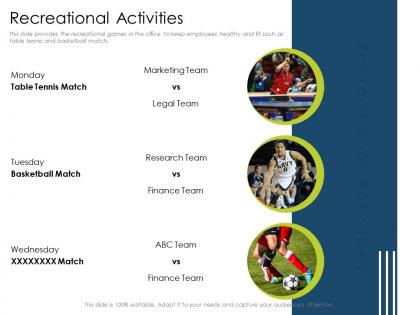
This slide provides the recreational games in the office to keep employees healthy and fit such as table tennis and basketball match.
People who downloaded this PowerPoint presentation also viewed the following :
Recreational activities abc team powerpoint presentation slide with all 2 slides:
Use our Recreational Activities Abc Team Powerpoint Presentation Slide to effectively help you save your valuable time. They are readymade to fit into any presentation structure.

FAQs for Recreational activities abc team
Popular recreational activities for urban dwellers include fitness classes, park visits, dining experiences, cultural events, and outdoor markets. These activities enhance city living by providing stress relief, social connection, and physical wellness within accessible urban spaces, with many residents finding that diverse recreational options significantly improve work-life balance and overall quality of life.
Recreational activities contribute to mental health by reducing stress hormones, releasing endorphins, and providing social connection opportunities. Through activities like hiking, team sports, and creative hobbies, individuals experience improved mood regulation, enhanced cognitive function, and stronger community bonds, with many healthcare organizations increasingly recognizing recreational therapy's role in comprehensive wellness programs.
Community parks serve as vital hubs for recreational activities, offering spaces for sports, fitness programs, family gatherings, cultural events, and nature-based activities. These public spaces enhance community health and social cohesion by providing accessible venues for diverse recreational pursuits, while fostering neighborhood connections and delivering improved quality of life for residents across all demographics.
Technology enhances outdoor recreational experiences through GPS navigation systems, fitness tracking devices, weather monitoring apps, augmented reality features, and emergency communication tools. These innovations streamline trip planning, improve safety protocols, and deliver real-time environmental data, with many outdoor enthusiasts finding that digital integration ultimately enhances adventure accessibility while maintaining nature connection.
Affordable family recreational activities include visiting public parks, organizing backyard games, exploring free community events, hiking local trails, and hosting movie nights at home. These activities enhance family bonding while minimizing entertainment costs, with many families finding that nature-based and home-centered options deliver meaningful experiences, strengthen relationships, and ultimately provide sustainable entertainment solutions without straining household budgets.
Cultural differences significantly influence recreational preferences through varying social values, religious practices, climate adaptations, and historical traditions that shape what communities consider enjoyable or meaningful. For example, collectivist cultures often favor group activities like community festivals and team sports, while individualist societies gravitate toward personal pursuits, with many organizations finding that culturally-aware recreational programming enhances participation and community engagement.
Environmental factors impacting recreational space accessibility include weather patterns, air quality, natural disasters, seasonal changes, and geographic terrain. These conditions significantly influence facility usage by affecting safety conditions, operational schedules, and visitor comfort levels, with many parks and recreational facilities finding that proactive environmental management enhances year-round accessibility and user experiences.
Recreational activities foster social connections by bringing diverse community members together through shared interests, collaborative projects, and regular gatherings that build familiarity and trust. These programs create natural networking opportunities across age groups and backgrounds, with many communities finding that organized sports leagues, hobby clubs, and volunteer initiatives ultimately strengthen neighborhood bonds and enhance local social cohesion.
**INPUT**: What trends are emerging in recreational activities post-pandemic? **OUTPUT**: Post-pandemic recreational trends include outdoor adventure activities, virtual fitness experiences, wellness-focused tourism, contactless entertainment options, and hybrid social gatherings. These shifts are revolutionizing the recreation industry by prioritizing health safety, digital integration, and flexible participation models, with many entertainment venues, fitness centers, and travel companies finding that adaptable offerings deliver enhanced customer experiences and sustained competitive advantage. [Word count: 60 words]
Age and physical ability significantly influence recreational activity selection by determining mobility requirements, energy levels, and safety considerations across different life stages. Younger individuals often gravitate toward high-intensity sports like rock climbing or competitive athletics, while older adults increasingly choose low-impact activities such as swimming, walking groups, or gardening, with many finding that adaptive programs enable continued participation regardless of physical limitations, ultimately delivering sustained wellness and social engagement.
Recreational activities significantly enhance physical fitness levels across demographics by improving cardiovascular health, building muscle strength, increasing flexibility, and boosting endurance capacity. Through regular participation, children develop motor skills and healthy habits, adults maintain weight management and reduce chronic disease risks, while seniors preserve mobility and cognitive function, ultimately delivering improved quality of life and reduced healthcare costs across all age groups.
Schools incorporate recreational activities effectively by integrating them into daily schedules, aligning activities with learning objectives, providing diverse options for different interests, and ensuring proper supervision and resources. Educational institutions increasingly find that structured recreational programs enhance student engagement, improve social skills, and boost academic performance, while fostering creativity and physical wellness across all grade levels.
Combining recreational activities with volunteer work delivers personal fulfillment, skill development, community impact, networking opportunities, and enhanced well-being through meaningful engagement. Many organizations find that volunteer-integrated recreation programs, from environmental cleanups to sports coaching, ultimately strengthen team building while addressing social needs, creating sustainable community partnerships that benefit both participants and recipients.
Seasonal changes significantly influence recreational preferences by shifting outdoor activities from summer swimming, hiking, and camping to winter skiing, ice skating, and indoor pursuits like bowling or fitness classes. Weather patterns drive people toward climate-appropriate options, with many recreation businesses finding that diversifying seasonal offerings, such as resorts adding winter sports or summer water activities, ultimately delivers year-round revenue and sustained customer engagement.
Innovative urban recreational activities include parkour courses, rooftop farming workshops, escape room experiences, virtual reality gaming centers, and pop-up outdoor fitness classes. These activities enhance community engagement and urban livability by transforming underutilized spaces, creating social connections, and delivering accessible entertainment options, with many cities finding that diverse recreational offerings ultimately attract residents and boost local economic development.
-
Use of icon with content is very relateable, informative and appealing.