


Retail Store Business Plan Powerpoint Presentation Slides




Try Before you Buy Download Free Sample Product
 Impress Your
 Audience
 100%
100% Editable
 Save Hours
 of Time


Get access to our meticulously designed Retail Business Store Plan PowerPoint presentation and embark on a successful journey in the rapidly growing retail store sector. This comprehensive deck provides valuable insights and practical guidance to help you establish and operate your business effectively. It encompasses key sections such as the executive summary, entity overview, and industry analysis, offering a holistic view of the retail industry and addressing potential challenges and their solutions. The presentation incorporates strategic analyses such as SWOT, PESTEL, and Porters Five Forces, enabling you to assess risks and identify opportunities in the market. It also includes market size estimation and regional analysis to enhance your understanding of the industry landscape. Moreover, our Retail Sector module presents a forecasted financial analysis to assess your organizations financial position and performance. To ensure smooth operations, the deck features a comprehensive management summary, outlining the required number of employees, their roles, and critical responsibilities. Dont miss the opportunity to access this highly researched and expertly designed product. Download our editable presentation now and set your retail business on the path to success.
People who downloaded this PowerPoint presentation also viewed the following :
Content of this Powerpoint Presentation
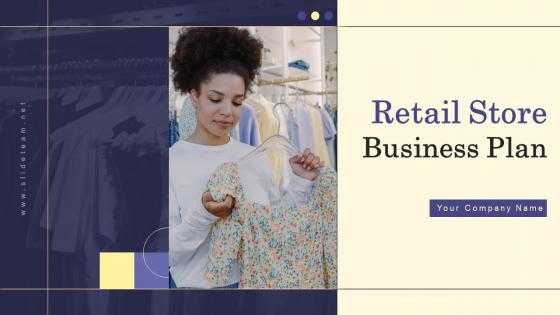
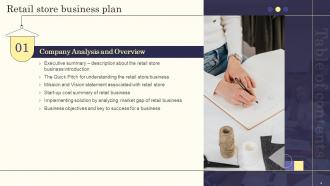
Slide 1: This slide introduces Retail Store Business Plan. State your company name and begin.
Slide 2: This slide depicts the Agenda of the presentation.
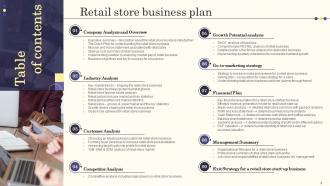
Slide 3: This slide incorporates the Table of contents.
Slide 4: This slide highlights the Title for the Topics to be covered in the upcoming template.
Slide 5: This slide covers a brief glimpse of what the business will be offering to the customer with market information.
Slide 6: This slide deals with the The Quick Pitch for understanding the retail store business.
Slide 7: This slide elucidates the Mission and Vision statement of a retail store business.
Slide 8: This slide provides a gist of company start-up summary.
Slide 9: This slide provides detailed information about the business objectives and the key success drivers for the purpose of expanding the business.
Slide 10: This slide exhibits the Detailed overview about the retail store business.
Slide 11: This slide focuses on Implementing solution by analyzing market gap of retail store business.
Slide 12: This is yet another slide continuing the Implementing solution.
Slide 13: This slide presents the Heading for the Components to be discussed further.
Slide 14: This slide highlights the thorough assessment of a market within the grocery or supermarket along with the key stats.
Slide 15: This slide gives a glimpse of industry overview of the retail trade business trends.
Slide 16: This slide emphasizes on the retail fashion industry business trends.
Slide 17: This slide reveals the thorough assessment of a market within the skincare industry.
Slide 18: This slide portrays the thorough assessment of a market within the athleisure market.
Slide 19: This slide incorporatess the thorough assessment of a market within the grocery or supermarket along with the key stats.
Slide 20: This slide exhibits information about the Growth drivers shaping the retail store business.
Slide 21: This is yet another slide continuing the Growth drivers.
Slide 22: This slide states the Goals to be achieved for retail store business.
Slide 23: This slide shows the Title for the Ideas to be covered in the next template.
Slide 24: This slide highlights the thorough assessment of a business location within country.
Slide 25: This slide focuses on Forming buyer personas to increase retail store personalization.
Slide 26: This slide represents Assessing target customer profile for retail stores.
Slide 27: The purpose of this slide is to depict the market potential of retail stores in terms of TAM, SAM, and SOM.
Slide 28: This slide portrays the Heading for the Ideas to be discussed next.
Slide 29: This slide displays the Competitive analysis including major players in retail store business.
Slide 30: This slide elucidates the Title for the Components to be covered further.
Slide 31: This slide showcases the Comprehensive SWOT analysis of retail store business.
Slide 32: The slide highlights porter’s five forces model and its implications in the retail store business industry.
Slide 33: The purpose of this slide is to identify the industry’ political, economic, social, technological, environmental and legal effects that can influence the growth of the business.
Slide 34: This slide emphasizes on Implementing quarterly milestones for successful retail store business growth.
Slide 35: This slide exhibits the Heading for the Topics to be discussed in the upcoming template.
Slide 36: This slide outlines the Strategy to increase sales and revenue for a retail store business.
Slide 37: The purpose of this slide is to implement an effective go-to-market strategy for bringing the company's products or services to an end customer taking into consideration various elements.
Slide 38: This slide focuses on Understanding retail store business customer journey through funnel.
Slide 39: This slide depicts the Title for the Topics to eb discussed next.
Slide 40: This slide represents financial assumptions of the clothing store business plan.
Slide 41: This slide presents revenue model of retail store business.
Slide 42: This slide showcases the breakeven analysis.
Slide 43: This slide reveals the breakeven graph.
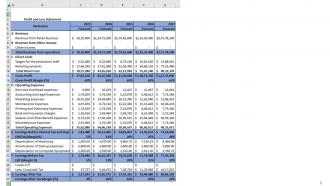
Slide 44: This slide elucidates the profit and loss statement.
Slide 45: This is yet another slide continuing the Profit and loss statement.
Slide 46: This slide is an extension of the Profit and loss statement.
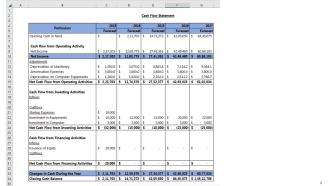
Slide 47: This slide elucidates the Organziation's Cash Flow Statement.
Slide 48: This slide continues the Cash Flow Statement.
Slide 49: This slide shows the balance sheet statement.
Slide 50: This slide is the continuation of the Balance sheet statement.
Slide 51: This slide exhibits the different scenarios for deriving final annual profit after tax on the basis of best case, nominal case and worst case.
Slide 52: This slide presents a scenario analysis of annual revenue break-even, annual profit after tax and break-even analysis.
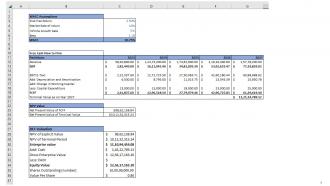
Slide 53: This slide highlights the DCF valuation analysis of a business’s financials based on the free cash flow to firm.
Slide 54: This slide mentions the Heading for the Contents to be discussed further.
Slide 55: This slide represents organizational structure of the business.
Slide 56: This slide emphasizes on the Professional summary of retail store start-up founder.
Slide 57: This slide lists the Job roles and responsibilities of retail store business key management.
Slide 58: This slide is an extension of the Job roles and responsibilities.
Slide 59: This slide incorporates the Title for the Ideas to be covered next.
Slide 60: This slide reveals the Exit strategy for retail store business stakeholders.
Slide 61: This slide contains all the icons used in this presentation.
Slide 62: This slide is titled as Additional Slides for moving forward.
Slide 63: This is About Us slide to show company specifications etc.
Slide 64: This slide shows Post It Notes. Post your important notes here.
Slide 65: This slide shows SWOT describing- Strength, Weakness, Opportunity, and Threat.
Slide 66: This slide displays Mind Map with related imagery.
Slide 67: This slide contains Puzzle with related icons and text.
Slide 68: This slide showcases Magnifying Glass to highlight information, specifications etc
Slide 69: This is a Timeline slide. Show data related to time intervals here.
Slide 70: This slide provides 30 60 90 Days Plan with text boxes.
Slide 71: This is a Thank You slide with address, contact numbers and email address.
Retail Store Business Plan Powerpoint Presentation Slides with all 76 slides:
Use our Retail Store Business Plan Powerpoint Presentation Slides to effectively help you save your valuable time. They are readymade to fit into any presentation structure.





FAQs for Retail Store Business Plan
So you'll need an executive summary, market analysis, and competitive stuff - the usual suspects. Product details, marketing plan, operations, financial projections. Oh and funding requirements if you're looking for money (people always mess that part up). Management structure too, plus your growth timeline. Honestly? The financial section is what makes or breaks these things, so don't rush the sales forecasts and cash flow. I'd grab a template online and tweak it for your specific retail thing instead of starting blank. Way easier that way.
Look at who actually has the problem your product solves AND can afford it. Don't fall into that "everyone will want this" trap - trust me, they won't. Check out what your competitors are doing for targeting ideas. Survey some potential customers if you can swing it. Also dig into local market data - boring but helpful. The tricky part is finding a group big enough to keep you in business but narrow enough that you can actually reach them without blowing your entire budget on marketing. Demographics and spending patterns are your best friends here.
Start by actually walking into their stores - check prices, see how staff treats customers, that whole deal. Their social media is pure gold for intel too. Track their promos and website updates religiously. If they're big enough, dig into public financial reports. SEMrush works great for spying on their online marketing (honestly saved my butt so many times). Map out where they're located and watch foot traffic patterns. The real magic happens when you track this stuff consistently - that's how you spot the gaps they're missing that you can jump on.
Dude, location seriously makes or breaks everything. Like, I've watched solid businesses crash just because they chose some pretty spot with zero foot traffic - such a waste. Cheaper rent sounds tempting, but you'll blow that savings on ads trying to get people there. Go hang out at places you're considering. Different days, different times. See who actually walks by and if they're your people. The visibility thing matters too - can people even spot your shop? Trust me, do this homework before you sign anything. Your future self will thank you.
For your retail plan, you'll definitely need monthly sales forecasts for the first year, then quarterly breakdowns for years two and three. Cash flow projections are huge - probably the most important thing investors look at, honestly. Also include your startup costs and P&L statements. Break-even analysis is another must-have so people know when you'll actually make money. Oh, and if your business has busy/slow seasons, factor that in too! Just make sure everything's based on real market research, not numbers you pulled out of thin air. That never fools anyone.
Figure out what actually makes you different first - maybe it's your product mix, how you treat customers, or your whole vibe. Everyone and their mom says "quality and service" so that's useless honestly. Get specific about the problem you're solving. What do your customers really want that they're not getting elsewhere? Test your idea with actual people before you commit to anything. Oh and whatever you promise, you better be able to deliver every single time or you're screwed.
Honestly, the best approach is mixing online and offline stuff. Social media is huge - Instagram and TikTok especially if you're targeting younger people. Email campaigns work great for getting customers back in the door. Make sure your local SEO is solid so people can actually find you when they search. But don't ignore the basics either! Loyalty programs and referral rewards are still money. Community events too - people love feeling connected to local businesses. Oh, and pick like 2-3 things max to start with. Better to nail a few strategies than half-ass a bunch of them.
Honestly, there's so much tech you can add it'll make your head spin. I'd start with a decent POS system that actually tracks your inventory - saves you tons of headaches later. Then maybe an online store if you don't have one yet. CRM software is pretty clutch for tracking what customers buy and sending them deals they'll actually want. Oh, and definitely get mobile payments set up - people get weird when they can't tap their phone to pay now. Don't try to do everything at once though. Pick like two things max and get those working first.
Honestly, cash flow will probably kill you before anything else does. Finding a decent location that doesn't cost a fortune is rough too. Then there's inventory - you'll be guessing wrong about what people want like 40% of the time, I swear. Everyone's gonna pull out their phone and price-check you against Amazon right in your store, which is super fun. Marketing feels impossible when you're working with basically no budget. Oh, and building any kind of customer base when there's already ten other shops doing the same thing? Yeah, good luck with that. Just focus on your neighborhood first and really nail down those cash flow patterns.
Look at your sales data first - figure out what flies off the shelves vs what just sits there collecting dust. Set up reorder points so you're not scrambling when stuff runs out. ABC analysis is a game changer (seriously, why don't they teach this stuff earlier?). Group products by how much they sell and their profit margins. Track everything - could be fancy software or even just spreadsheets if that's your vibe. Do physical counts regularly because numbers lie sometimes. Oh, and build solid relationships with suppliers who won't leave you hanging when you desperately need inventory.
Customer service can make or break your retail business - seriously, one terrible Yelp review and you're done. Map out your service standards and how you'll train staff to handle complaints. Detail your staffing needs and every point where customers interact with your team. Recovery procedures are huge too. This is honestly where you can beat Amazon and big box stores if you do it right. Budget for proper training (worth every penny) and maybe throw in a loyalty program. The goal isn't just sales - it's creating customers who keep coming back.
Honestly, attitude beats experience every time - find people who actually like helping others, even if they've never worked retail. Figure out what skills you really need first (cash handling, product stuff, basic customer service). Set up some training that covers your POS system, policies, all that boring but necessary stuff. Role-playing is awkward but it works - they'll thank you later when they're not panicking over returns. Write everything down so they can check procedures when you're not around. Oh, and definitely pair newbies with your best people for their first few shifts. Learning on the job with someone who knows their stuff is worth more than any training manual.
Oh man, retail has so many legal hoops. Business structure first - LLC or corp, whatever fits your tax situation. Licensing is a nightmare honestly, there's always some random permit you missed. Check zoning laws for your location too. Sales tax rules vary by state and they're weirdly complicated. If you're hiring people, brush up on employment law basics. Consumer protection stuff matters a lot in retail. Seriously though, just pay for an attorney consult upfront. Way better than scrambling to fix problems later when you're actually making money.
Honestly, start with your supply chain - find suppliers who aren't sketchy about ethics and labor practices. Packaging waste is a huge win too, customers notice when you're not drowning them in plastic. Energy-efficient lighting saves money (which your boss will love) while looking good to shoppers. I'd focus on quality over constantly churning out cheap stuff. People want things that'll actually last these days. Make your efforts visible though - don't be modest about it! Product take-back programs work well if you can swing the logistics. Pick one or two things you can actually do right instead of half-assing everything. Build from there once you see what clicks.
You're gonna want to look at both the money side and how things actually run day-to-day. Sales revenue, gross margin, inventory turnover - that's your foundation right there. Then dig into foot traffic, conversion rates, and average transaction value so you know what customers are actually doing. Oh, and customer acquisition cost plus lifetime value are pretty crucial for the long game. There's honestly like 50 different things you could obsess over, but these main ones show if you're doing okay or not. Just pick maybe 5-7 that fit your specific setup and check them weekly.
-
Qualitative and comprehensive slides.
-
Out of the box and creative design.