

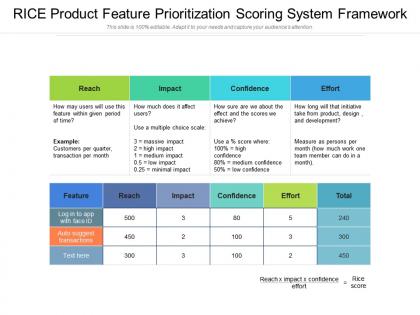
Rice product feature prioritization scoring system framework




Try Before you Buy Download Free Sample Product
 Impress Your
 Audience
 100%
100% Editable
 Save Hours
 of Time


Our Rice Product Feature Prioritization Scoring System Framework are topically designed to provide an attractive backdrop to any subject. Use them to look like a presentation pro.
People who downloaded this PowerPoint presentation also viewed the following :
Rice product feature prioritization scoring system framework with all 2 slides:
Use our Rice Product Feature Prioritization Scoring System Framework to effectively help you save your valuable time. They are readymade to fit into any presentation structure.
FAQs for Rice product feature prioritization
Brown rice is definitely your best bet - it keeps all the good stuff like fiber, B vitamins, and minerals that white rice loses when they strip it down. White rice is easier on your stomach but honestly pretty meh nutrition-wise. Wild rice isn't even technically rice (random, right?) but it's loaded with protein and antioxidants. The black and red varieties are pretty solid too - somewhere in the middle with decent fiber plus those colorful antioxidants. I'd stick with brown or wild most of the time if you want the most bang for your buck.
So rice farming is totally different depending on where you're at. Asia's got those famous flooded fields - crazy amounts of water management and they still plant seedlings by hand in a lot of places. The US is way more mechanized though, direct seeding everything with way less water. Some places don't flood at all and just do upland rice, which honestly seems easier to me. Africa mixes old school methods with newer drought-resistant types. If this is for work stuff, I'd definitely look at water management first since that's usually the biggest difference between regions.
So rice basically feeds half the planet - we're talking 3.5 billion people getting 20% of their calories from it daily. Crazy right? Most of Asia, chunks of Africa and Latin America would be screwed without it. Here's the thing though - when rice production gets disrupted, countries can fall apart pretty fast. Climate stuff, crop diseases, supply chain mess-ups... they all hit hard. I mean, you've probably seen how quickly food shortages turn into political chaos. If you're tracking global stability, watch rice yields. They're like a canary in the coal mine for where the next food crisis might pop up.
Honestly, brown rice is way better than white - more nutrients and less processing. I know it's an adjustment but trust me on this one. Buy local varieties when you can, and look for ones that don't need tons of water to grow. Mix your rice with lentils or beans for complete protein so you're not relying on meat as much. Bulk buying cuts down on all that plastic packaging waste. Oh and don't cook huge batches unless you'll actually eat them - I'm terrible at using up leftovers before they go weird. Maybe start by switching up one rice dish a week?
Oh man, rice farming is actually pretty rough on the environment. Those flooded paddies? They pump out methane like crazy - we're talking 10% of all agricultural emissions. The water usage is insane too since fields stay flooded for months. Plus all that fertilizer runoff messes with waterways and creates dead zones. It's honestly kind of shocking for something we eat so much of, you know? If you're trying to source more sustainably, look for suppliers doing that alternate wetting/drying thing or going organic.
Ugh, rice processing is such a nightmare for nutrition. They basically strip out all the good parts when making white rice - the bran and germ get tossed, which is where like 80% of the B vitamins and iron live. Plus you lose almost all the fiber too. Honestly it's kind of crazy how much they destroy just to make it look prettier and cook faster. The more they mess with it (instant rice is the worst), the less nutritious it gets. Brown rice isn't everyone's favorite but it's so much better for you if you can handle the texture.
Oh man, rice is everywhere! Asia's obviously huge for it - sushi, fried rice, biryani, Thai jasmine rice with everything. But Peru and Colombia do amazing things with rice too. West Africa has incredible rice dishes (honestly underrated). Middle Eastern pilafs are so good. It's actually harder to think of places that don't use rice as a staple. If you want to get into it, I'd learn the basic steamed rice methods from different cultures first. Each one has their own ratios and techniques that make a difference.
Dude, rice farming is getting wild right now. Drones are monitoring crops and optimizing water - honestly didn't think we'd be here so fast. CRISPR is creating these drought-resistant varieties that'll actually survive climate change. Smart irrigation cuts water waste by 30%, which farmers desperately need. AI helps predict planting times and spots diseases early. Oh, and John Deere's doing some crazy stuff with their smart platforms - worth checking out if you're serious about this. The whole agtech space is blowing up. Short answer: technology's finally catching up to what farming actually needs.
Oh man, the cooking method makes such a huge difference! Steaming gets you those perfect fluffy grains for stir-fries. Boiling makes it stickier though. My rice cooker is honestly a game changer - it uses that absorption method where the rice soaks up all the liquid instead of you draining it, so you keep way more flavor. Also, try frying your rice first before adding water. Creates this nutty taste that's incredible. I usually toast it in a dry pan for like 2-3 minutes. Sounds weird but trust me on this one.
Dude, rice is huge for developing countries but it's complicated. Thailand and Vietnam make bank exporting it - we're talking millions of jobs and serious cash flow. But then prices crash and suddenly farmers are screwed when cheap imports pour in. Africa's the opposite problem - they import tons of rice which drains their money and leaves them super vulnerable when supply chains break down. India's pretty smart about timing their export bans though. Countries basically have to juggle keeping food cheap for people while not destroying their own farmers. It's honestly a mess but super important economically.
So basically, grab the rice and give it a quick look - you want grains that are all roughly the same size and color. Broken pieces are a red flag. Run your hand through it if you can; it should feel dry and firm, not soft or smell funky. I learned this the hard way after buying crappy rice for months lol. Also check when it was packaged since newer rice cooks way better. If you're doing bulk bins, just make sure they look clean and properly covered. Takes like 30 seconds but totally worth it!
Honestly, rice is so underrated! I've been making these crispy rice "pancakes" lately - just press leftover rice in a pan until it's golden and crunchy, then top it however you want. Rice paper rolls are amazing too, especially with Korean BBQ or random Mediterranean stuff. Oh, and you can actually blend cooked rice into smoothies? Sounds weird but it makes them super creamy. Rice flour works great for gluten-free pasta if you're into that. Even rice pudding doesn't have to be boring - try making it into panna cotta or ice cream. Just grab whatever rice you've got and mess around with it!
Honestly, the big three you'll be fighting are rice stem borers, brown planthoppers, and rice water weevils - they can totally destroy your harvest. Disease-wise, blast fungus is the worst, plus you've got bacterial blight and sheath blight to worry about. Brown planthoppers are especially annoying since they spread rice ragged stunt virus too. Get those pheromone traps set up early and check your fields weekly. Your crop's most vulnerable during tillering and heading stages, so that's when I'd be out there constantly. Catch problems early or you're screwed basically.
So basically just get airtight containers and keep them somewhere cool and dry. Heat and moisture will totally ruin your rice - I made that mistake once and ended up with bugs everywhere, ugh. Keep it under 70°F if you can and away from sunlight. Rice soaks up humidity like crazy, which causes mold. Oh and here's something kinda weird but it works - freeze your rice for 48 hours before storing to kill any bugs that might already be in there. Just check on it every few months for weird smells or weird colors and you'll be good.
Organic rice can definitely pay off with those premium prices, but man, the weeds are gonna drive you crazy without herbicides. Your yields will probably drop 10-20% too. The environmental stuff is great though - no synthetic chemicals and your soil gets healthier over time. Labor costs shoot up since everything's more hands-on. Honestly, I'd test it on just a small section first. My neighbor jumped in with his whole farm and kinda regretted it that first year. See how your specific land handles it before going all in.
-
Thanks for all your great templates they have saved me lots of time and accelerate my presentations. Great product, keep them up!