


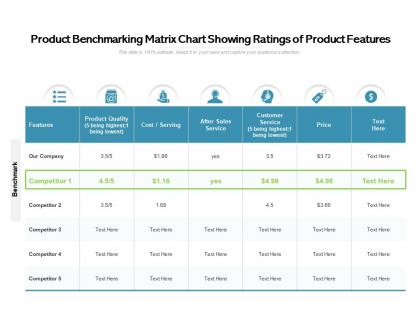
Product benchmarking matrix chart showing ratings of product features




Try Before you Buy Download Free Sample Product
 Impress Your
 Audience
 100%
100% Editable
 Save Hours
 of Time


Our Product Benchmarking Matrix Chart Showing Ratings Of Product Features are topically designed to provide an attractive backdrop to any subject. Use them to look like a presentation pro.
People who downloaded this PowerPoint presentation also viewed the following :
Product benchmarking matrix chart showing ratings of product features with all 2 slides:
Use our Product Benchmarking Matrix Chart Showing Ratings Of Product Features to effectively help you save your valuable time. They are readymade to fit into any presentation structure.
FAQs for Product benchmarking matrix chart showing ratings
Focus on the basics first - performance stuff like speed and uptime, plus user satisfaction scores. Revenue metrics are obviously crucial too (conversion rates, customer acquisition costs, that kind of thing). Competitive positioning helps but honestly? Don't get too caught up in what everyone else is doing. The real challenge isn't figuring out what to measure - it's not drowning in a million different data points. I'd pick maybe 3-5 metrics that actually connect to your strategy. You can always add more later once you've got a handle on the core ones. Start simple, then build from there.
Start by figuring out who's going after your same customers, even if their product looks totally different. Your sales team probably hears competitor names all the time - just ask them who keeps coming up in deals. LinkedIn Sales Navigator actually works pretty well for finding companies with similar teams (weird flex but ok). Look at your website analytics to see where people bounce to next. Industry reports have market share stuff too. Oh and track who you're losing deals to - that's usually the most obvious sign. Don't just think about direct competitors though. Anyone fighting for the same budget counts.
Okay so for product benchmarking - SEMrush or Ahrefs are solid for digital stuff, and SimilarWeb works great for website comparisons. G2 and Capterra have tons of feature breakdowns and user reviews (I literally get lost reading those for hours sometimes). Pricing analysis is trickier - PriceIntelligently helps, but honestly a good spreadsheet can work too. UX benchmarking though? Hotjar and FullStory will show you exactly how people use competitor products, which is pretty eye-opening. Just start with free versions first. See what data you actually need before spending money on the fancy features.
Numbers only tell you what's happening, but qualitative stuff shows you WHY competitors are crushing it or failing. User interviews, reviews, usability tests - that's where you'll find the real insights that raw data completely misses. Pain points, what users actually care about, emotional triggers. Honestly, I think most people skip this part and wonder why their benchmarking feels so surface-level. Even if you just dig through competitor reviews (which takes like 20 minutes), you'll understand the performance gaps way better. Always pair your metrics with some qualitative research - it's the difference between knowing and actually understanding.
Dude, you absolutely need customer feedback for benchmarking - it's like the difference between theory and reality. Internal metrics are fine, but users will tell you what actually sucks or rocks about your product compared to others. I've watched teams get totally wrecked because they obsessed over tech specs while ignoring what people were saying in reviews. Feedback shows you which features matter most and catches stuff your testing probably missed. Just start gathering reviews, surveys, support tickets - whatever you can get. Then see how that lines up with what competitors are hearing from their users.
Quarterly reviews work for most people, but honestly? Your industry speed matters way more. Tech moves crazy fast, so monthly makes sense there. Stable industries can probably get away with twice yearly. Don't use stale data though - six months old is useless for current decisions. I'd set calendar reminders plus trigger extra reviews when competitors drop something big or your numbers go weird. Oh, and definitely audit what you're tracking first. Half that stuff probably isn't even relevant anymore, which is annoying but whatever.
Don't fall into the trap of comparing completely different products - like I've seen teams spend forever analyzing competitors who aren't even targeting the same users. That's just wasted time. Feature checklists are pretty useless too unless you actually understand why those features exist. Look at real user reviews and how well competitors are actually doing in the market, not just their fancy marketing pages. Oh and here's the thing - benchmarking should guide your decisions, not become a copy-paste exercise. Figure out what you're trying to learn before you start digging around.
Honestly, benchmarking is like getting the answers before the test. You see what competitors are nailing and what they're totally missing, then figure out where your product fits. I spend way too much time stalking other companies' features, but it's worth it. You'll catch trends early and understand what users actually expect these days. The trick isn't copying everything though - use those insights to build something better. Short sentences work. Longer ones help you explain the nuances of staying ahead instead of playing catch-up. Just make it a regular thing so you're not blindsided.
Oh man, it's everywhere honestly. Tech companies are constantly ripping apart each other's phones and gadgets. Cars too - like automotive engineers basically reverse-engineer competitors' vehicles all the time. Consumer goods, healthcare, manufacturing... pretty much any industry where people actually compare products before buying uses benchmarking. I went down a rabbit hole once watching teardown videos and it's wild how detailed they get! Financial companies do it with loan rates and credit cards. Even retail stores benchmark pricing strategies. If your industry has real competition, someone's definitely doing product benchmarking behind the scenes.
So direct benchmarking is when you're looking at your actual competitors - the ones going after your exact customers. Indirect is more like... companies solving similar problems but differently. Take ride-sharing apps: Uber's your direct competitor, but transit apps or bike shares are indirect. (Lines get pretty blurry though, not gonna lie.) You'll get tactical stuff from direct competitors - pricing, features, that kind of thing. Indirect benchmarking? That's where the creative ideas come from. Start with direct first since they're breathing down your neck anyway.
Totally doable! Big companies suck at customer service, personalization, and moving fast. Check their reviews - customers are probably complaining about the same stuff over and over. That's your in. Don't try matching their features one-for-one. Pick 2-3 things you can actually nail better. Maybe their support takes forever to respond, or their product is way too complex for smaller users. Honestly, these giants are often just too slow when things shift in the market. Find those gaps in your benchmarking, then go hard on being amazing at those specific things instead of spreading yourself thin everywhere.
Look at Toyota - they studied GM's processes way back and basically invented lean manufacturing that everyone uses now. Xerox got demolished by Canon in the 80s, so they benchmarked Canon's costs and totally rebuilt how they operated. Southwest actually studied bus companies (random but genius) to create their whole low-cost thing. The trick isn't copying what they do on the surface. You gotta dig into WHY they do it that way, then adapt it to your situation. Don't just steal features - that never works.
Look, you can't just grab data from one source and call it good - I learned that the hard way. Mix it up with customer surveys, competitor research, and those third-party reports (even if they're boring as hell). The real trick is making sure you're comparing stuff consistently. Same timeframes, same metrics, all that. Write down exactly how you did everything so you can do it again later. Trust me on this one. Start by checking what data you already have, then find at least two backup sources for each thing you're tracking. It's way more work upfront but you'll actually trust your results.
Honestly, just stick to publicly available stuff and don't be shady about it. If you're reaching out to people, be upfront about why you're asking - don't pretend to be someone you're not. That's sketchy and can backfire hard. Customer reviews, industry reports, basic research... there's tons of legitimate ways to scope out competitors. Oh and definitely don't touch anything covered by NDAs or use inside info if you've got it. Legal headaches aren't worth it, trust me. Set some ground rules with your team first so everyone knows what's cool and what crosses the line.
Oh man, this bit me so hard last year on a project! Markets are just wildly different - Japan vs Germany might as well be different planets sometimes. Consumer tastes, local regulations, pricing, even seasonal stuff varies like crazy. You can't just do one big global comparison and call it a day. Break it down by region and only benchmark against what's actually available in each market. Otherwise you're comparing products that don't even exist there, which is totally useless. Cultural factors mess with the data too - learned that one the expensive way!
No Reviews