

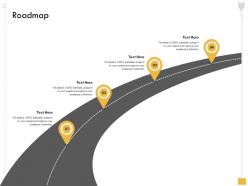
Roadmap your needs m2572 ppt powerpoint presentation summary smartart





Try Before you Buy Download Free Sample Product
 Impress Your
Audience
 100%
Editable
 Save Hours
of Time


Our Roadmap Your Needs M2572 Ppt Powerpoint Presentation Summary Smartart are topically designed to provide an attractive backdrop to any subject. Use them to look like a presentation pro.
People who downloaded this PowerPoint presentation also viewed the following :
Roadmap your needs m2572 ppt powerpoint presentation summary smartart with all 2 slides:
Use our Roadmap Your Needs M2572 Ppt Powerpoint Presentation Summary Smartart to effectively help you save your valuable time. They are readymade to fit into any presentation structure.

FAQs for Roadmap your needs m2572 ppt powerpoint
Okay so timeline with realistic milestones is huge - don't oversell what you can deliver. Connect each phase to actual business goals, not just busy work. I always forget this part but map out your dependencies and risks upfront. Nobody wants surprises later. Resource needs and success metrics are clutch so everyone knows when you're actually done. Executives eat up the bigger picture stuff, so tie it back to company objectives. Make it visual - swimlanes work great. End with clear next steps and definitely practice your timing beforehand. You'll thank me when you're not scrambling through slides.
Honestly, visuals are a game-changer for roadmaps. People can actually *see* what's happening when instead of drowning in bullet points. Gantt charts work great, or just basic timelines - whatever clicks with your crowd. Your stakeholders will eat up those clean graphics (I swear they judge presentations 50% on how they look). Here's the thing though - you'll catch timeline conflicts way easier visually than buried in paragraphs. Just don't go crazy with rainbow colors and weird fonts. Pick something clean and roll with it. Oh, and swimlanes are clutch if you've got multiple teams involved.
Oh man, timeline optimism is the killer - I've been burned by this so many times. Don't get too detailed upfront either, things shift way too fast. Actually talk to your team when you're setting dates instead of just deciding solo. Your roadmap isn't a contract carved in stone, it's more like... I dunno, a GPS that reroutes when there's traffic? Keep tweaking it based on what you learn. The whole "buffer time" thing sounds boring but trust me, stuff always comes up that you didn't expect.
Honestly, you just gotta show each group what they actually care about from the same roadmap. Execs want the big picture stuff - business outcomes and when things'll happen. Engineering needs all the technical dependencies and who's doing what (they're gonna dive deep anyway). Sales and marketing? They need feature specifics and realistic launch dates to tell customers. Here's the thing though - don't make separate documents or you'll lose your mind keeping everything updated. Instead, take your main roadmap and just filter it differently for each audience. Figure out what keeps each group up at night, then frame your info around that. Way easier than managing five different versions.
Figma and Miro are my go-to picks - super easy to use and great for team collab. ProductPlan's nice if you want roadmap-specific features, but it'll cost you more. Don't overlook basic stuff like PowerPoint or Google Slides though. They work fine for most situations, honestly. If you're already in Notion, their timeline view is actually pretty decent (I was surprised by this). The real trick is finding something your whole team will stick with. I'd start simple with whatever feels right, then move up if you need fancier stuff later.
Start with your business goals and what actually matters to users - that's your north star. Map everything against revenue potential, user value, how hard it'll be to build, and what depends on what. Impact vs effort matrix is pretty solid, though office politics will mess with your perfect scoring system anyway. Focus on whatever's blocking other work or what customers won't shut up about. Factor in your team's bandwidth and any deadlines that are actually set in stone. Oh, and get everyone to agree on how you're scoring things upfront - saves you from endless debates later where everyone's just arguing their pet features.
Here's the thing - short-term goals are like your quick wins that actually keep everyone from getting burned out. You knock them out in a few weeks or months and boom, progress you can see. Long-term stuff? That's your bigger picture, maybe a year out or whatever. Honestly, most teams mess this up because they do short-term work that doesn't connect to anything meaningful. You've gotta make sure those quick wins actually build toward something. Otherwise you're just... doing stuff. The sweet spot is when your weekly tasks clearly feed into where you're trying to go long-term.
Don't just tack feedback onto your roadmap process - build it right in from the start. Monthly stakeholder check-ins, quarterly user research, ongoing metrics tracking. Been there with collecting tons of feedback that just... sits there unused (learned that lesson the hard way). What actually works? Creating specific moments where you stop, digest what people are telling you, then openly change your priorities based on that input. Oh, and show stakeholders their feedback actually mattered - they'll stay way more engaged next time around.
Monthly check-ins are your friend here - weekly if things are moving super fast. Track where you actually are vs where you thought you'd be, then adjust priorities based on what's shifted. The trickiest part? Getting stakeholders to realize roadmaps aren't gospel truth. Back up any changes with real data: budget tweaks, resource issues, new requirements, market feedback. I always document what changed and why so you can catch patterns later. Oh, and definitely communicate updates before people start asking why you're running late - that conversation's way easier when you're proactive about it.
Build it like a pyramid - executives get the big picture stuff at the top, then people can dig deeper if they need specifics. I've watched so many teams mess this up by going either too vague or drowning everyone in details. Visual hierarchy is your friend here. Group things that make sense together, and honestly test it out with different people first. If someone's squinting at your screen going "huh?", you know you've got the detail level wrong. Oh and contractions help it feel less corporate-y if that makes sense for your audience.
Think of a roadmap like your team's GPS - shows everyone the destination and route. Your teams stop working separately when they can actually see the same priorities and timelines laid out. It's wild how much confusion just vanishes when everyone's staring at the same plan. You'll make better trade-off decisions together, coordinate between teams way easier, and stay focused on stuff that actually matters for your goal. Oh, and keep updating it regularly or it becomes completely pointless. I've seen too many teams create these beautiful roadmaps then forget they exist.
Definitely show clear before/after states with actual dates and numbers. Progress bars or color coding help tons - makes wins super obvious. Real user feedback hits different than just ticking boxes, trust me. Business impact numbers work great too. Oh, and don't skip over the stuff that went sideways. Shows you're actually learning from mistakes instead of pretending everything's perfect. I always wrap up each section by mentioning what's next - keeps people seeing that things are still moving forward rather than stalling out.
Tesla nailed this - they mapped out going from pricey sports cars to affordable EVs and actually pulled it off. Apple's solid at it too, though they keep timelines under wraps. Google's pretty open with their developer roadmaps, especially Android stuff. The best ones honestly? They're kinda boring but they work. Focus on real outcomes instead of flashy features, and don't promise what you can't deliver. Oh, and check how they handle progress updates - that's the goldmine for managing your own stakeholders' expectations.
Honestly, start weaving risk assessment into your roadmap planning right away. For each big project, figure out what could go wrong - blockers, dependencies, tech stuff that might not work. Rate them by how likely they are and how badly they'd mess things up. I wish someone had told me this years ago because I got burned by so many "unexpected" delays. Put these risks right on your roadmap next to your timelines. Build in extra time for risky stuff and have Plan B ready. Oh, and review everything monthly since things change constantly. Try listing your top 3 risks per quarter first - it'll make your planning way more realistic.
Honestly, forget boring slide decks - ask them what's keeping them up at night right before you dive in. Gets everyone actually paying attention. Ditch those microscopic Gantt charts (seriously, who can read those?) and use visuals that don't require a magnifying glass. Connect everything back to what matters to their bottom line. Don't save questions for the end when half the room's already mentally at lunch. Oh, and here's the thing most people miss - shoot them a follow-up email within 24 hours with decisions and action items. That's where you'll see if they're really bought in.
-
Best way of representation of the topic.
-
Awesomely designed templates, Easy to understand.
-
Great quality product.
-
Editable templates with innovative design and color combination.