

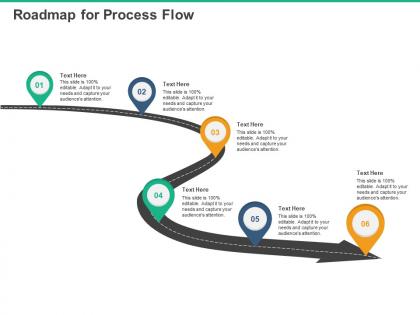
Roadmap for process flow n40 ppt powerpoint presentation smartart




Try Before you Buy Download Free Sample Product
 Impress Your
 Audience
 100%
100% Editable
 Save Hours
 of Time


Our Roadmap For Process Flow N40 Ppt Powerpoint Presentation Smartart are topically designed to provide an attractive backdrop to any subject. Use them to look like a presentation pro.
People who downloaded this PowerPoint presentation also viewed the following :
Roadmap for process flow n40 ppt powerpoint presentation smartart with all 2 slides:
Use our Roadmap For Process Flow N40 Ppt Powerpoint Presentation Smartart to effectively help you save your valuable time. They are readymade to fit into any presentation structure.
FAQs for Roadmap for process flow n40 ppt
So you need solid start/end points first - that's your foundation. Map out each process step with clear decision branches (yes/no stuff). Don't skip the dependencies between tasks because honestly, those always come back to haunt you later. Include who's responsible for what and realistic timelines. Build in measurable checkpoints and feedback loops too. Your roadmap should show where you are now versus where you want to be - makes the gap super obvious. Risk mitigation steps are clutch. I'd start by documenting your current state, then work backwards from your goal to spot what's missing.
So color-coding is huge for this - use different colors for different activity types, and make decision points look different from regular tasks. Icons help too. Swimlanes are honestly where it's at though, they show who owns what without making everything messy. Make your critical paths pop with bold colors or whatever. Oh, and visual hierarchy is key - highlight bottlenecks so they jump out. The whole point is someone should scan it and instantly get the handoffs and dependencies. Nobody wants to read every tiny label, you know?
For process flow roadmaps, I'd go with **Lucidchart** or **Visio** first - they're basically made for this and have all the templates you need. **Miro** and **Mural** are awesome if your team's into that collaborative whiteboard thing (honestly way more fun than traditional tools). You could totally just use **PowerPoint** or **Google Slides** for simple stuff though. **Draw.io** is free and actually pretty solid if you're on a budget. My advice? Start with whatever you already have. The tool doesn't really matter that much - it's more about getting your process mapped out clearly. Don't overthink it.
First thing - map out every single step you're doing now. Then grab actual numbers on how long stuff takes and where things get stuck. Seriously, go talk to whoever's actually doing this work because they'll tell you exactly what sucks about it. Time everything, see where handoffs happen, figure out what keeps getting repeated for no good reason. I'd look for the obvious junk first - like waiting around for approvals that don't matter or typing the same info three times. Oh, and check if this whole process even works consistently! Once you've got all that baseline stuff, you'll know what's actually broken vs what's fine.
Honestly, don't skip the stakeholder feedback part - I've watched so many projects crash because of this. Get input from everyone who'll actually touch the process, not just the managers. They know where things break down day-to-day that you'd never see from the planning side. Your roadmap might look perfect in theory, but if Sarah from accounting can't actually use it without three workarounds... well, you're screwed. Oh, and collect feedback throughout the whole thing, not just at the end when fixing stuff costs a fortune. Trust me on this one.
Honestly, it's way easier than starting from zero. Take your basic roadmap structure and just swap out the industry stuff - like if you've got a manufacturing one with production stages, flip those to patient touchpoints for healthcare. Same skeleton, different meat on the bones. Most processes are pretty similar when you think about it. Just customize the milestones and approval gates for whatever field you're working in. Oh, and don't forget to adjust the success metrics too - that part always trips people up. You'll save yourself hours of work this way instead of building something completely new.
Honestly, the two biggest mistakes I see are getting way too granular at the start and building the thing in a vacuum. Like, people spend forever mapping out every little detail when they should just nail down the big milestones first. Super counterproductive. And don't just lock yourself in a room to create it - get your team involved early or you'll end up with something totally disconnected from reality. Oh, and treat it like it's flexible! I can't tell you how many times I've watched people cling to their original roadmap even when circumstances changed. Keep it high-level initially, gather input from everyone actually doing the work, then adapt as you learn stuff.
So first thing - map out where your key metrics naturally happen in each stage. Like conversion rates at decision points, cycle times between steps, that kind of stuff. I always color-code mine (probably overkill but whatever, it helps me see patterns). Give each KPI to a specific person and do regular check-ins. The real trick? Make sure you're tracking stuff that actually shows if that process step is healthy, not just numbers that look good. Oh and don't go crazy - stick to 2-3 critical ones per stage or you'll drown in data.
So there are a few approaches that actually work well. Kaizen's probably your best bet to start - it's just small, continuous tweaks rather than massive overhauls. Lean methodology helps cut out waste, and Six Sigma's more about reducing defects (though honestly that one can get pretty intense). PDCA cycles are solid for systematic stuff - Plan, Do, Check, Act. Oh, and value stream mapping is clutch for spotting bottlenecks visually. I'd go with Kaizen first since you'll see quick wins, then maybe add Lean principles once your team's bought in. Way less overwhelming that way.
Honestly, just start by literally mapping out how each process step connects to your business goals - like actually draw it out so everyone's on the same page. Monthly stakeholder check-ins are a lifesaver for making sure your roadmap still makes sense when priorities shift. Build in feedback loops because you'll need to pivot sometimes. Oh, and those quarterly alignment sessions? Total game changer - you can catch yourself before going too far down the wrong rabbit hole. I've seen too many teams skip the mapping part and then wonder why nothing feels connected later.
Start with the big picture problem you're solving, then walk through each step. Clean visuals work way better than cramming every detail in there - nobody wants to squint at a messy slide. Point out the key decision spots and where things might get stuck. Oh, and definitely send it ahead of time so people can actually think about it before the meeting instead of just staring blankly. Be ready to explain how it affects their specific team. Questions will come up, so leave space for that. Honestly, the story your roadmap tells matters more than perfect formatting.
Honestly, it just saves you from the nightmare of trying to make flowcharts look decent in PowerPoint. You can drag and drop symbols that actually connect properly, plus when stuff changes you don't have to redo everything manually. Real-time collaboration is clutch too - no more emailing versions back and forth. Most tools come with roadmap templates so you're not staring at a blank screen wondering where to start. The export options are pretty solid across different formats. I'd definitely try a few free trials first since some interfaces just feel more intuitive than others, you know?
Look, your first draft is gonna suck - that's just reality. You'll miss obvious stuff, find dependencies that make no sense, or realize half your steps don't actually work. Stakeholders will throw curveballs too (they always do). But here's the thing - each round you iterate, you're building on what you learned before. It's like adding layers instead of trying to be perfect from day one. Honestly? Budget for 3-4 rounds minimum and actually block time for revisions in your timeline. Trust me on this one.
Start with the stuff that actually impacts your bottom line - revenue, customer satisfaction, compliance stuff you can't ignore. I always make one of those effort vs value charts because it really shows you which battles are worth fighting. Also check what your team can realistically handle right now and whether processes depend on each other (learned that one the hard way). Honestly, most things feel urgent but aren't. Be brutal about what genuinely moves your business forward today. Pick your top 3-5 and get some wins before you dive into everything else.
Yeah, most companies keep that stuff locked down since it's proprietary. But check out Microsoft's whole DevOps transformation - they've shared tons about it. Toyota's lean manufacturing is classic too. Amazon does this "two-pizza team" thing that's basically their decision-making playbook scaled up. Honestly, your best shot is digging through McKinsey or BCG case studies where companies actually walk through their changes. Oh, and GitHub repos are weirdly helpful - open-source projects document their workflows really well and you can just steal their ideas. Way more practical than you'd think.
No Reviews