

Rogers technology adoption curve ppt pictures rules





Try Before you Buy Download Free Sample Product
 Impress Your
Audience
 100%
Editable
 Save Hours
of Time


Highlight good interior designs with our Rogers Technology Adoption Curve Ppt Pictures Rules. Indulge in aesthetic analysis.
People who downloaded this PowerPoint presentation also viewed the following :
Rogers technology adoption curve ppt pictures rules with all 5 slides:
Our Rogers Technology Adoption Curve Ppt Pictures Rules enable you to enter with the advantage. They create conditions that will favor you.


FAQs for Rogers technology adoption curve
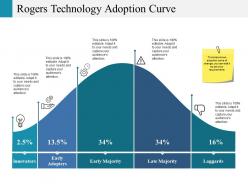
So Rogers' adoption curve breaks down into five groups. **Innovators** (2.5%) try everything first - honestly, these people have way too much time and money. Then **Early Adopters** (13.5%) who actually influence others and take smart risks. **Early Majority** (34%) waits until things are proven safe. **Late Majority** (34%) needs serious peer pressure to switch, and **Laggards** (16%) resist until they're forced. The crazy part? These percentages stay consistent across different tech. If you're launching something, target those first two groups hard - they'll drag everyone else along once you hit that tipping point.
Look at how fast they jumped on previous tech in your space - were they day-one buyers or did they wait like three years? Survey them about comfort with new stuff and what actually makes them buy. Early adopters will talk about being first and cutting-edge. Late majority? They want proof it works and that everyone else is already using it. Honestly, the patterns are pretty predictable once you start looking for them. Create different buyer personas based on this, then switch up your messaging. Innovation talk for the eager ones, safety and reliability for the cautious types.
So innovators are those crazy early adopters who'll try anything new, even if it's buggy as hell. They don't mind paying premium prices or dealing with half-baked features because they just love being first. Honestly, they're doing companies a huge favor by being free beta testers. Without them proving the tech actually works, you'd never convince the more cautious early adopters to jump in. The whole adoption curve would just... stop. If you're launching something, find these tech geeks first. They'll help you work out the problems and give you those success stories that'll convince everyone else it's worth trying.
So early adopters are basically your best friends when launching new tech. They're not just nerds who love shiny objects (though some are lol) - they actually have influence in their circles. When they say something works, people listen. They'll take risks on your product but only if it solves real problems for them. The feedback they give you is gold for improving things. Plus they create those success stories that convince everyone else it's safe to try. Honestly, if you don't win them over first, you're gonna struggle with the mainstream crowd later.
So early majority folks are your practical types - about 34% of buyers who won't touch anything until it's proven. They need case studies, references, all that good stuff before they'll bite. These aren't the "ooh shiny new toy" people like early adopters. Honestly, they're probably the smartest ones since they wait for someone else to deal with the headaches first. Peer recommendations are huge for them. If you're going after this crowd, show clear ROI and tons of examples of companies like theirs already using it successfully. They want proof it actually works, not promises.
So Rogers' adoption curve works totally different for each group when it comes to social influence. Innovators and early adopters? They listen to tech experts and industry leaders - basically other forward-thinking people in their networks. Early majority folks are way more cautious though. They watch what those early adopters do and wait for real proof before diving in. Late majority needs to see their actual friends and coworkers using stuff successfully. And laggards - honestly, they usually only adopt when there's serious social pressure or they've got no other choice. The key is matching your influence strategy to where each group actually looks for validation.
Late majority folks are super cautious - they literally won't budge until everyone else jumps first. Social proof is your best friend here. Load up on testimonials from companies just like theirs. Risk is what freaks them out most, so throw in guarantees, free trials, whatever kills that anxiety. Peer pressure actually works great too (sounds mean but it's true lol). Don't pitch it as some revolutionary thing - make it feel boring and obvious instead. Show tons of support options so they know they won't be left hanging. Patience is key with this group.
So it's pretty straightforward - people weigh benefits vs risks when deciding to try new stuff. High benefits + low risk? You're jumping in early with the innovators. Scary risks or weak benefits? You're waiting for other people to test it first (totally makes sense tbh). Risk-averse folks hang back until late majority, while benefit-hunters go early. Think of it like... would you try that sketchy-looking food truck or wait for Yelp reviews? Same psychology. When you're selling new tech, pump up the benefits for early birds but really tackle those risk concerns for mainstream users. They need the reassurance.
Word-of-mouth is huge in Rogers' model - it's what connects all the different adopter groups. Your early adopters turn into opinion leaders who convince the early majority through personal recommendations. The early majority doesn't trust marketing BS; they need to hear from people they actually respect. Without this peer communication, tons of solid products just die before hitting mainstream. Pretty brutal honestly. That's why you've got to nail the experience for early adopters since they're basically your unpaid sales team for everyone else.
Okay so here's the deal - you can't just blast the same message to everyone. Innovators and early adopters? They want all the techy details and love being first to try stuff. Early majority needs to see proof it actually works, so show them case studies and testimonials. Late majority are the cautious ones asking "but is it safe though?" - they need simple explanations and lots of reassurance. Laggards only move when they absolutely have to. Honestly, what excites an innovator will totally turn off a laggard. Figure out which group has the biggest opportunity for you, then tailor everything to how they think and where they actually spend time.
Look at iPhones - tech nerds got them first, then regular people once they seemed normal, and finally your dad switched when his flip phone died. Facebook started with college kids before somehow ending up on everyone's mom's timeline (still weird). Electric cars are doing this whole dance right now. The trick is jumping in during that early majority sweet spot - not too risky, but you're not playing catch-up either. Companies that time it right usually see the best returns, though honestly timing markets is harder than it sounds.
So the adoption curve basically lets you match your product strategy to what each group actually wants. Start with features that'll get innovators and early adopters hyped - honestly, they don't even mind if things are a bit buggy at first. Once you've got them hooked, pivot hard toward making everything super reliable and user-friendly for the early majority crowd. Those folks need serious proof before they'll even consider switching. Your messaging should shift too - go from "revolutionary new tech" to "the solution everyone's already using." Just keep an eye on which segment you're actually reaching so you can tweak your roadmap as needed.
Laggards usually don't have tons of cash to throw around, plus they're super risk-averse. Makes sense though - they've watched early adopters waste money on tech that flopped. They'll wait until something becomes absolutely necessary or their old methods just stop working entirely. Price is huge for them, and they need rock-solid proof the investment will actually pay off. Another thing - they often don't have the social connections that help other people learn new systems, so it feels more overwhelming. If you're dealing with laggards, show clear ROI and be ready to provide way more training support than usual.
So culture totally shapes how fast people adopt new tech. Individualistic societies jump on innovation way quicker than collectivistic ones where everyone needs to agree first. Your audience's risk tolerance matters too - plus their whole vibe around tradition vs. being cutting-edge. Age isn't just "young = fast adopter" though. It's more about comfort with change and what social benefits they see in it. Honestly, I think people underestimate how much peer influence plays into this stuff. Map out where your demographics fall on Rogers' adoption curve, then adjust your messaging for each group. Different cultural values = different approaches needed.
Honestly, just watch your market share and how fast you're gaining customers compared to competitors. Are you launching stuff first or always catching up? That's huge. Your customer types matter too - if you're mostly getting tech nerds who love trying new things, you're probably ahead of the curve. But if your customers want everything proven and reliable first, you're hitting mainstream later. I'd say track how long it takes between your launches and industry leaders' launches. Six months behind? You're definitely not the innovator. Check this stuff quarterly against what everyone else is doing.
-
Content of slide is easy to understand and edit.
-
Easily Editable.