

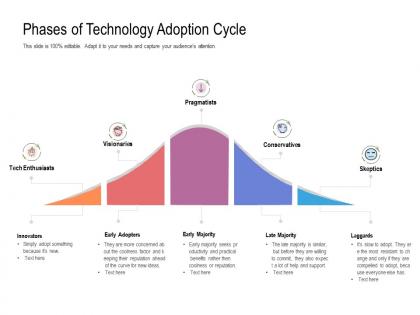
Phases of technology adoption cycle




Try Before you Buy Download Free Sample Product
 Impress Your
 Audience
 100%
100% Editable
 Save Hours
 of Time


Our Phases Of Technology Adoption Cycle are explicit and effective. They combine clarity and concise expression.
People who downloaded this PowerPoint presentation also viewed the following :
Phases of technology adoption cycle with all 2 slides:
Give your audience a fulfilling experience. They will find our Phases Of Technology Adoption Cycle elevating.
FAQs for Phases of
Ok so the Technology Adoption Cycle breaks down into five groups: Innovators (tech geeks who buy everything), Early Adopters (smart risk-takers), Early Majority (people who want proof it works), Late Majority (skeptics needing social pressure), and Laggards (they'll resist forever, honestly). Most products crash trying to jump from Early Adopters to Early Majority - that's called "the chasm." Pretty brutal spot. You'll want to figure out which group you're actually selling to first. Then craft your pitch to match their mindset. Different groups need totally different approaches.
So innovators are basically tech junkies who'll try anything new - they're like 2.5% of people camping out for iPhones or downloading random beta apps. Early adopters are different though, they're way more selective. They make up about 13.5% and actually think before jumping in. Sure, they'll take risks, but only if they can see real value in it first. Honestly, innovators will hunt down your product no matter what, but early adopters? You've got to show them why it's worth their time with actual benefits and proof it works.
Honestly, it comes down to a few things. Does it actually solve a problem they have? That's huge. Ease of use matters too - people bail fast if something's confusing. Your peers using it makes a difference (we're all sheep basically). Cost isn't just money, it's the headache of learning something new. Trust is critical, especially with anything involving personal data. Oh, and timing matters - sometimes people just aren't ready. When you're introducing new tech, show clear benefits upfront and don't make the learning curve brutal.
Oh totally! So like in the US, people jump on new tech immediately to get ahead. But collectivist cultures? They wait until everyone's doing it first. Risk tolerance is huge too - Silicon Valley loves that whole "fail fast" thing, while Germany and Japan take forever to evaluate stuff (honestly makes sense though). Religion matters, trust in government, language barriers... it's wild how much affects adoption speed. That's actually why tech companies dump so much money into localization research. Bottom line - you gotta match your rollout timeline to what each culture's comfortable with, not just assume everyone adopts at the same pace.
Your network is literally how new stuff spreads - it's like a chain reaction. Early adopters tell their work buddies, who then convince the mainstream crowd. But late adopters? They won't budge until their mom or best friend swears by it. I mean, think about it - where'd you hear about TikTok or whatever app you're obsessed with now? Probably from someone you actually trust, not some random ad. The tighter your connections, the faster things catch on. So instead of shouting at everyone, find those super-connected people in each group first.
So first thing - figure out if your product is cutting-edge or more mainstream ready. New techy stuff? Go after the innovators who actually want to be guinea pigs. More polished products work better with early majority types who need proof it works. Most companies screw this up by casting too wide a net right away (I see it all the time). Look at your current customers - are they impulsive buyers or do they research everything to death? Risk-takers vs. cautious types? Interview them about how they make decisions. Once you map out those characteristics, your marketing becomes way clearer.
Conservative adopters need to see your tech as a safe bet, not a gamble. Show them rock-solid case studies and tons of testimonials - they're way more skeptical than early adopters. They'll probably wait to see competitors succeed first anyway. ROI demos are crucial here. Give them comprehensive support and training programs to reduce risk. Pilot programs work great too. Price matters more at this stage, so think volume discounts. Your messaging should scream stability over flashy features. Oh, and start building those detailed implementation guides now - you'll need them. Make it feel like everyone's already doing this successfully.
Your early adopters? They're gold. These people don't just buy your stuff early - they become your biggest cheerleaders and give you the feedback you actually need. When mainstream users see these tech-savvy folks using your product, it makes them way less nervous about trying it themselves. Plus they'll spot problems you missed and help you fix things before you go big. I learned this the hard way with my last project, honestly. Focus on finding these people first when you launch something new. They're literally your ticket to getting everyone else on board later.
So basically, these people are scared of screwing up and looking dumb in front of everyone. They've been doing things the same way forever and don't trust that new stuff is actually better - which, let's be real, isn't always wrong. Fear of change is huge too. They worry about losing control of their workflow or feeling incompetent when they can't figure something out right away. Oh, and the social pressure makes it worse. Your best bet? Don't just show them why it's great. Actually sit with them and help them practice until they feel confident.
Okay so feedback loops are huge for speeding up adoption - you're basically creating this cycle where each user group helps you nail it for the next one. Your early adopters test stuff out and give you the real talk on what's broken. Then you fix it before hitting mainstream users, which honestly makes everything way smoother. The early majority gets this polished experience because you already worked out the bugs with people who don't mind rougher edges. You'll want to set up good feedback channels from day one though - and actually listen to what people tell you. It seriously cuts down your timeline if you do it right.
Honestly, you need both the hard numbers and the softer stuff to really know what's working. Track how many people are actually using it and how long it takes them to get comfortable - that second one's super telling. Look at whether productivity actually improved or if you're saving money (the whole point, right?). User satisfaction scores matter way more than people think because frustrated users will just... stop using it. Oh, and keep an eye on support tickets and training completion rates. Pick maybe 3-4 metrics that match why you got the tech in the first place and stick with tracking those consistently.
Yeah, it's following that typical tech adoption pattern pretty much like clockwork. Your innovators are already all over ChatGPT and have their entire homes automated. Early adopters? They're testing AI stuff at work and buying connected gadgets left and right. The early majority just started getting curious - basic Alexa, simple smart devices, nothing too crazy. Honestly feels like sci-fi half the time! But you've still got tons of people worried about privacy or thinking it's all too complicated. Figure out where your audience sits on that spectrum and adjust your pitch accordingly. Makes a huge difference.
Honestly, most companies just jump in headfirst without training anyone properly. Employees hate change - that's just reality - so you get tons of pushback. They pick whatever tech looks cool instead of what actually fixes their problems. Budget? Forget about it, they always spend way more than planned. Plus nobody sets clear goals upfront, so six months later you're like "did this even work?" Oh and integration with old systems is always a nightmare - I swear IT departments never talk to each other. Start small with a pilot group, get them excited about it first, then expand. Way better than the whole "let's change everything at once" disaster.
Honestly, most companies mess this up by just dumping new software on people without warning. Three things that actually work: tell everyone WHY you're switching and what they'll get out of it. Nobody wants to feel ambushed. Find your tech-savvy people first - they'll help sell it to everyone else. Training is huge too, but I mean real training, not some rushed 20-minute overview. Oh and don't expect people to love it immediately. Give them time to complain and actually listen to their feedback. The whole thing falls apart if you try to rush it.
Schools and universities are like tech adoption catalysts, honestly. They create the next wave of early adopters who'll push new technologies in their future jobs. Academic research also validates or shoots down emerging tech, which really shapes what the public thinks about it. Companies love using universities as testing grounds too - students are usually more willing to try new stuff. The networking aspect is probably the biggest factor though. Students and professors become advocates who spread adoption through their circles. Oh, and if you're trying to guess which technologies will take off, just watch what the big universities are spending their money on.
No Reviews