

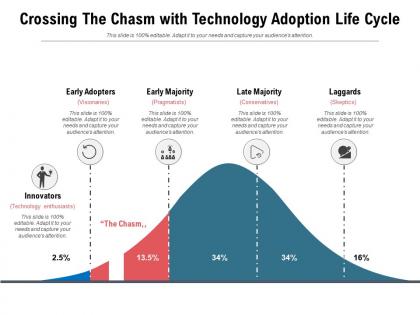
Crossing the chasm with technology adoption life cycle




Try Before you Buy Download Free Sample Product
 Impress Your
 Audience
 100%
100% Editable
 Save Hours
 of Time


Our Crossing The Chasm With Technology Adoption Life Cycle are topically designed to provide an attractive backdrop to any subject. Use them to look like a presentation pro.
People who downloaded this PowerPoint presentation also viewed the following :
Crossing the chasm with technology adoption life cycle with all 2 slides:
Use our Crossing The Chasm With Technology Adoption Life Cycle to effectively help you save your valuable time. They are readymade to fit into any presentation structure.


FAQs for Crossing the chasm with technology
Honestly, it comes down to three things: budget, simplicity, and whether it actually fixes something broken. Most small businesses can't drop tons of cash or deal with overly complex systems. Integration's huge too - you don't want to juggle multiple platforms that won't sync up (nightmare fuel). Your team needs to actually like using it, otherwise forget about it. Oh, and here's what I'd do: pick one specific problem first. Get some wins there, show it's worth the money, then think about expanding. Way less risky that way.
Honestly, your company culture is everything when it comes to tech adoption. Does your team feel safe trying stuff and messing up? Then they'll actually test new tools and tell you what sucks. But if everyone's scared of change or stuck in old habits, good luck getting anyone to touch that shiny new software. I watched one place spend thousands on this incredible platform that literally nobody used because the bosses never showed any interest. Communication style matters big time too - nobody likes being told "use this now" from above. Way better to get people involved in choosing what to try. Quick test: ask yourself if your people can experiment without getting in trouble.
Dude, training makes or breaks everything. Seriously - I've watched companies dump thousands on software that nobody even touches because they skipped this part. Your team will either ignore the new tech completely or mess it up so bad you'll wish they had. Hands-on sessions work best, plus those little cheat sheets people can keep at their desks. Once they actually see how it saves them time instead of creating more work, the pushback disappears. Confidence is huge here. Nobody wants to look stupid learning something new.
Baby Boomers usually want proper training and solid reasons before jumping into new tech. Gen X adapts pretty well but skips the fancy stuff for practical tools. Millennials? They're all over new tech immediately. Gen Z expects everything to work perfectly on mobile - honestly, they get annoyed fast if something's clunky. But I've definitely seen tons of exceptions to this! Your best bet is mixing up your approach. Different training styles, highlight what matters to each group. Just don't assume someone's tech comfort based on their age alone.
Honestly, change management is all about getting people on board instead of forcing stuff on them. Explain WHY you're doing this - nobody likes being kept in the dark. Get them involved early so they feel like they helped build it, not like it's just happening to them. Training is huge too because frustrated people will just give up. Oh, and find those people who are naturally excited about new things - they'll help convince the skeptics way better than you can. Don't brush off complaints either. Usually when someone's pushing back, there's a real reason behind it like worrying about their job or extra work.
Honestly, perceived ease of use makes or breaks adoption rates. People just won't bother if they think something's gonna be a pain to figure out. First impressions happen super fast too - like within minutes of someone opening your app or whatever. I've seen so many cool products fail because they prioritized flashy features over being actually usable. Simple beats complex every time. Nobody has patience for clunky interfaces anymore. Focus on making that initial experience smooth and you'll see way better uptake. It's wild how much this one factor determines whether people stick around or bounce immediately.
Honestly, focus on adoption rates first - like how many people are actually using this thing vs just ignoring it. User satisfaction scores matter too, obviously. Track how long it takes folks to get decent at it, plus any productivity bumps you're seeing. ROI is huge - are you actually making money back? One thing people forget is monitoring support tickets, which tells you where users are getting stuck. Oh, and definitely measure stuff before you roll out so you can prove it's working later. Don't go crazy with metrics though - pick maybe 3 or 4 max and stick with those.
Honestly, it's all about not getting left behind. Your competitors start using AI or automation? You're basically forced to look into it too or risk becoming irrelevant. Budget constraints shift with economic conditions - sometimes you've got money to spend, sometimes you don't. Customer expectations are constantly changing (remote work really accelerated this), so you end up scrambling to adopt new tech just to keep them happy. Regulatory stuff can push you forward too. I'd say watch what others in your industry are doing and read those boring industry reports so you're not always playing catch-up.
Honestly, you've got to get leadership on board first or you're screwed. They're the ones who set the whole vibe around new tech. If they don't use it themselves, nobody else will either - people are way more influenced by what their boss actually does than what they claim to support. Make sure they're visible about using the technology and put real money behind training. Oh, and they need to tackle the inevitable pushback directly instead of just hoping resistance fades away. Create some actual incentives too. Bottom line: nail down your leadership team before you even think about rolling anything out to everyone else.
First thing - audit what tech you already have and spot the gaps. Figure out which systems need to talk to each other and where things might break down. Yeah, it's boring as hell but trust me, skip this and you'll regret it later. Then map out a timeline with testing phases, training, and actual rollout. Always add extra time because nothing ever goes as planned. Oh and definitely loop in the people who'll actually use this stuff - they catch problems way faster than the executives do. Document everything so you don't have to reinvent the wheel next time.
Ugh, nonprofits are basically always broke compared to regular companies. Every dollar has to count, so dropping cash on fancy tech feels impossible when you're choosing between software and actual programs. Half their staff probably learned their current system years ago and nobody wants to retrain - I swear some places are still stuck in 2015. Plus good luck convincing a board that your new database is worth it when they'd rather fund something visible. Staff keeps leaving too, so there's never enough tech knowledge to go around. You need cheap, simple stuff that obviously helps their mission or forget about it.
Hey! So digital transformation is way bigger than just adopting new tech. Regular adoption might be like getting a new CRM system. Transformation? That's completely rethinking how your whole business works around technology - your customer journey, processes, culture, everything. It's honestly kind of intense when you realize the scope. I was just talking to my coworker about this yesterday actually. The real difference is you're not just swapping tools, you're changing how work actually gets done. Worth asking yourself: are you upgrading or truly transforming?
Look, new tech can totally change how customers see your brand - mostly in good ways if you don't screw it up. The thing is, you're basically redesigning every interaction point they have with you. Good execution means smoother experiences and faster responses. Plus more personal touches, which everyone loves these days. But I've watched companies completely botch this by moving too fast. Your team needs proper training first. Also make sure you're actually fixing customer problems, not just making your own life easier (guilty as charged sometimes). Pick one area where you'll see real impact and build from there.
Honestly, find your early adopters first - they're usually pretty obvious. Get them to share real wins with the team. Like if Sarah cut her admin time in half with that new CRM, have her mention it in meetings or do a quick video about it. Metrics help too, but focus on stuff people actually care about - less busy work, finishing projects faster, whatever clicks for your team. Oh and skip the corporate cheerleading - nobody buys that. Peer recommendations work way better than anything coming from management. Make it feel grassroots, not forced.
Honestly, there's three big things to watch out for. Privacy is huge - all that employee monitoring and productivity tracking can feel super invasive without clear limits. Job displacement is another one since new tech often means fewer positions. Then there's bias issues, especially with AI making hiring or review decisions. Be upfront with your team about what you're rolling out and how you'll use their data. Oh, and make sure everyone gets proper training on the new systems - nothing worse than leaving people behind because they couldn't figure out the tech. Transparency goes a long way here.
No Reviews