

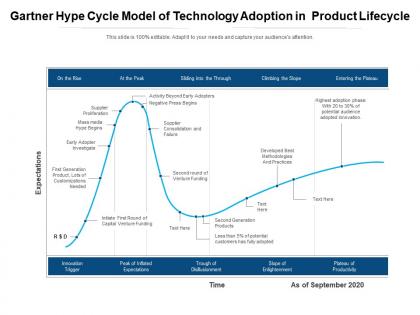
Gartner hype cycle model of technology adoption in product lifecycle




Try Before you Buy Download Free Sample Product
 Impress Your
 Audience
 100%
100% Editable
 Save Hours
 of Time


Our Gartner Hype Cycle Model Of Technology Adoption In Product Lifecycle are topically designed to provide an attractive backdrop to any subject. Use them to look like a presentation pro.
People who downloaded this PowerPoint presentation also viewed the following :
Gartner hype cycle model of technology adoption in product lifecycle with all 2 slides:
Use our Gartner Hype Cycle Model Of Technology Adoption In Product Lifecycle to effectively help you save your valuable time. They are readymade to fit into any presentation structure.
FAQs for Gartner hype cycle model of technology adoption
So Gartner's Hype Cycle breaks down how tech actually gets adopted - there's five stages. First is Innovation Trigger when something new pops up. Then Peak of Inflated Expectations where everyone loses their minds thinking it'll change everything overnight. Reality hits hard in the Trough of Disillusionment and most people bail. That's followed by Slope of Enlightenment where useful stuff finally starts happening. Last is Plateau of Productivity when it becomes, you know, actually normal to use. Pro tip though - watch for anything climbing out of that trough phase, that's where the money usually is.
Look at where your actual situation fits on that hype curve - don't just chase whatever's trending. When stuff hits "Peak of Inflated Expectations," that's when you really need to dig into real ROI numbers from companies like yours. Honestly, the "Trough of Disillusionment" phase is where you'll find the best deals and vendors who've stopped overselling everything. Your timeline matters too. Things climbing the "Slope of Enlightenment" work way better if you're planning 2-3 years out. Use it to sanity-check your budget and resources, not predict the future.
So investor confidence is like the gas pedal for the whole Hype Cycle thing. VCs throw money at something and boom - it rockets up to that peak hype phase. Look at what happened with AI lately, right? But then reality kicks in and funding dries up, which makes everything crash way harder into that "disillusionment" valley. Honestly, I think following the money tells you more than following the headlines sometimes. You can spot where a technology actually is by watching funding patterns - not just the buzz everyone's making about it.
The Hype Cycle shows you where tech sits emotionally - super useful for timing decisions. When something hits "Peak of Inflated Expectations," run the other way honestly. Benefits are oversold, risks get ignored. But tech in the "Trough of Disillusionment"? That's where you'll find actual value since everyone's expectations finally got realistic. I learned this the hard way with a few investments, lol. You can plan adoption around these phases instead of riding the hype train or ditching good tech too early. Just helps you ask smarter questions about timelines and real returns.
Stop betting everything on flashy demos and run some small tests first. Honestly measure what actually happens - even if it sucks. Most teams won't admit when stuff doesn't work because nobody wants to look dumb, but you need those reality checks. Pick one specific problem instead of trying to "transform everything" (god I hate that phrase). Train your people so they can spot the difference between real results and sales pitches. Small pilots will save you from expensive disasters later. Trust me on this one.
So the trough of disillusionment is when everyone gets sick of overhyped tech that flopped. People become super skeptical, adoption drops off, and all that negative buzz starts spreading. Remember VR headsets like 3-4 years ago? Perfect example - everyone was over it. But here's the thing: this phase is actually good for the market. Unrealistic expectations finally get grounded in reality. For your projects, pay attention to these sentiment shifts. You can usually snag better deals on talent and partnerships when everyone's being pessimistic, right before things start bouncing back.
Honestly, timing is everything with the Hype Cycle. When a tech is at peak hype, VCs will fund almost anything - even mediocre ideas get checks thrown at them. But once reality hits and you're in that disillusionment phase? Good luck getting meetings, even if your product actually works. I've seen solid companies struggle just because their sector fell out of favor. You need to know where your tech sits on that curve before fundraising. Or at least have a damn good story about why you're not like everyone else who overpromised.
Oh totally! Healthcare's a great example - telemedicine was this huge thing, then everyone got frustrated with the tech issues and awkward video calls, and now it's actually useful for routine stuff. Education does this too with things like MOOCs and flipped classrooms. Honestly, I think any big change follows that same pattern - crazy hype first, then reality hits and people get disappointed, then it slowly finds where it actually works. You could probably map this out with whatever's happening in your industry right now and see the exact same curve.
Oh totally, culture changes everything on the Hype Cycle! Like, Silicon Valley thinks AI is old news while my uncle's manufacturing company still acts like it's magic. Geography is huge here. Risk tolerance varies wildly between regions - some places jump on new tech immediately, others wait forever. Regulation plays a part too. Honestly, following Gartner's global curve without considering your local context is pretty useless. You'll end up way off if you don't factor in how your specific industry and region actually views the technology you're working with.
The big new stuff on Gartner's Hype Cycle? Generative AI obviously - that thing just came out of nowhere. Quantum computing's getting real applications now, not just theory. Digital immune systems are trending too, which honestly makes sense after all the cyberattacks lately. Companies are also pushing hard on sustainable tech and autonomous systems. It's wild how everything's moving past basic digital transformation into this AI-everywhere approach. Plus organizations actually care about resilience now. Watch generative AI though - it'll probably crash from peak hype soon, but that's when the useful stuff happens.
Honestly, just plot where your projects sit on that Hype Cycle thing and see if you're way ahead or behind everyone else. Like if you're dumping money into something at peak hype while your competitors are sitting back waiting for it to actually work - that says a lot about who's willing to take bigger risks. I'd use it more as a sanity check though. Are you just chasing whatever's trendy or actually making smart bets? Check where similar companies are with emerging tech, then figure out if you want to be first in line or wait and see. Depends how much you like gambling, really.
Honestly, predicting human psychology and market timing is super hard. Tech doesn't follow clean timelines - some stuff jumps ahead while other things get stuck in that "disappointment phase" forever. Different industries pick up the same technology at totally different speeds too, which makes it messy to track. Market hype gets weird with PR pushes or one bad news story tanking everything. My take? Use it more as a rough guide for team discussions rather than trying to nail exact predictions. It's pretty useful for getting conversations started though.
Ditch Gartner's weird jargon and just tell people what it actually means. "Peak of Inflated Expectations" = this tech is way overhyped right now. Create visual timelines showing when to invest instead of those confusing curves - execs eat that stuff up. Map each technology to real decisions your company needs to make. Should we pilot this? Wait two years? Go all-in? Honestly, the biggest win is getting everyone on the same page about realistic timelines. Otherwise you'll have people chasing every shiny new thing. Oh, and make sure it actually fits your strategy and how much risk you can handle.
Okay, so when you're trying to figure out if some new tech is worth the hype, I'd check three things. How long before it actually works for what you need? Most companies honestly can't handle being guinea pigs when something's at peak hype. Also think about whether your competitors will crush you if they jump on it first - or if you can chill and wait. The timing trick is catching stuff right as it crawls out of that "disappointment valley" when people finally get realistic about what it can do. That's usually your window.
Honestly, the Hype Cycle is pretty solid for avoiding stupid tech decisions. I just map out whatever technologies I'm considering and see where they fall on that curve. Peak hype stuff? Hard pass - wait for the dust to settle. But don't sleep on things that've actually hit the productivity plateau either. It's basically saved my ass from some really expensive mistakes over the years. Your risk tolerance matters way more than whatever TechCrunch is hyping this week. Try plotting your top 5 tech priorities and see what patterns show up - might surprise you.
-
Use of icon with content is very relateable, informative and appealing.
-
Excellent design and quick turnaround.